What AI Sales Consultants Are Really Selling – Will AI Tools Replace Human Sales Reps?

What AI Sales Consultants are Really Selling

AI SALES CONSULTANt - Top Question FRom Google

What Is The Job of an AI Sales Consultant?

An AI sales consultant is a professional who helps businesses implement artificial intelligence technologies to improve their sales processes and outcomes. They analyze your company’s existing sales processes to identify areas where AI can add value and recommend specific AI tools you can work with. In some cases, AI sales consultants also train sales teams on how to work effectively with AI tools.

Introduction: What AI Sales Consultants are Really Selling

Over the past few years, AI technology has been one of the hottest topics worldwide. You must be familiar with the common, understandable worry that AI tools will replace humans at their jobs. For many salespeople, it is becoming clearer that AI tools have come to stay in sales, with many companies hiring AI sales consultants to improve their sales strategies. The real question is whether human reps are still relevant. Let’s start by examining how AI is currently being used in sales.

The Current Role of AI in Sales

Generating Leads and Prospecting

Sales teams now use AI tools to find and connect with potential customers. These tools scan through data like patterns in customer behavior, company information, and market trends to identify prospects who are most likely to buy your product or service.

Many AI sales consultant services now focus on helping businesses set up these lead generation systems. The AI can automatically research companies, find contact information, and even predict which leads are ready to make a purchase. Tools like HubSpot’s Breeze Prospecting Agent and Seamless.AI use machine learning to validate contact information in real-time. This means sales teams always have accurate data to work with.

AI prospecting and lead generation tools work around the clock searching for new leads, updating contact information, and more based on their likelihood to convert. This means sales teams clock in with fresh, qualified leads ready for outreach. AI also helps sales teams personalize their strategy for each prospect. An AI sales strategy can analyze a prospect’s social media activity, company news, and industry trends to suggest conversation starters and relevant talking points. This level of research would take human reps hours to complete manually, but AI does it in seconds.

Sales Forecasting & Analytics

AI tools have made sales forecasting more accurate and reliable. AI systems can analyze previous sales data, seasonal patterns, market conditions, and various other factors to predict future sales performance with remarkable precision. 

These forecasting tools help sales managers make better decisions about resource allocation, hiring, and goal setting. Sales teams can now use AI to understand which deals are most likely to close and when they’ll close, rather than relying on gut feelings.

AI analytics sales tools can also give insight into sales performance. Sales managers can quickly identify which reps are struggling, which products are selling well, and which markets offer the best opportunities.

Conversational AI and Customer Interaction 

Chatbots and virtual assistants are now advanced enough to interact with many customers without human involvement. These AI systems can answer common questions, qualify leads, schedule meetings, and even guide prospects through the early stages of the sales process.

These AI tools understand context and can maintain natural conversations with prospects to a reasonable degree. They can remember previous interactions and escalate issues to human reps when necessary.

Voice AI is also becoming more common in sales. Some AI systems can make and receive phone calls, hold initial qualifying conversations, and even set appointments. These tools sound remarkably human and can handle multiple conversations simultaneously.

Account Management & Relationship Building

AI is also being used to help sales reps manage their existing customer relationships more effectively. AI account management tools can analyze customer usage patterns to identify opportunities for upselling or cross-selling. They can suggest the best times to approach customers about additional products or services, and even recommend talking points based on the customer’s current situation. The systems also predict which accounts might be at risk of churning. This allows sales reps to proactively address issues before they become serious problems. 

For large enterprise accounts, AI can help sales reps stay on top of long buyer journeys involving multiple stakeholders to ensure nothing falls through the cracks.

Automating Administrative Tasks

One of the most immediate benefits of AI in sales is its ability to handle time-consuming administrative work. AI can automatically update customer records, log call notes, send follow-up emails, and generate reports. This frees up sales reps to spend more time actually selling.

AI systems can also listen to sales calls and automatically extract key information, action items, and next steps. They can update CRM systems in real-time and even suggest follow-up activities based on what happened during the conversation. AI can draft personalized emails based on the prospect’s profile, previous interactions, and current stage in the sales process.

Scheduling is another area where AI excels. Instead of the back-and-forth emails trying to find a meeting time, AI assistants can access calendars, suggest times, and automatically book meetings. Some systems can even reschedule meetings automatically when conflicts arise.

Human Sales Reps’ Strengths

Even as AI tools help improve efficiency and reduce manual labor in sales, human reps still have several irreplaceable strengths.

Emotional Intelligence and Relationship Building

The human touch will always be important in sales. People often buy from people they trust and connect with, and that requires the human element. Human sales reps excel at reading emotions and building genuine relationships with customers. They can pick up on subtle cues during conversations that AI might miss. They can sense when a prospect is hesitant, excited, or confused, and adjust their approach accordingly.

Customers want to feel confident that they have a real person they can rely on when issues arise or when they need support. Human reps can share experiences, relate to challenges, and build trust. These relationships often lead to repeat business, referrals, and long-term customer loyalty.

Problem-Solving and Consultative Selling

Human sales reps can think outside the box and adapt their approach based on specific customer needs. Consultative selling involves identifying the customer’s pain points and offering solutions. This requires deep industry knowledge, critical thinking skills, and the ability to see connections that might not be obvious to AI systems.

Human reps can also handle unexpected situations and objections that fall outside the scope of programmed responses. They can think on their feet, ask probing questions, and guide conversations in new directions based on what they learn during the interaction.

Negotiation and Persuasion

Negotiation requires human judgment, intuition, and the ability to read between the lines. While AI can provide data and suggest strategies, the actual negotiation process often takes human finesse.

Experienced sales reps understand when to be firm and when to be flexible. They can recognize win-win opportunities and can propose creative deal structures that satisfy both parties. Human reps can tell stories, create emotional connections, and present information in ways that resonate with individual prospects.

The ability to read the room during negotiations and adjust tactics in real-time is uniquely human. Sales reps can sense when to push harder, when to back off, and when to try a completely different approach.

Objection Handling and Difficult Conversations

Difficult conversations and objections during sales require empathy and being able to remain calm under pressure, all of which only humans can provide. Human sales reps can validate customers’ concerns and address objections in ways that feel natural and genuine.

When conversations become emotional or heated, human reps can de-escalate situations, show empathy, and work toward resolution. They can apologize when appropriate, take responsibility for mistakes, and rebuild trust when relationships are strained. These are situations AI might not fully grasp.

Future Outlook: AI vs Human

The future of sales isn’t about AI replacing humans, but rather about AI and humans working together more effectively. The most successful sales organizations are likely to be those that combine the efficiency and data processing power of AI with the emotional intelligence and skills of human reps. 

The benefits of an AI sales consultant become clear when you see how AI tools improve sales outcomes by handling the routine, repetitive tasks. A report found that companies that use AI tools record up to 50% revenue growth compared to their peers. AI sales consulting will continue to grow as businesses seek to optimize this human-AI collaboration.

ACTIONABLE TIP

Actionable Tip: Use AI to Enhance Call Preparation

Rather than relying on AI for direct outreach or conversation, apply it to the pre-call research phase. Tools like Clay or Humantic AI can compile relevant prospect data—including company updates, recent activity, and communication preferences—within seconds.

This allows sales reps to approach each call with deeper context and more tailored messaging, improving engagement without increasing manual effort. It’s a practical example of how AI can streamline preparation while keeping the human element front and center.

Best B2B Sales Blog | International Recognition for Klozers

Sales Training Company UK

Best B2B Sales Blog

Edinburgh based, Business 2 Business Sales Training specialists Klozers have been recognized as one of only 12 companies worldwide for their Sales Blog in the Top Sales Awards.

Klozers blog was a Finalist in the Top Company Sales & Marketing Company Blog, and the only UK company represented in this category of the prestigious sales industry awards. 

Created in January 2020 Klozers wanted to use the blog to demonstrate best practice in Inbound & Outbound selling.  

Founder Iain Swanston explained:

“When the lockdowns started in March 2020 we lost all of our order book, as we were like every other traditional training company in that our training was all delivered face to face.  We regrouped and introduced online learning, but we also doubled down on our blog, as we knew it could help with lead generation.”

With an average Google page rank of 16.4 the blog has over 120 articles listed on page 1 of Google. 

These articles have helped the company grow through the lockdown period, with new inquiries generated from the blog accounting for over 30% of revenue in 2021.

The blog has helped raise brand awareness for Klozers abroad, helping them secure new clients in the US, Eastern Europe and the Far East. 

Klozers founder, Iain Swanston was delighted with the award and commented:

“As a company we have put a lot of effort into both the strategy, and the blog content itself, so it’s great to see the results in terms of real sales orders and the recognition from the Top Sales Awards body.  As the only UK company in the Finals for this category we had stiff competition from some of the US and worlds best sales and marketing experts, so I’m really proud of what our team has achieved.”

As a company Klozers works with small to mid-market organisations to help them compete with the giants and large brands in their industry and win. 

Klozers has a full compliment of B2B sales training and coaching courses available online and specialises in helping organisations maximise their Inbound and Outbound sales capabilities.

Why Sales Training Fails

Sales training

Why Sales Training Fails

Not because the content is wrong. Because of what happens in the room, what happens in the ninety days after it, and the fact that nothing ever expires.

By Iain Swanston, Founder, Klozers

7 minute read
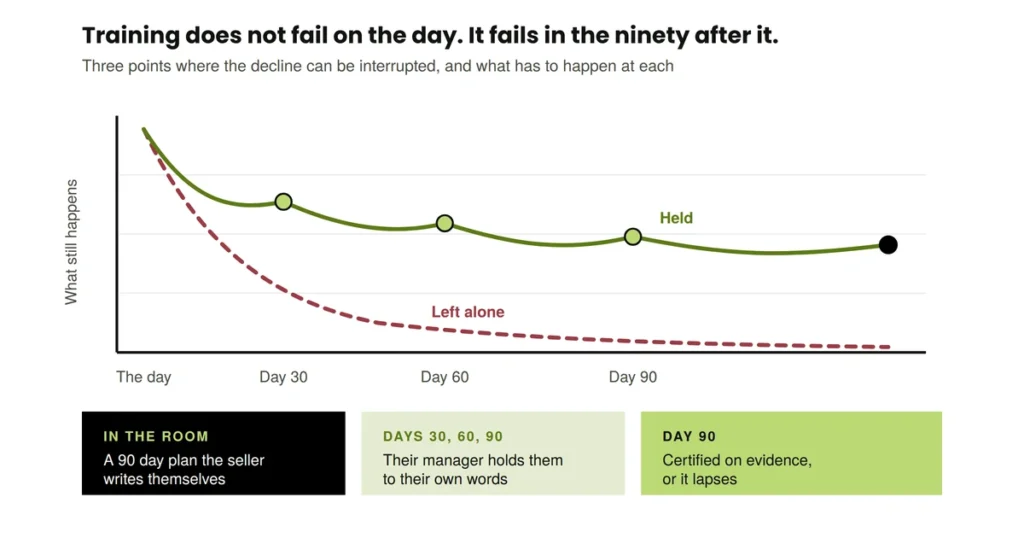
Diagram: memory of training decays steeply in the first days and continues falling. Three interventions hold it: a plan the participant writes in the room, manager checkpoints at 30, 60 and 90 days, and a certification that expires at day 90 unless evidenced.
Diagram: without reinforcement, what a team does after training declines within weeks. Three interventions hold it: a plan the seller writes in the room, manager checkpoints at 30, 60 and 90 days, and a certification that expires unless it is evidenced.
In short

Sales training fails for three reasons, and none of them is the content. The day is built to be watched rather than worked, so nothing is produced. Nothing reinforces it afterwards, so it is forgotten within weeks. And nothing ever expires, so nobody has to maintain it. Fix all three and training holds. Fix one and it does not.

Table of Contents
Key takeaways
  1. Forgetting is not a motivation problem. It is how memory works, and it has been measured since 1885.
  2. A day spent watching slides leaves nothing behind. A day spent building a plan leaves a plan.
  3. People defend what they wrote themselves. Ownership comes from authorship, not from agreement.
  4. Reinforcement is a manager’s job, and managers need their own plan to do it.
  5. A certificate that never expires only records attendance. If nothing lapses, nothing has to be maintained.

Why does sales training fail?

Ask most sales leaders and you get an answer about the provider. The trainer was too generic, the content was theory, the team did not engage.

Sometimes that is true. Usually it is not, and you can tell because the same result occurs with a different provider two years later. When the result is the same across different suppliers, the supplier is not the cause.

Training does not fail on the day. It fails in the ninety days after it.

What fails is the design around the day. Three things go wrong, in sequence, and each one makes the next inevitable.

What does the research actually say about forgetting?

You will see a figure quoted everywhere that 84% of sales training is forgotten within 90 days. That number comes from vendor research rather than an independent study, and it is repeated far more often than it is checked.

The underlying science is much older and much better established. Hermann Ebbinghaus measured memory decay in 1885, and later research has confirmed the pattern he found. A 2015 replication published in PLOS ONE by Murre and Dros at the University of Amsterdam reproduced his curve: recall fell to 33.7% after one day, 27.8% after two days, and 21.1% after 31 days.

Roughly a fifth left after a month, without reinforcement. That is not a comment on your team. It is a property of human memory, and any training design that ignores it is designed to fail.

Which means the question is not how to teach better. It is what happens on days two through ninety.

The first failure: the day is built to be watched, not worked

Most sales training is a presentation. A trainer works through a deck, the room listens, there is a role play after lunch, and everyone leaves with a folder of materials.

Nothing has been produced. The participants have received something rather than made something, and something you are given is easier to set aside than something you made.

The alternative is not a better presentation. It is not using one at all.

At Klozers there are no slides. The learning is in a detailed workbook, so the time in the room can be spent working, and the day is built around a 90 Day Action Plan that each participant completes during the day. After each topic, they write what they are going to do about it on their own live accounts. At the end of the day they do not have notes on what a trainer said. They have a plan they wrote themselves, about deals they own.

That distinction matters more than anything else in the day, and it is not really about training at all. It is about authorship. People argue with a plan they were given and defend a plan they wrote. When people are busy and something has to be dropped, the plan that survives is the one with their own name on it.

How most training days runHow a Klozers day runs
A deck presented to the roomNo slides. A workbook carries the learning
A generic case studyThe team’s own live opportunities
Participants receive materialParticipants produce a plan
Actions written by the trainerActions written by the seller
Ends when the room emptiesEnds with something the manager can inspect
One and two day sales workshops
Bespoke, measured, and built to last.

Every workshop is built from a blank page around your team’s own live deals. No slides. Every topic carries a KPI you agree up front, then track and prove afterwards.

Pre and post assessment, so you see the change

Worked on your real deals, in the room

Manager Embed Plan and calls at 30, 60 and 90 days

Delivered in person by a practitioner, not a presenter

Trusted by teams at Microsoft, Panasonic, TikTok, Bizerba, Marangoni and Lathams.

The second failure: nothing embeds it afterwards

A plan written on the day is still only a plan. What decides whether it survives is whether anybody asks about it.

In most organisations nobody does. The manager was not in the room, does not know what was agreed, and has a forecast to worry about. Three weeks later the plan is filed away and the training is remembered as a pleasant day.

So the manager needs their own plan. Klozers issues a Manager Embed Plan alongside the training, setting out exactly how to reinforce what was agreed, with follow-up calls at 30, 60 and 90 days.

The mechanism that matters is small and specific. The manager holds the salesperson to the plan the salesperson wrote. Not to a course, not to the trainer’s framework, not to the manager’s own preference. To their own words, in their own handwriting, about their own accounts.

That changes the conversation entirely. There is nothing to disagree about. Nobody argues that the standard is unfair, because they set it. The only question left is whether it happened, which is a far easier conversation and a far more useful one.

The third failure: nothing expires

Almost every sales training certificate is issued on the last day of the course. It records that a person attended. It never expires, so it never has to be maintained, and it tells you nothing about how that person will run a deal in March.

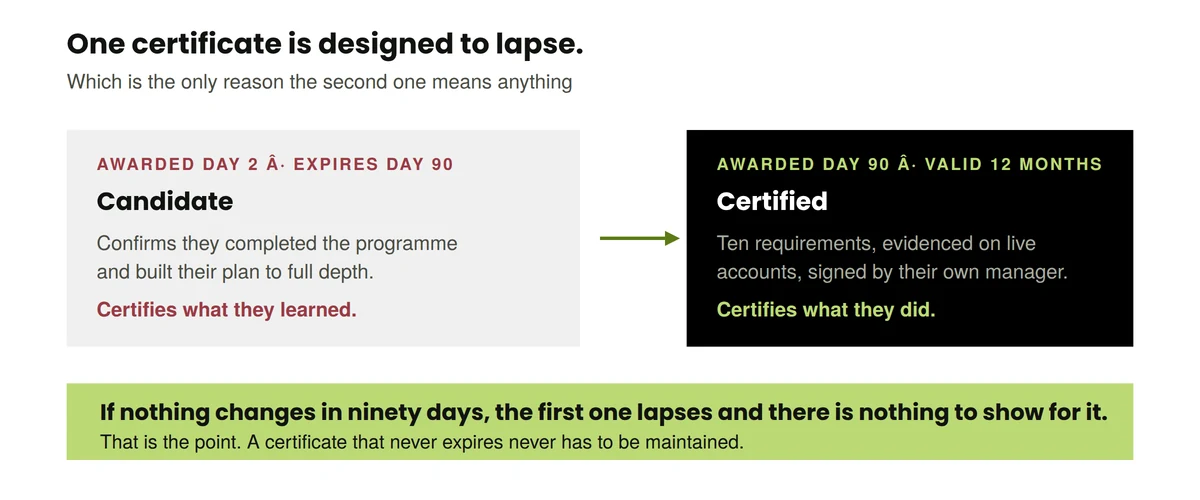
Klozers issues two, and the first one is designed to lapse.

Candidate is awarded on day two. It confirms the participant completed the programme and built their plan to full depth. It expires at day 90. If nothing changes in those ninety days it simply lapses, and there is nothing to show for the investment.

Certified is awarded at day 90, on evidence. Ten execution requirements, evidenced on live accounts as the work happened, assessed at 30, 60 and 90 days and signed off by the participant’s own manager. It is valid twelve months and renewed on evidence, not by attending something else.

Two things about that are unusual enough to be worth stating plainly.

Your manager assesses. We issue. Klozers designs the standard and awards the certification, but never marks a requirement as evidenced. The person with the visibility is the person who signs, which means we cannot mark our own work.

It expires on purpose. Behaviour deteriorates under pressure. That is the entire reason the programme exists, so a certification that never expired would contradict its own argument.

Diagram: two certifications. Candidate is awarded on day two and expires on day 90. Certified is awarded on day 90 on ten requirements evidenced on live accounts and signed by the participant's own manager, and is valid twelve months.
Diagram: Candidate is awarded on day two and lapses at day 90. Certified is awarded only on evidence, assessed by the participant's own manager, and is valid twelve months.

"Not a theoretical course. I left with a clear plan for my own accounts."

When is training not the answer at all?

Sometimes the honest answer is that no training design will fix it.

If every seller interprets “qualified” differently, if every manager coaches to personal preference, if the forecast is a collection of opinions, then you do not have a skills gap. You have no agreed definition of how a deal should be run, and training a team to be better at an undefined job will not help.

That is a governance problem, and the fix is a written standard your managers can inspect against. We cover how operating standards replace training cycles separately, because it is a different decision with a different owner: it needs your CRO or VP of Sales, not your L&D team.

The order matters. Diagnose first, then embed, then govern. Imposing a standard on a team that has never been shown what good looks like produces box-ticking rather than change.

How do you tell whether a provider has solved this?

Four questions, and you can ask them on a first call.

  1. What will my team physically hold at the end of the day? If the answer is a workbook and a set of slides, nothing was produced.
  2. Who wrote the actions? If the trainer wrote them, ownership never transferred.
  3. What does my manager get? If the answer is a summary email, reinforcement is not part of the design.
  4. What happens at day 90 if nothing changed? If the answer is nothing, then there is no consequence, and no consequence means no change.

The last question is the one that shows the difference between providers. A design where nothing lapses is a design where nobody has to do anything.

If you want to see what a diagnostic looks like before any of this, read how sales simulation solves the retention problem, or browse all sales training courses to see how each part connects.

Do this on Monday
Audit your last training day in ten minutes.

You do not need a provider to find out whether your last investment held. You need four questions and the person who attended.

  1. Ask someone who went on the last training day to show you what they left with. Not describe it. Show you.
  2. Ask what they committed to doing differently, and whether it is written down anywhere.
  3. Ask their manager when they last discussed it. If the answer is the week after, the reinforcement stopped there.
  4. Ask what would have happened if nothing had changed. If the answer is nothing, you now know why it did not.

Common questions about why sales training fails

Is sales training worth it at all?

Yes, when it is designed to hold up once people are busy again. Training improves capability, and capability is necessary. What it does not do on its own is control execution, which is why the design around the day matters more than the day itself.

Without reinforcement, most of it is gone within a month. The 2015 PLOS ONE replication of Ebbinghaus put recall at around a fifth after 31 days. That is the default, not a worst case.

The line manager’s. They are the only person with enough contact to notice a change in behaviour within weeks rather than at the end of a quarter. But they need their own plan and their own checkpoints, or reinforcement becomes something they intend to do.

Because behaviour deteriorates under pressure, which is the reason the training happened. A certification that never expires records attendance. One that lapses at 90 days unless it is evidenced records behaviour, and has to be maintained to stay true.

Start by finding out what is actually breaking rather than buying more content. A simulation or a structured deal review will tell you whether the gap is skill, process or standards, and those have very different answers.

Founder & Lead Trainer Klozers · London, Dortmund, Austin, Melbourne

Iain has trained and coached B2B sales teams since 2008. He was Lead Trainer and Coach at Microsoft Scotland. Before that he sold capital equipment and managed sales teams in the UK and North America. He served as an Associate at Strathclyde University Business School, where he delivered the sales content for the Masters in Entrepreneurship from 2015 to 2019.

Connect with Iain on LinkedIn

Bespoke sales training
You are not buying a day of training.

You are buying a change in how your team sells, and the proof that it worked. A short call to work out what would need to change, and a date that works

How to Build an Internal Sales Academy

Internal sales academy

How to Build an Internal Sales Academy

Start with useful resources and the practices that already work. Build a way to develop your own salespeople, then improve it through application and review.

By Iain Swanston, Founder, Klozers

6 minute read
Four practical activities for starting an academy: capture effective practice, teach it, apply it and review its use.
A practitioner sequence for starting small. This is not a named Klozers methodology.
What is an internal sales academy?

An internal sales academy is an organisation’s own arrangement for developing selling capability through resources, training, coaching and workplace application. It can begin with a small collection of useful material. The essential work is identifying what people need, capturing effective internal practice, helping participants apply it and reviewing progress.

On this page
Key takeaways
  1. A building or platform is not required to begin.
  2. Start with a real development need and existing effective practice.
  3. Developing people can reduce dependence on recruitment; compare actual costs.
  4. Managers support application, not just completion.

What is an internal sales academy?

An internal sales academy is an organisation’s own arrangement for developing selling capability. It connects relevant resources, effective internal practice, training, coaching and workplace application. It can support new starters, experienced salespeople and future managers without requiring every person to follow the same learning path.

A dedicated training building is one possible setting. An online academy is another. Neither defines whether the academy is useful. A small team can begin with six books and a bookshelf, provided someone selects relevant material, helps people apply it and reviews what changes. The academy can become more structured as the organisation learns what its people need.

Start somewhere useful. The first version can improve through review.

“You can start an academy with six books and a bookshelf. You need to start somewhere and it might not be perfect.”

Where should you start when building a sales academy?

Start with a commercial requirement and the practices that already work inside your organisation. Ask where salespeople need help, which behaviours matter and what your strongest performers do successfully. Do not begin by buying a platform and then looking for content to fill it.

Klozers uses best-practice-first programme design. We speak to effective performers and sales leaders before designing the development. Their real conversations, customer situations and successful practices provide the foundation. Additional skills and frameworks address genuine gaps rather than replacing an approach that already works.

Begin with one development priority. For example, if discovery conversations are weak, collect examples of effective discovery, agree what participants should be able to do, practise the behaviour and review its use on live opportunities. Expand when that first area is useful. This is practitioner guidance, not a measured claim that one starting sequence suits every organisation.

Does an academy need an online learning platform?

An academy needs accessible resources and a way to support development. A platform can help organise those resources, but it is not a prerequisite for beginning. Existing shared folders, a physical bookshelf and regular team sessions may provide a sufficient starting arrangement.

Physical training settings and online academies are different ways to provide access. The important design questions remain the same: what should people learn, where will they apply it, who supports them and how will progress be reviewed? Moving content online does not answer those questions automatically.

Choose technology when a clear requirement justifies it. A larger organisation may need access controls, learning records or resources across several locations. A small team may need a reliable place to find a guide and a manager who reviews its application. Avoid introducing a platform that creates administration without improving access or development.

Why develop your own salespeople rather than rely on recruitment?

Developing existing people can reduce dependence on external recruitment and preserve knowledge of your customers, products and ways of working. It gives the organisation a repeatable way to improve capability instead of treating every skills gap as a vacancy.

The cost argument needs a real comparison. Recruitment can involve fees, management time, vacancy costs, induction and time before a new salesperson becomes effective. Internal development has costs too: participant time, manager support, resources and training. Compare these costs over the same period and against the same capability requirement.

The sustainability argument is organisational. Effective practices can be captured and taught, rather than remaining with a few individuals. Internal development can also support succession and progression. These are potential benefits, not guarantees of retention or lower costs. Hiring remains appropriate where the organisation lacks a capability it cannot develop in the required time. The academy makes development a deliberate option alongside recruitment.

Start Small and Build Capability
Build development around how your team sells

Start with your organisation’s effective practices and the capability gaps that matter. We can help you identify the development requirement.

What should an internal sales academy contain?

Include resources and activities that help people perform their roles. That may mean a small set of books, internal guides, worked examples, training sessions and coaching. The purpose is not to offer the largest possible catalogue. It is to make useful knowledge accessible and help participants use it.

Capture company-specific practice: how effective sellers prepare, conduct discovery, explain value, handle objections and agree next steps. Use genuine examples with appropriate permission and confidentiality controls. Explain the circumstances in which a practice works so that participants can judge when it applies.

Learning paths should reflect role requirements. A new salesperson may need fundamentals in a clear order. An experienced account manager may need development in account growth or complex conversations. A future manager needs support in coaching and performance management. Review resources regularly so that outdated material does not become the organisation’s default instruction.

How should managers support academy learning?

Managers connect learning to the situations salespeople face after a session. They should know what behaviour is being developed, where it should be applied and what evidence would show application. General encouragement is less useful than a review of a specific conversation or opportunity.

The Klozers Manager Embed Plan gives managers a structure for reinforcing development. The principle for an academy is to make support explicit: agree the application, review progress and help the salesperson correct problems. Do not assume a manager has understood the development simply because they received a course outline.

HR and L&D organise the development, while sales leadership establishes commercial priorities and managers support application. Participants also have responsibilities. They practise, apply the learning and bring examples to review. The academy becomes more useful when those roles are clear and the work is included in existing routines rather than left to spare time.

Leadership sets priorities, L&D organises development, managers coach application and participants practise and apply learning.
These are practical responsibilities to agree within your organisation, rather than fixed job descriptions.

How do you measure whether the academy is useful?

Measure whether people apply the intended behaviour, alongside the commercial measure relevant to that behaviour. Course completion tells you that an activity was completed. It does not establish that a salesperson can use the skill with a customer.

CIPD’s Learning at Work 2023 survey found that 57% of learning professionals proactively understood a performance issue before recommending a solution. The survey included 1,108 professionals with responsibility for supporting workplace learning. This is adjacent workplace-learning research: it did not study sales academies or prove that a particular academy design improves sales.

Define the performance issue before choosing resources. For discovery, managers might review whether sellers establish the customer’s problem and required outcome. Commercial measures may take longer to change and can be affected by factors beyond the academy. Record the starting position, inspect application and report those limits. Avoid presenting an improvement in revenue as proof that training alone caused it.

What practical uses can an academy support?

An academy can support onboarding, development for experienced salespeople and preparation for leadership roles. It can also help a team learn the selling requirements of a new product, service or market. Each use needs a defined capability requirement rather than an automatic expansion of the curriculum.

For onboarding, capture the company knowledge and selling practices new starters need first. For a new offer, connect product knowledge to customer discovery, value and relevant conversations. For succession, identify the responsibilities of the future role and provide opportunities to practise them.

Recording useful company knowledge allows mentoring to focus on judgement and application.

When should you add training or sales simulation?

Add support when a specific requirement is clear. bespoke sales training programmes fit where the team needs to develop selected capabilities around its own selling environment. add simulation to your internal academy when leaders need to inspect execution. Simulation can be a secondary option where leaders need to inspect how people execute under realistic pressure.

Neither requires replacing the academy. Training can supply focused development, while managers help participants apply it. Simulation can expose a difference between being able to describe a behaviour and being able to execute it in a demanding situation.

Keep the academy connected to the original development requirement. A larger library, more sessions and new technology are inputs, not evidence of progress. Invest where a gap has been established, retain practices that work and improve the academy through review.

Your first actions
  1. Choose one selling behaviour your team needs to improve.
  2. Ask an effective performer for a real example.
  3. Select a resource and agree where participants will apply it.
  4. Assign a manager review and decide what evidence to inspect.

Internal sales academy FAQs

Can we start without a platform?

Yes. Accessible resources, clear ownership and practical application can provide a starting arrangement. Add technology when the requirement justifies it.

No. Compare development costs and time to competence with recruitment, vacancy, induction and management costs. The answer depends on the capability needed and the time available.

No. Role requirements and existing capability should inform the development. New starters, experienced sellers and future managers can need different support.

Founder & Lead Trainer Klozers · London, Dortmund, Austin, Melbourne

Iain has trained and coached B2B sales teams since 2008. He was Lead Trainer and Coach at Microsoft Scotland. Before that he sold capital equipment and managed sales teams in the UK and North America. He served as an Associate at Strathclyde University Business School, where he delivered the sales content for the Masters in Entrepreneurship from 2015 to 2019.

Connect with Iain on LinkedIn

internal sales academy
Start with the development your team needs

Tell us what you want your salespeople to do differently. We can help you connect that requirement to practical training and workplace application.

B2B Sales Tools

Sales Enablement Templates

B2B Sales Tools and Frameworks we use

Sales Audit Part 1 – Sales Skills – Use the first stage of this audit to benchmark and evaluate the core skills of your sales team
Sales Audit Part 2 – Functions – Use this stage of the audit to benchmark and evaluate the core areas within your sales function
Sales Audit Part 3 – Sales Formula – This benchmarks and evaluates areas outside sales which have an impact
Sales Change Management Planning – Any form of sales intervention means change which means you need to understand change management
Envision Planning Exercise – This is a great exercise to empower and motivate your team.  It also helps identify areas for improvement in the sales function
Day in the Life – Understanding People Exercise – This workshop helps sales people understand DiSC and how they need to adapt their sales approach
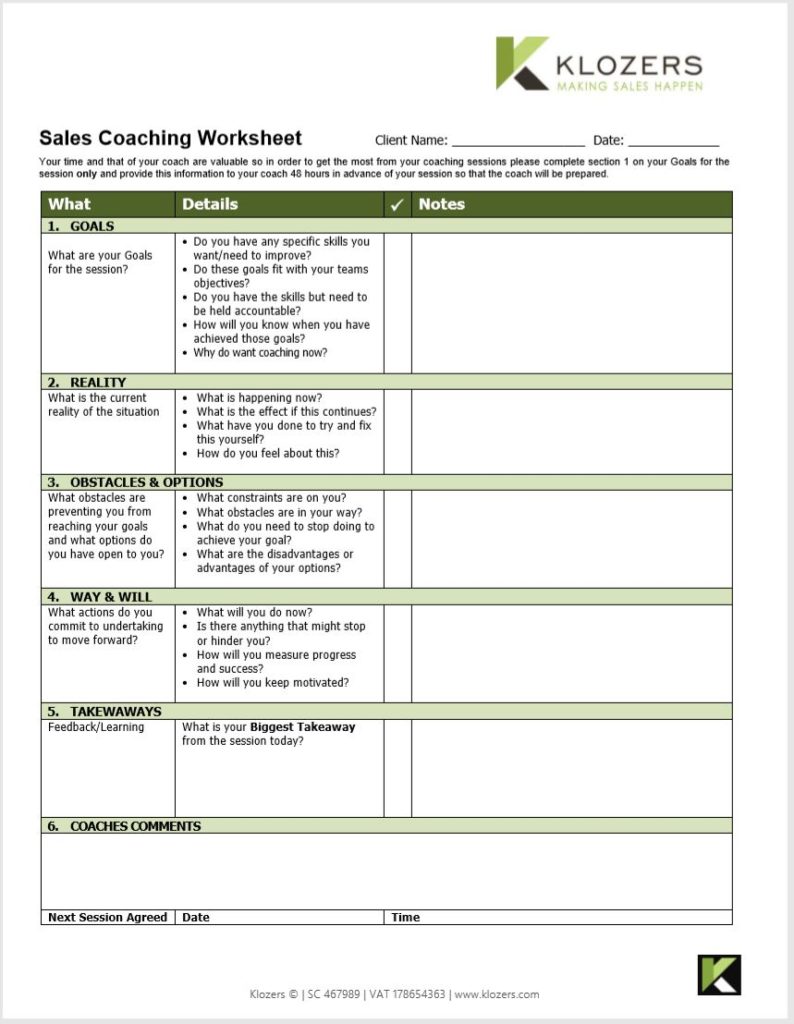
Sales Coaching Worksheet – This template provides a structure and a proven framework to your sales coaching
Sales Scorecard Template – This is a simple example of a Sales Scorecard.  Use the template as a starting point to develop your own
Sales Coaching Final Questions – Use these questions to finalise your coaching sessions with your sales people
Sales Training Evaluation Form – Collect feedback after every sales training session using this form
B2B Customer Journey Map – Evaluate your customers journey and look for improvements in conversion ratios
Sales Campaign Funnel – An example of an end to end sales campaign funnel.  Use the template to create your own
ADKAR Change Model – Our go-to model for Change Management and simply a must have for any sales leaders
Business Case Template – If you’re selling to corporates then you’ll need to be able to write business cases so here’s a template to get started
Sales Tender Qualification Checklist – Objectively qualify your tender responses so you can improve your win rates
Key Account Management Plan Template – Document and plan your key account strategy with this comprehensive template
Handling Sales Stalls & Objections – This template helps sales people prepare for the hardest stalls and objections
Sales Call Tracker Template –  This tracker highlights where in the call people are struggling so you can coach them accordingly
Prospect Profile Template – Profile your best customers and then use the information to target more of the same
Prospect Value Calculator – Understand your core value to build highly targeted sales messaging
Root Cause Analysis Template – This tool helps you build powerful questions to uncover your prospects real pain
Prospect Pains & Goals Template – Know your prospects pains and goals so you they will buy versus you having to sell
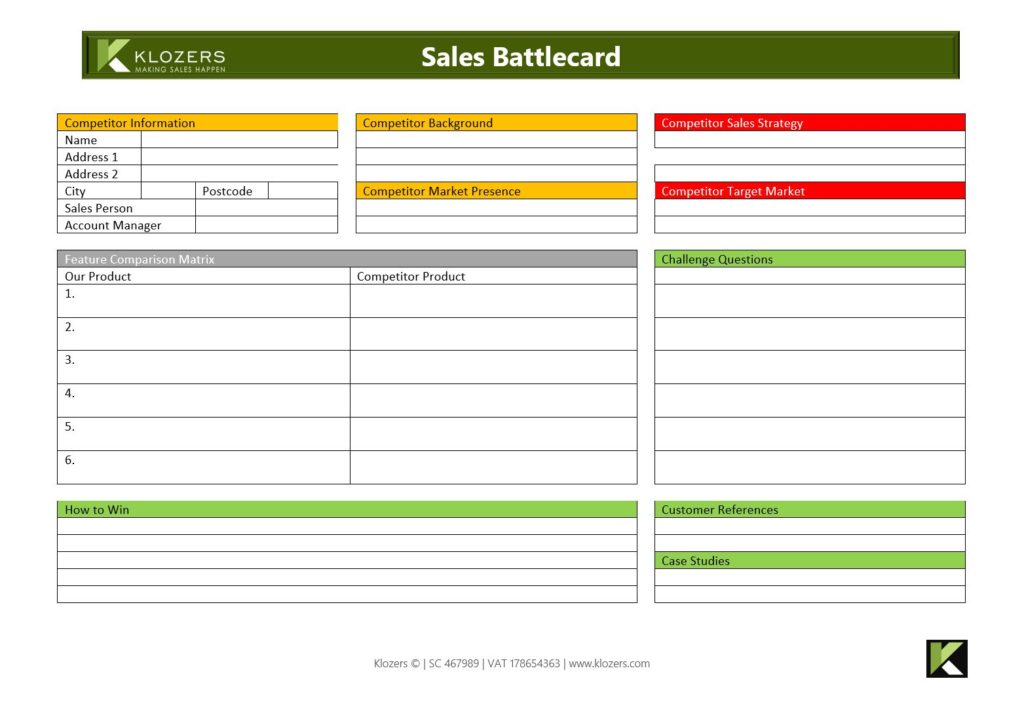
Sales Battlecards Template – Battlecards are great for identifying your strengths and weaknesses versus your competitors
Sales Negotiation Worksheet – Prepare in advance for the boardroom so you get what you want with this simple template
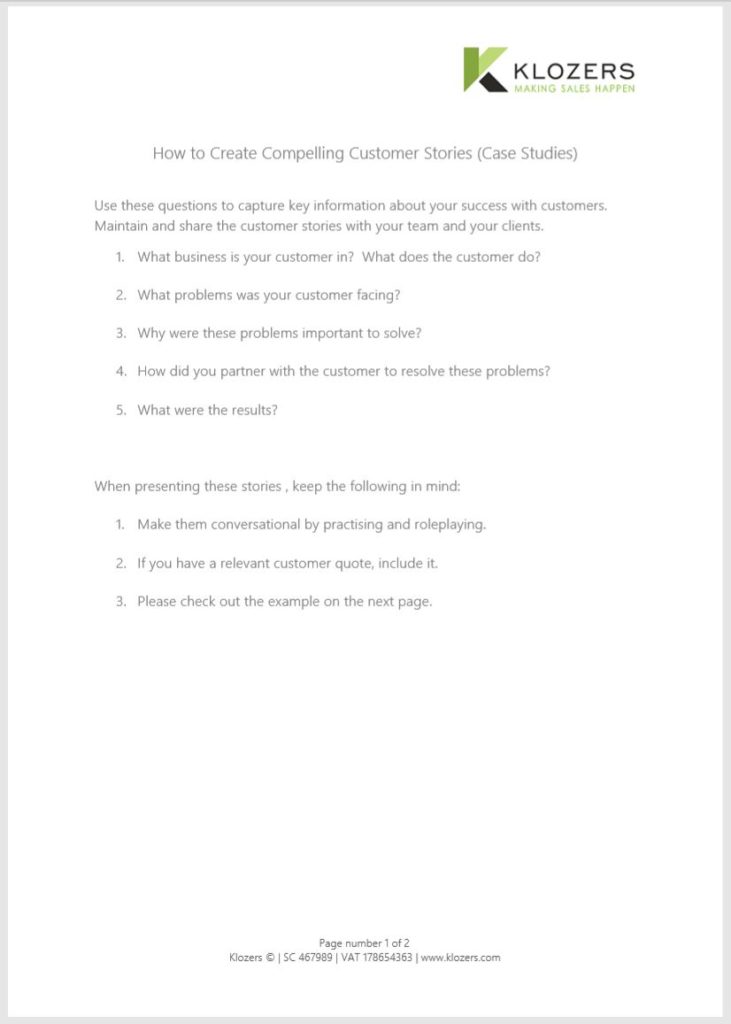
Client Case Study Template – Use examples of previous sales wins to generate more with this one page template
Preparing to Sell Checklist – Superb check list for new hires ( and maybe old ones) before they get in front of real prospects
Consultative Selling Process – Use this tool to reinforce your consultative selling process – slow the sales process down if you want to speed the sale up
Time Management Tracker – Help sales people become super productive and track where they lose time during the day
Meeting Notes Record – This template reminds you what questions to ask the prospect and take accurate notes on the answers given

This content is available for FREE
download in the Sales Playbook

Get Started

Sales Audit – Sales Skills

Sales Tools - Sales Audit 1
Sales Tools – Sales Audit 1

What are Sales Skills?

Sales skills include the actions, mindset and strategies that contribute to sales success. The sales leaders audit therefore helps you accurately benchmark the skills of your sales people and will allow you to quickly see where to focus your performance improvement plans for the sales team.

Why are Sales Skills important?

In B2B sales unless you have a powerful brand the quality and performance of your sales team is vital. Indeed when products and services are similar the Unique Selling Point can often be the sales people. Most importantly the audit focuses on the three main areas that sales people need to concentrate on to be successful – Finding new sales, Klozing new sales and Growing existing accounts.

Need an objective external party to lead your sales audit? Check out or Sales Consulting here

Sales Audit – Sales Functions

Sales Tools - Sales Audit 2
Sales Tools – Sales Audit 2

What are Sales Functions?

We all know that people are a vital part of every successful sales function however sometimes there can be other areas within sales that are equally important and also have a huge impact on our ability to sell. Consequently these can even be a huge blocker and prevent your team from selling.
Every business regardless of what product or services they are selling will have these common sales functions which we can audit.

Why are Sales Functions important?

You can use this tool to quickly evaluate where your Sales Unit is in terms of best practice and from this create your bespoke improvement plans.

Sales Audit – Sales Formula

Sales Tools - Sales Formula
Sales Tools – Sales Formula

What is the Sales Formula?

The sales formula is a list of business “ingredients” common to every successful organisation. These ingredients will apply to your business, however the context and application will be different as your business is unique.

Why is the Sales Formula important?

Examples of successful companies are all around us in B2B and B2C. Whether it’s national or international, products or services, they all follow the same winning formula. Don’t waste time reinventing the wheel – learn from others who have gone before by applying the sales formula to your business.

Sales Change Management Planning

B2B Sales tools - Sales Improvement Process
B2B Sales tools – Sales Improvement Process

What is Sales Change Management Planning?

Sales Change Management Planning is simply a structured approach to transitioning your sales team from where they are currently, to where you need them to be. Planning makes sure your changes work and are embedded in a new improved sales environment.

Why is Sales Change Management Planning important?

By creating a Sales Change Management plan you will minimise the resistance to your changes from some sales people. As a result you will increase the engagement of the team and improve the overall performance. Equally important is the long term affect of failed improvement plans which include missed sales targets, low morale and higher staff turnover.

Envision Planning Exercise

B2B Sales tools - Sales Envision Planning Excercise
B2B Sales tools – Sales Envision Planning Exercise

What is Envision Planning?

Envision Planning is a 1/2 day group workshop that facilitates an open discussion to identify and prioritise all the sales opportunities open to the business in the future. The goal of the session is to create a joint understanding of the exact direction you want to take the sales department.

Why is Envision Planning important?

Envision planning helps with team morale, increases the engagement of your sales team and ensures everyone involved is on the same page. Finally the output would include a full action plan with milestones and goals.

A Day in The Life – Understanding People

B2B Sales tools
B2B Sales tools –

What is A Day in The Life?

This is a 1/2 day workshop focused on DiSC – a profiling system that psychologists use to learn and understand more about people. This exercise gives sales people a deeper understanding of the different behavioural styles of themselves, their work colleagues and their prospects/customers.

Why is a Day in The Life important?

This workshop is vital in developing self awareness, teamwork and understanding the preferences both prospects and customers have, in the way sales people communicate with them.

Sales Coaching Worksheet

B2B Sales tools - Sales Coaching Worksheet Tool
B2B Sales tools – Sales Coaching Worksheet Tool

What is the Sales Coaching Worksheet?

Our Sales Coaching Worksheet is a simple one page template that managers can use to coach sales people. The template follows the proven GROW coaching model but has been adapted to sales.

Why is the Sales Coaching Worksheet important?

Coaching is one of the most productive activities that sales leaders do to empower and enhance their sales teams. The worksheet provides a repeatable and objective framework to the coaching process.

Sales Scorecard Template

Sales Tools - Sales Scorecard Template
Sales Tools – Sales Scorecard Template

What is a Sales Scorecard?

A Sales Scorecard Template is a simple one page sheet for recording specific sales activities. The activities are divided between the four most important areas of sales – Finding new customers, Klozing new customers, Growing customer accounts and personal learning & development. As a result if sales people simply do enough of these four activities it’s nearly impossible to not increase your sales.

Why is a Sales Scorecard important?

Sales Scorecards provide a focus to the sales persons activities and ensures those activities are fully aligned with the companies overall growth strategy. They also help identify areas for development and can alert management in advance of potential problems.

Sales Coaching Final Questions

Sales Tools - Coaching Final Session Questions
Sales Tools – Coaching Final Session Questions

What are Sales Coaching Final Questions?

Our Sales Coaching Final Questions worksheet is used at the end of a structured coaching programme. There are 10 questions that the sales person has to answer taking no longer than 45 minutes.

Why are Sales Coaching Final Questions important?

The final session questions are part of “reflective learning” whereby the sales person can reflect on what they have learned and how they have grown through the length of the coaching programme. Furthermore future challenges and actions are also included to ensure continued personal development.

Sales Training Evaluation Form

B2B Sales tools - Sales Training Evaluation Form
B2B Sales tools – Sales Training Evaluation Form

What is a Sales Training Evaluation Form?

A Sales Training Evaluation form is used after any form of sales training to gather feedback from participants. The form includes specific feedback questions on the three most important areas of training – the trainer, the content and the training environment.

Why is a Sales Training Evaluation Form important?

Sales Training Evaluation forms helps to identify the ROI and value derived from any training programme and above all provides the data by which future training programmes may be improved.

B2B Customer Journey Map

Sales Tools - B2B Customer Journey Evaluation
Sales Tools – B2B Customer Journey Evaluation

What is a Customer Journey Map?

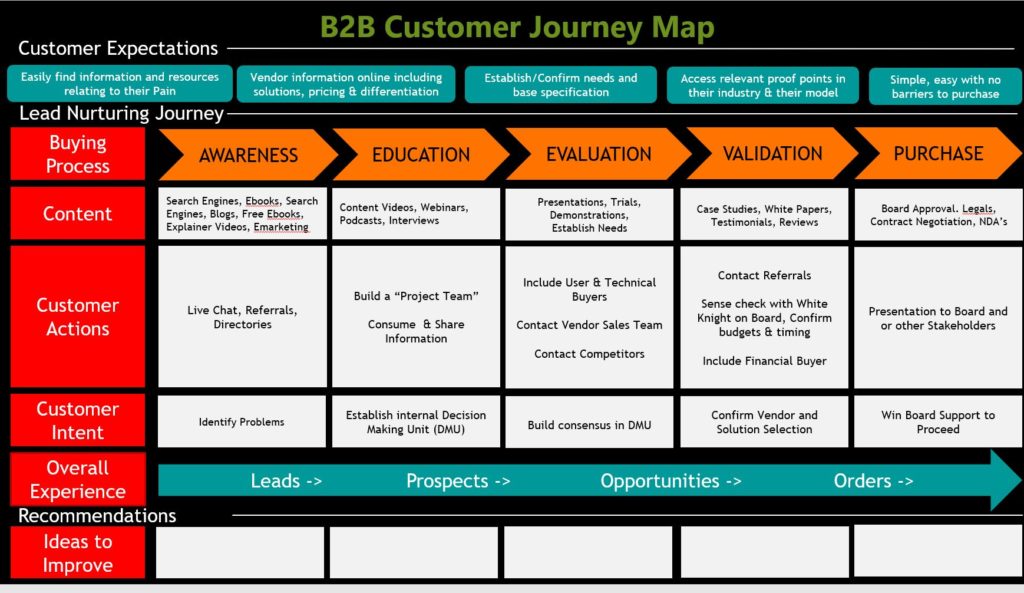
A customer journey map documents what information and actions your sales & marketing take and cross references this with the customers intent throughout the buying process.

Why is a Customer Journey Map important?

The customer journey map provides an audit which helps to identify which information and actions need to be improved and or added to, in order to reduce friction throughout the sales process.

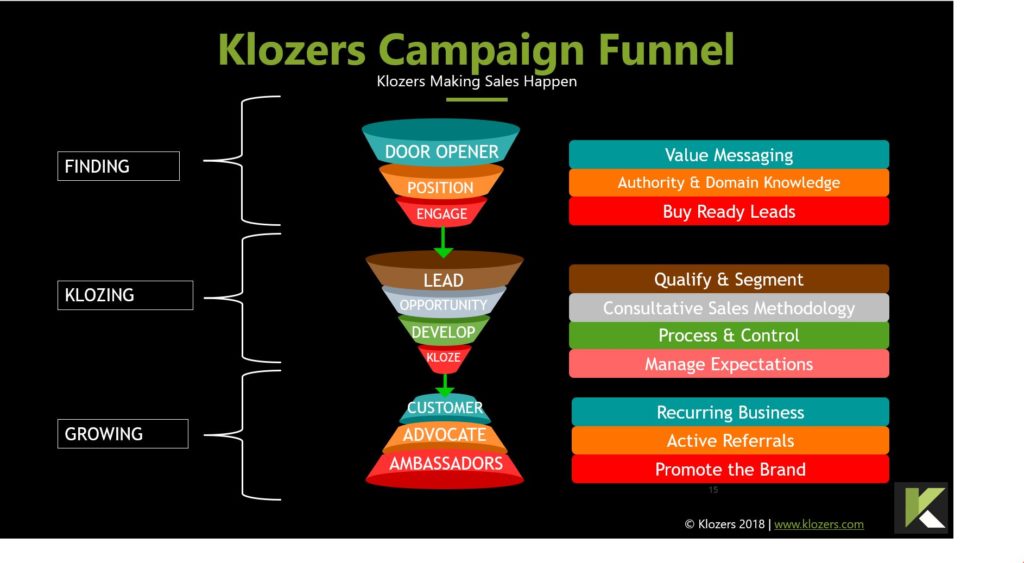
Sales Campaign Funnel

Sales Tools - Sales Campaign Funnel Example
Sales Tools – Sales Campaign Funnel Example

What is a Sales Campaign Funnel?

The Sales Campaign Funnel is Klozers own funnel template that we use in our sales enablement programme ready to be customised to your business.

Why is the Sales Campaign Funnel important?

The Klozers Sales Campaign Funnel is the end to end funnel we use to Find new customers, Kloze new customers and Grow existing customer accounts. It’s a proven step by step system for B2B sales organisations.

ADKAR Change Model

Sales Tools - ADKAR Change Management
Sales Tools – ADKAR Change Management

What is the ADKAR Change Model?

The ADKAR change model is a proven change methodology from https://www.prosci.com/ the global leader in change management solutions.

Why is the ADKAR Change Model important?

This is highly relevant as every sales improvement project involves change and people do not like change. In our opinion this is the best Change Management Solution available today and we strongly recommend you include this in every improvement programme.

Business Case Template

B2B Sales tools - Business Case Template
B2B Sales tools – Business Case Template

What is a Business Case?

A Business Case is a document created to demonstrate the anticipated ROI or benefit of a project or purchase. Our template allows you to create your own Business Case bespoke to your products or services.

Why is a Business Case important?

In larger Enterprise organisations it is simply not acceptable to make a purchase without first justifying it in the form of a business case. Furthermore, Sales people can use this template both to help potential buyers and to document important information after a sale to create valuable sales content.

Tender Qualification Checklist

B2B Sales tools - Tender Qualification Checklist
B2B Sales tools – Tender Qualification Checklist

What is a Tender Qualification Checklist

A Tender Qualification Checklist is an objective way to pre-qualify tenders before you commit money and resources to responding.

Why is a Tender Qualification Checklist important?

Tenders can be an invaluable source of new sales revenue, however they can also be an expensive and time consuming distraction. This is because without any form of pre-qualification many companies commit to tenders that in reality they have no chance in winning.

Key Account Management Template

B2B Sales tools - Key Account Management Plan Template
B2B Sales tools – Key Account Management Plan Template

What is a Key Account Management Template?

Key Account Management is simply a joint agreement between the vendor and the client regarding the next 12 months. After 12 months the agreement would normally be reviewed and updated.

Why is a Key Account Management Template important?

The Key Account Management document sets out in writing the expectations in terms of actions, targets and milestones for both sides. Whilst they are not normally legally binding in the way that a contract is, they help identify to both sides what success is and are essential in managing expectations.

Handling Stalls & Objections Exercise

Sales Tools - Stalls & Objections
Sales Tools – Stalls & Objections

What are Stalls & Objections in Sales?

Stalls & Objections are the reasons prospects give to show disinterest in buying or obtain further information. They may be genuine or they may not. Stalls are typically the reasons not to buy now and Objections are reasons not to buy ever.

Why is the Stalls & Objections Exercise important?

The Stalls & Objections exercise provides sales people with the best possible answer or rebuttal to the most common stalls/objections that they receive. Those answers are then drilled into the muscle memory of the sales people so they become both natural and automatic.

Sales Call Tracker Tool

B2B Sales tools - Sales Call Tracker
B2B Sales tools – Sales Call Tracker

What is a Sales Call Tracker Tool?

This is a simple one page template that is used to record a sales persons activity throughout the various stages of a sales call, cold, warm or otherwise.

Why is a Sales Call Tracker Tool important?

The sales call tracker acts as a data dashboard allowing the sales person to track their success and their “numbers”. In addition by capturing the relevant data at every stage the sales person can see for themselves where they need to make any specific changes for example with their messaging, their soft skills or their call to action.

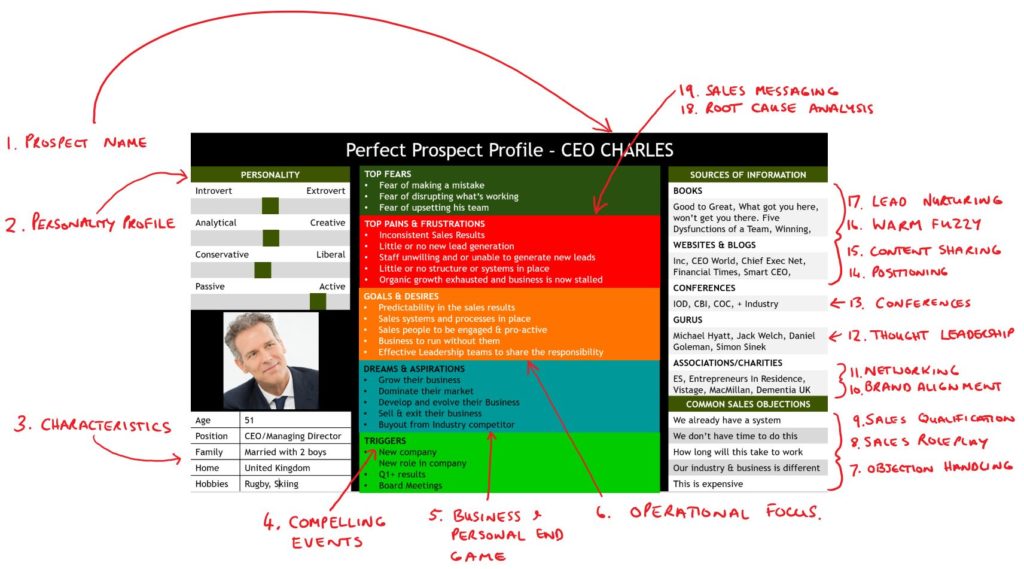
Perfect Prospect Profile Template

Sales Prospect Profile Template

What is a Perfect Prospect Profile Template?

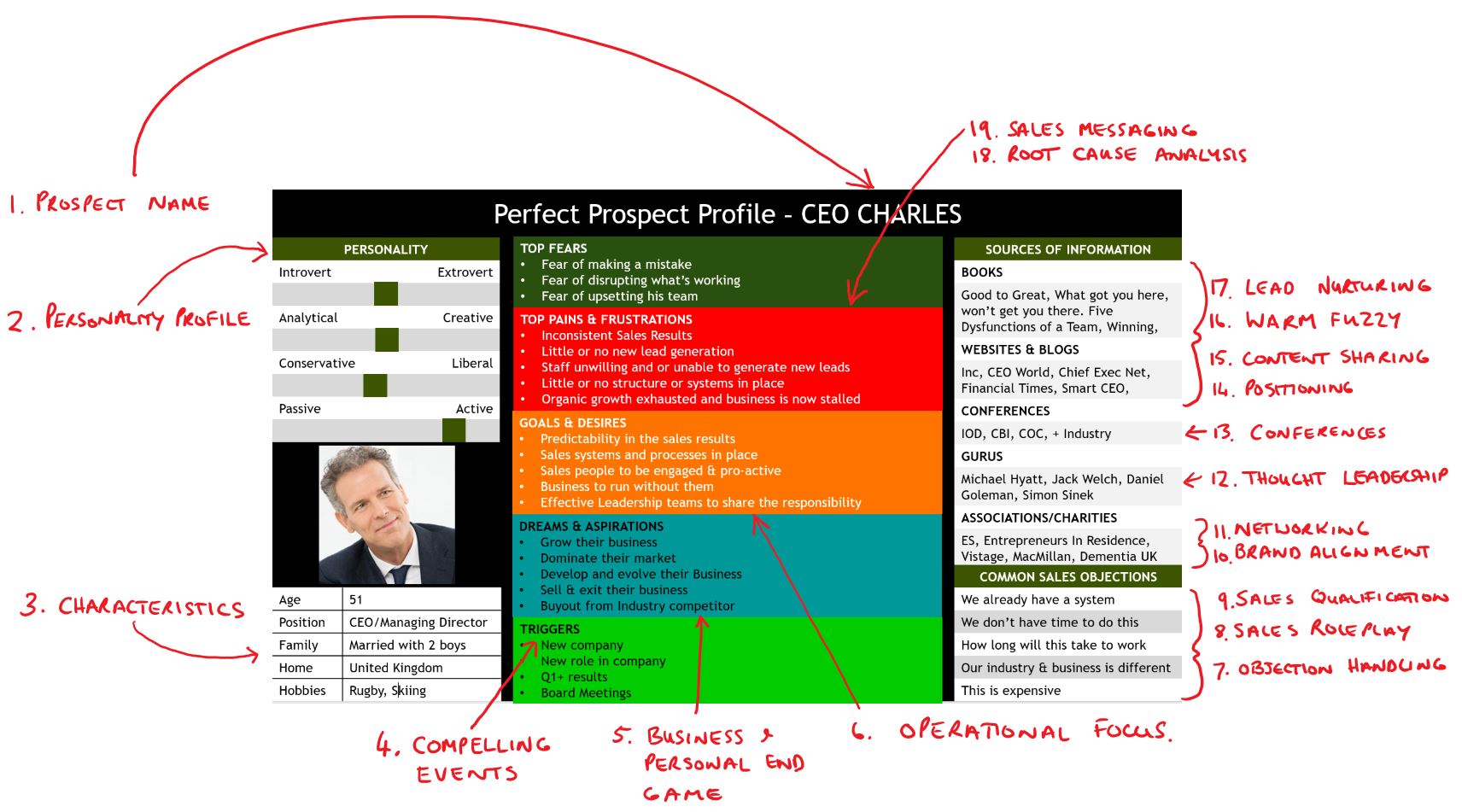
This Prospect Profile Template helps to identify the top 20 characteristics of the prospects most likely to buy your products/services.

Why is a Perfect Prospect Profile Template important?

If you are trying to sell to everybody then in reality you will end up selling to nobody. Therefore this prospect template goes deeper and wider than traditional marketing personas, as it contains specific information to help and coach sales people.

Sales Prospect Value Calculator

B2B Sales tools - Prospect Value Calculator
B2B Sales tools – Prospect Value Calculator

What is a Sales Prospect Value Calculator?

A prospect Value Calculator helps you identify the key metrics by which a prospect measures the value of your products or services.

Why is a Sales Prospect Value Calculator important?

The Prospect Value Calculator is an essential tool for identifying and building the best messaging around your value proposition. Once captured this information can be adapted for use in telephone calls, emails, networking in fact every touch point that sales people have with prospects and clients.

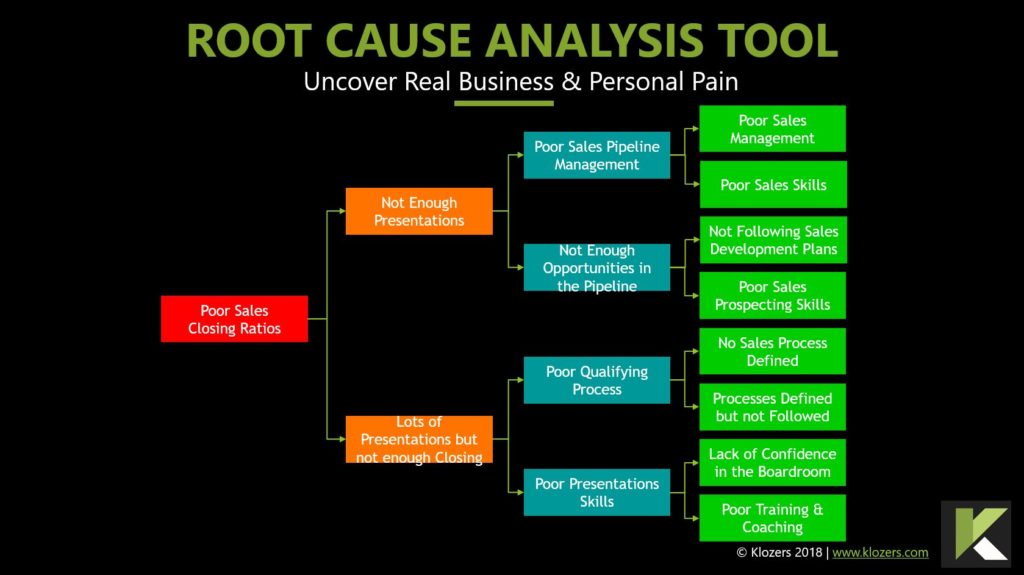
Root Cause Analysis Template

Sales Tools - Root Cause Analysis Template
Sales Tools – Root Cause Analysis Template

What is a Root Cause Analysis Template?

Our Root Cause Analysis template helps identify the most important questions to ask prospects to uncover their business pain.

Why is a Root Cause Analysis Template important?

Root Cause analysis is the foundation of the Consultative Sales Process and is essential tool for discovering the best questions, the best order for those questions and how to ask them.

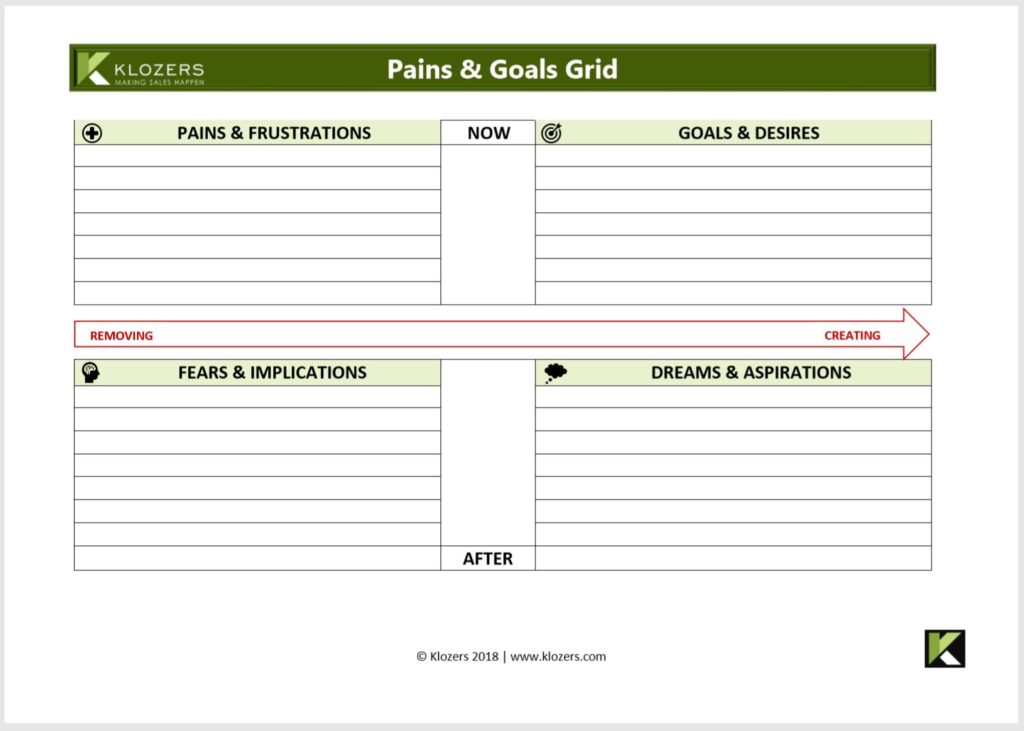
Prospect Pains & Goals Template

B2B Sales tools - Prospect Pains & Goals Template
B2B Sales tools – Prospect Pains & Goals Template

What is a Prospect Pains & Goals Template?

A Pains & Goals Template identifies the prospects business pains, their goals and desires, their fears & limitations and their dreams & aspirations.

Why is a Prospect Pains & Goals Template important?

The Prospect Pains & Goals template is an essential tool for building messaging and sales campaigns from your value proposition. In addition it provides sales people with an insight to the real thoughts and feelings of their prospects.

Sales Battlecard Template

Sales Tools - Sales Battlecard
Sales Tools – Sales Battlecard

What is a Sales Battlecard Template?

A Sales Battlecard template is a one page flyer that is used to clearly demonstrate the key points of differentiation between your product/service and your competitors.

Why is a Sales Battlecard Template important?

Sales Battlecards are typically used as a “leave behind” after a sales meeting with a prospect. Most importantly they are used for training to help sales people develop both product and industry knowledge.

Sales Negotiation Worksheet

Sales Tools - Sales Negotiation Template
Sales Tools – Sales Negotiation Template

What is a Sales Negotiation Worksheet?

A Sales Negotiation Worksheet is a template used to identify the vendor and the buyers goals, criteria, trades & concessions. In addition the template includes both the vendors BATNA’s (Best Alternative To No Agreement) and the prospects.

Why is a Sales Negotiation Worksheet important?

As the saying goes “In life you don’t get what you deserve, you get what you negotiate”. This is simply a must have in terms of planning and preparing for any sales negotiation.

Client Case Study Template

Client Case Study Tool
B2B Sales tools – Client Case Study Tool

What is a Client Case Study Template?

A Client Case Study template is a one page template used to gather the key information from any successful implementation of your product or service.

Why is a Case Study Template important?

Case Studies are one of the best ways to build trust, demonstrate tangible results and generate new business. Furthermore once the information is gathered using the template you can use it to create content in multiple formats such as presentations, proposals and sales campaigns.

Preparing to Sell Checklist

Preparing to Sell Checklist
B2B Sales tools – Preparing to Sell Checklist

What is a Preparing to Sell Checklist?

This checklist identifies the minimum “must have” information that every sales person needs to know, understand and memorise before speaking to any potential customers.

Why is a Preparing to Sell Checklist important?

Given how much money companies spend on marketing to simply get sales people in front of customers it’s vital to maximise those meetings. Whether you are on-boarding new sales people or looking to upgrade your existing sales teams skills this will help.

Consultative Selling Process

Consultative Sales Process

What is a Consultative Selling Process?

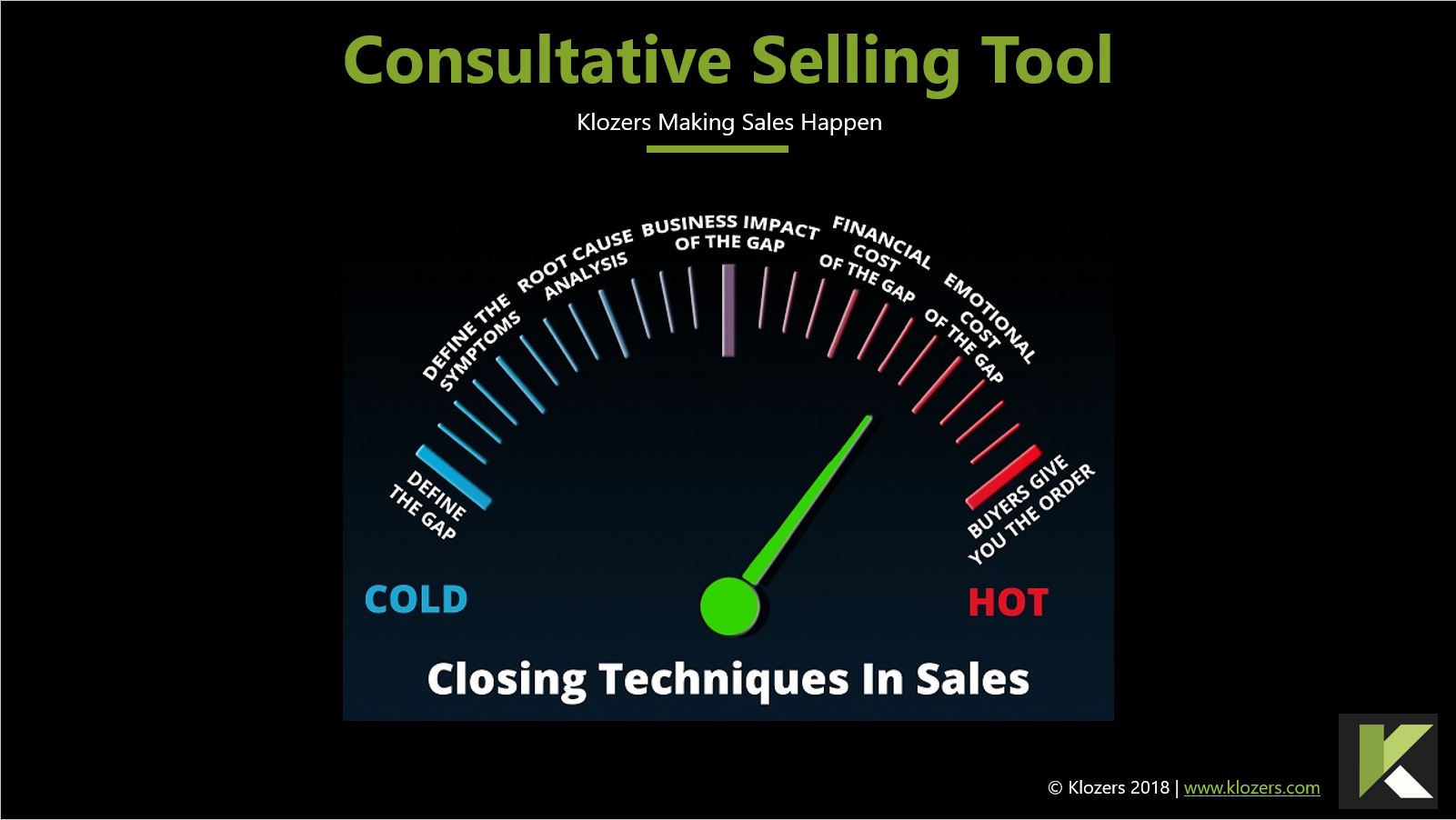
A Consultative Selling Process is a sales methodology based on asking prospects specific questions in order that they themselves can determine if there is any need for what the sales person is selling.

Why is a Consultative Selling Process important?

A true consultative sales process helps the prospect uncover their unique personal reasons for buying which are always the most powerful reasons. This is an essential part of modern selling, especially complex solution sales.

Time Management Tracker

B2B Sales tools - Time Management Tracker File
B2B Sales tools – Time Management Tracker File

What is a Time Management Tracker?

A Time Management Tracker records the planned time versus the actual time throughout the working day.

Why is a Time Management Tracker important?

A Time Management Tracker is an essential tool for increasing productivity and identifying any distractions that may occur whether genuine or not.

Meeting Notes Record

B2B Sales tools - Sales Meeting Notes Record
B2B Sales tools – Sales Meeting Notes Record

What is a Meeting Notes Record?

A Meeting Notes Record captures all the relevant information when a sales person meets with a prospect or client.  This template includes question prompts to help the sales person remember the most important questions they need to ask.  In addition the template includes the ability to record both DiSC and the Primary Sensory Dominance of the prospect.

Why is a Meeting Notes Record important?

Recording and keeping accurate records is a vital part of the sales process.  Furthermore failing to take notes in a sales meeting sub-consciously tells the prospect you are either unprofessional or simply not interested.

This content is available for FREE
download in the Sales Playbook

Get Started