Why Non “Salesy” Sales Training for Consultants Works

Sales Training for Consultants

In this article we will cover...

There’s a new way to deliver sales growth…

Don’t buy Sales Training until you’ve watched this video

1. Why Being Salesy Doesn’t Work for Consultants

Being Salesy is forcing your beliefs and opinions on why someone should buy a product or service from you. This rarely works because the approach is very off-putting for the person receiving on the receiving end and in most cases damages the Consultants personal brand in addition to the brand of the business.

Being Salesy clashes with our personal values which are the unwritten rules that guide the way we live and behave. When we are living and acting in congruence with our personal values people are the most productive and the most successful which is why being “salesy” doesn’t work for consultants or anyone else for that matter.

Consultants are not Sales People, they are experts in their chosen field and any sales training should be bespoke and reflect and leverage that expertise.

2. Selling Tips for Consultants Who are Introverts

Roughly one third of the population are introverts which means they are more likely to be uncomfortable around other people whether they are selling or not.

Introverts can make great salespeople as they are usually good listeners, good at building relationships and have high level of self awareness.

There are some practical steps that Consultants who believe themselves to be introverts can take to to help themselves enjoy the experience of selling more.

People who are introverts have a “self-as-story”. This self story reinforces negative beliefs such as they are introverted, not good with people and cannot sell.

It’s important to develop a new and believable “self-as-story” with more positive beliefs such as “I am not an introvert I am an Ambivert”.

Ambiverts are the third of the population who sit in the middle between introverts and extroverts.  “I am good with people and I enjoying spending time helping others.”  

Most human beings are by nature kind and well-meaning so this is again a believable statement.  

“My job is not to sell but instead to be of service, help people and create the right conditions for someone to buy; if they want to.” 

3. Sales Training for Consultants

We often are asked to train what we call Non-Selling Professionals in new selling techniques and these are people in a business where the sales function is not their primary role, they could be Consultants, but equally, they could be Lawyers, Engineers, Analysts, Accountants, Developers & Architects etc.

In most cases when we first meet them they proclaim that they could never be a salesperson – the reality is that humility is one of the traits that means that they absolutely could be a great salesperson.

Unfortunately, what’s holding these people back is that the publics’ perception of a salesperson is largely negative and the type of adjectives the public use, when asked to describe a salesperson, are words like “liar”, “selfish”, “talks too much”, “money-grabber” and “annoying”.

The reality is that most salespeople are nothing like this, however, sometimes we pay the price for those that go before us and unfortunately there are, albeit a small number of salespeople, who are like that. If you think about it though, those traits are hardly a recipe for success.

4. How to get sales leads without picking up the phone

After spending years trying to train and coach consultants, engineers and technical people from every different industry, we came to the realisation that nothing we could ever do would motivate them to pick up the phone and make a cold call consistently.

If we showed them how to make a cold call that won them a $1 million dollar order they would still prefer to come in the next day and work at their desktops. These same people, however, would be more than happy to take inbound calls and talk to strangers who had called them.

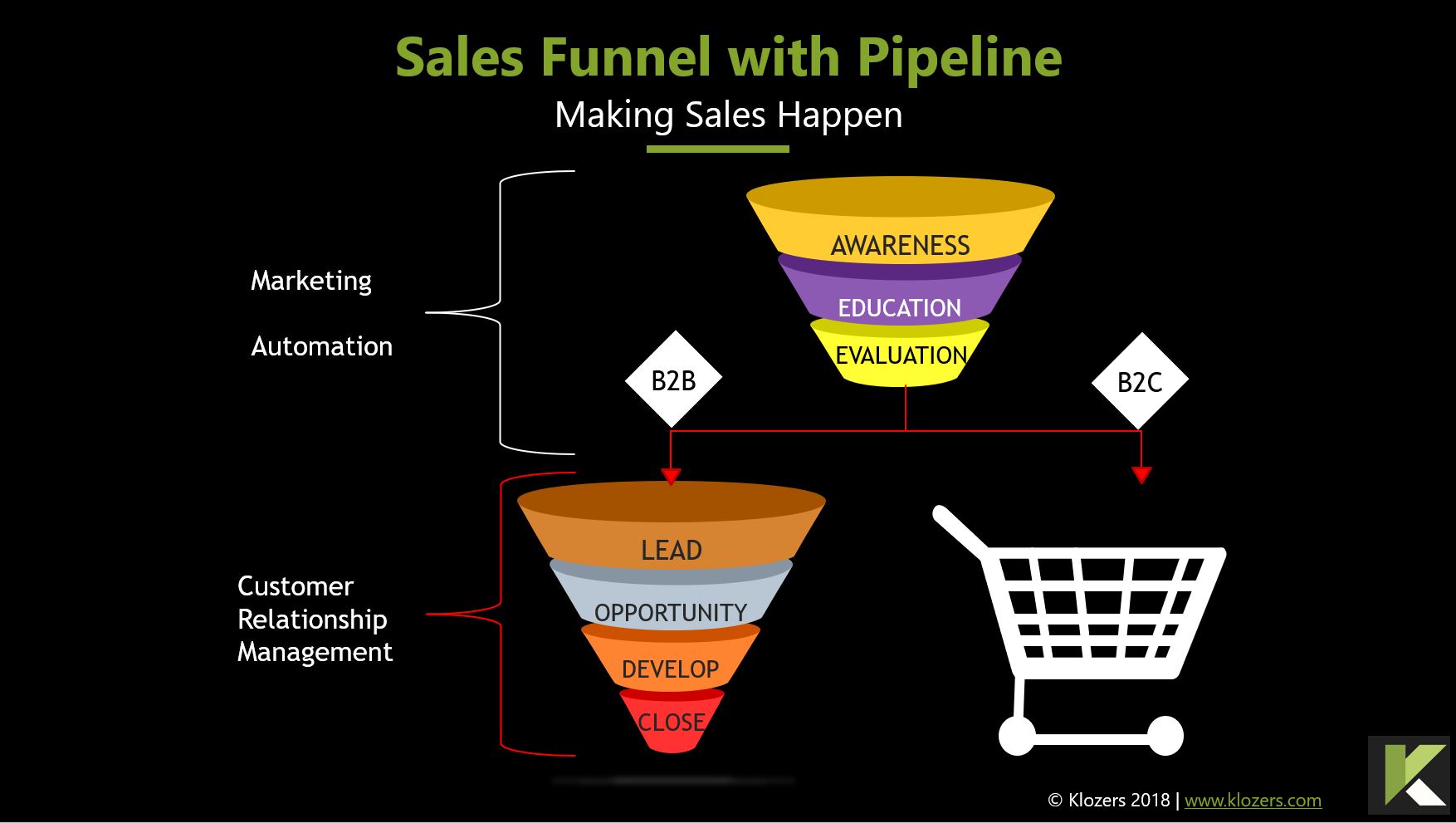
The answer to the challenge was easy then – get their phones to ring and get their email to ping. If you talk to anyone in B2B marketing they will probably say quite rightly that generating a consistent flow of inbound leads is not easy.

We worked with our own team to develop a new strategy around this and worked to implement this strategy into our own business to prove it works and to gather some good data.

What is this strategy and can it work for me? In simple terms the strategy involves leveraging the knowledge and expertise of the consultants, and position them and their company as SME’ s (Subject Matter Experts). We then help them develop thought leadership content that buyers were interested in.

We then help them take that knowledge and place it on their website in a way that can be easily found and ranked on Page 1 of Google – just the same way you found this article. This then creates a steady stream of self qualified sales leads who have already bought into the expertise of your consultants and keen to engage further.

What’s more unlike pay per click ads these articles create a steady flow of new leads that fuel future growth at no cost. Once the content is published that’s it.

No cold calls, no outbound phone calls of any sort. In fact, in some cases our clients are now closing deals via email.

If this approach interests you and you would like to learn more please contact us for further details.

Back to Table of Contents

5. Training Sessions for Sales Consultants

In most cases sales training for Consultants is delivered over 1 & 2-day courses. This can work however in our experience, Consultants can immediately feel defensive if they are told they need training as they are nearly always mature adults and often have had a negative experience from previous Sales Training programmes they have attended.

The best way around this is to choose sales training for Consultants that is specifically designed for Consultants and content that highlights the skills and experience of the Consultants. The trainer should have experience of training a wide variety of non-selling professionals and be able to address the specific learning styles and needs of this type of audience.

What can be equally productive is running workshops where the Consultants get to choose what they feel would benefit them most. This way they feel more empowered as they have chosen the content and by definition, the content should be more targeted and relevant.

The only drawback to this is that this requires an experienced facilitator/trainer who knows the answers to the Consultants Sales Challenges from memory and can articulate them without a PowerPoint. If the trainer has to stop the session to look up the answers in a textbook or slide deck they will lose all credibility.

These workshops should have defined outcomes with action plans to make sure they are more than just a talking shop and deliver real impact for the Consultants and the company.

6. Sales Training Tips for Sales Consultants

Most people have a common misconception that selling is all about closing and forcing people to make decisions that they might not want to make. In reality, this couldn’t be further from the truth as the most successful salespeople simply don’t do this because they know it doesn’t work and in many cases destroys any trust or relationship that they have with the prospect.

In most cases, traditional Sales Training for Consultants won’t work because the techniques they use go against the Values & Beliefs of the Consultants. No matter how good the trainer is unless the content is based on actions that are congruent with the beliefs and values of the Consultant it will simply be a waste of everyone’s time and money.

What will work however is if the training is designed to position the Consultants as Trusted Advisors to their prospects and the sales activities are aligned with positioning them as Thought Leaders in their Industry.

The following sales tips help Consultants & Non-Selling Professionals understand that Professional Selling is more about building trust and relationships than it is about “Closing” prospects.

To sell more consultants should focus on building TRUST

T = Time
R = Reliability
U = Unselfishness
S = Soundness
T = Truthfulness

Time

Set Goals and manage your own time – be effective, not busy. Be respectful of your clients’ time, turn up on time to meetings, prepare before meetings to get the most from them. Spend time with clients to help them. Focus your time on your best prospects.

Reliability

Get a plan and stick to it, sales plans, communications plans and account plans. Many sales are lost when you are back in your own office. Respond to every email within 24 hours, manage expectations and take ownership of problems and follow up.

Unselfishness

Listen, empathise and give, yes give, as in Emersons Law of Compensation. Stop trying to sell and start trying to help, have conversations, not sales pitches. Recognise when there is no fit and walk away – never force the sale. Pass on referrals and give recommendations.

Soundness

Become an expert in your field. Be the “go-to” person in your industry that people refer others to. Create your own personal development plan and learn as much as you can about yourself, your customers and your customers’ customers. Mentor, coach and help others.

Truthfulness

Be true to yourself. Have those difficult conversations with family, friends, colleagues and customers. Losing some sales, losing some battles will help you win the war. Nurture and grow your integrity, self-respect and self-belief. Be authentic and true to yourself.

These Sales Techniques are not glamorous, and they might not produce an overnight transformation however they do work. Together you will see these five areas form the basis of TRUST. Selling without trust may be possible, but it is extremely hard work and will, without doubt, limit your success. In business, the antithesis of trust is a risk, and every Buyer, every CEO, every organisation will pay more for a solution that is perceived to mitigate risk. Building and sustaining TRUST is the foundation of Mastery in sales, although many of our clients have asked us to help embed these “selling techniques” throughout their organisation, not just sales.

7. Sales Training for Professional Services

Selling Professional Services can be very different from selling as a Consultant because in many cases when you are selling Professional Services the salesperson is the product.


In B2B more so than B2C, buyers rarely purchase anything from a salesperson they don’t like or trust. There are exceptions to this when the Brand Power of the product or service is very strong, for example it doesn’t take the salesperson of the year to sell Microsoft Technical Services because the power of the Microsoft brand has pre-sold most people before they go into the sales meeting and the product is Microsoft, not the Consultant.


For Consultants who do not represent a big brand like Microsoft, Deloitte, or Bain & Co, in most cases they are the brand, they are the product, and they have to work even harder to win the sale.

In many cases what is more productive for Consultants is to stop trying to sell and focus all their energies on trying to help the prospect.

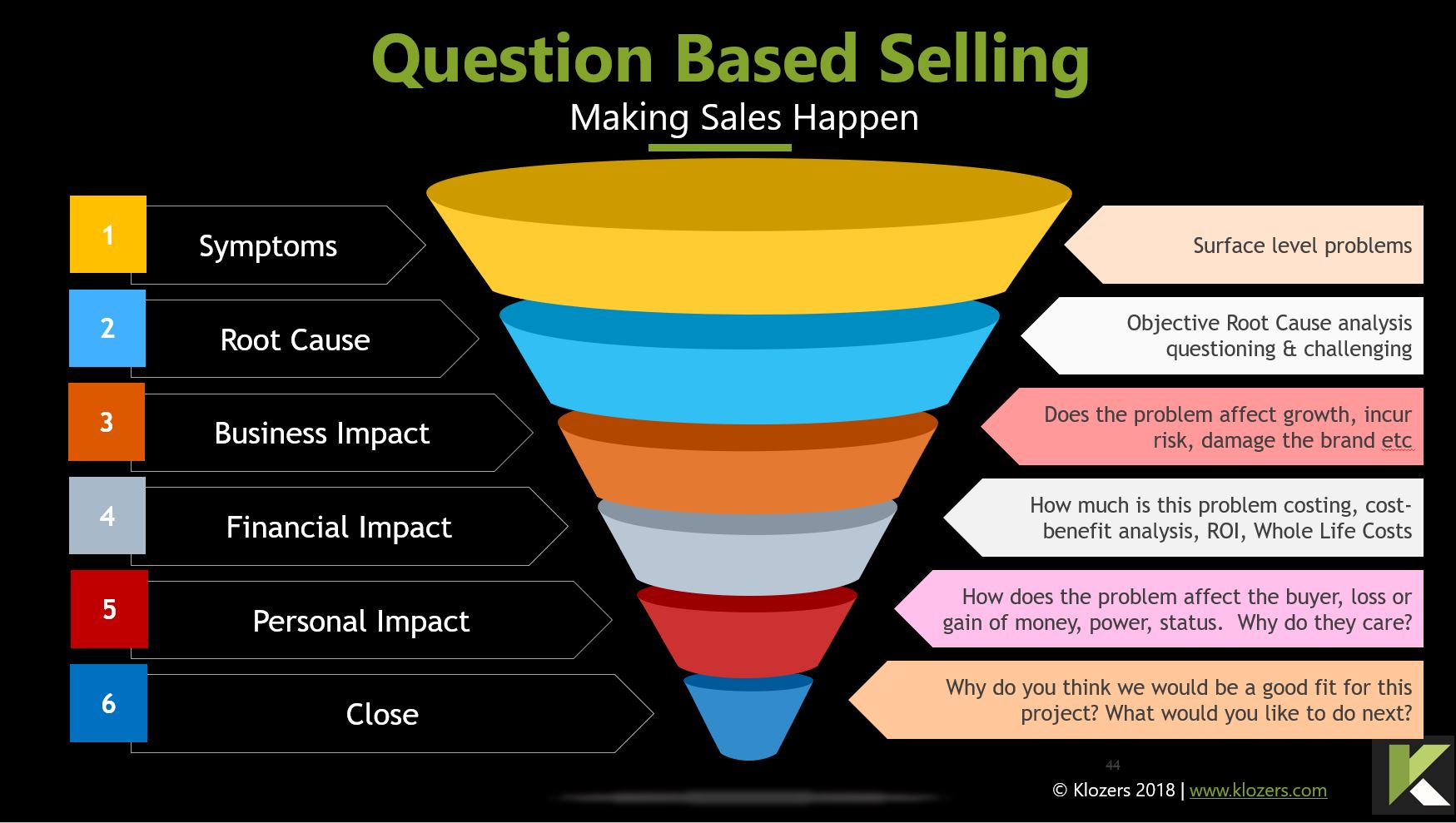
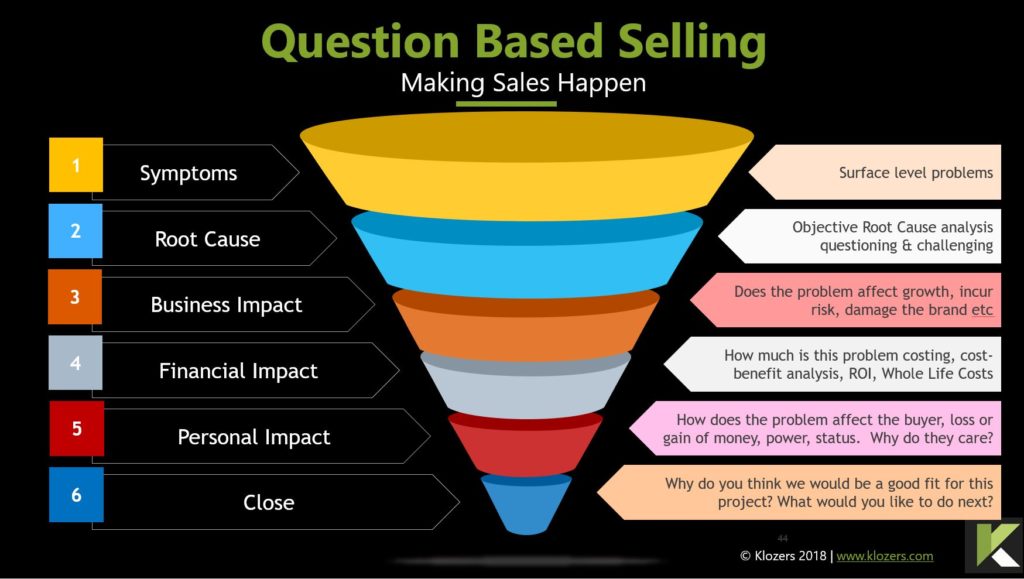
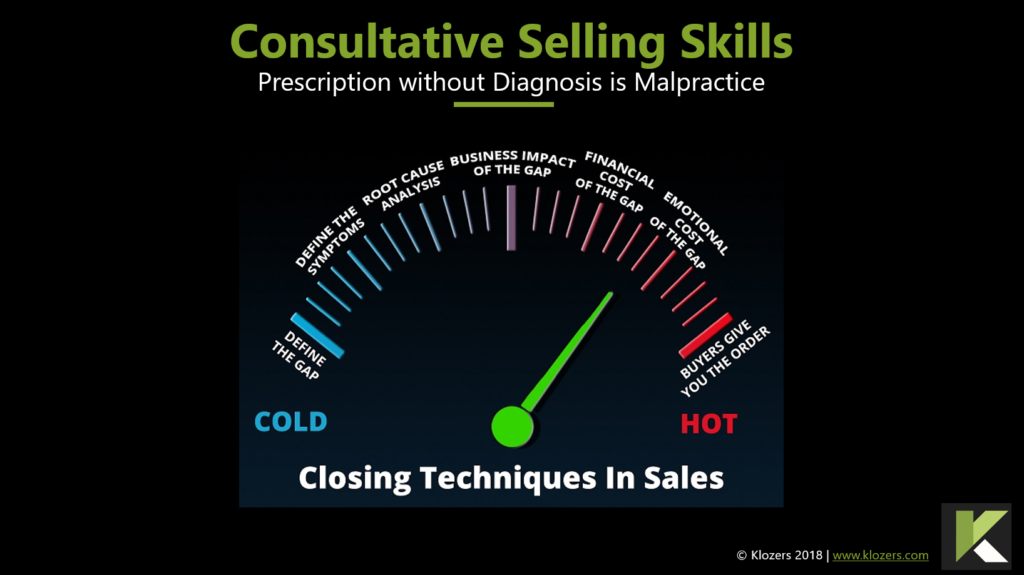
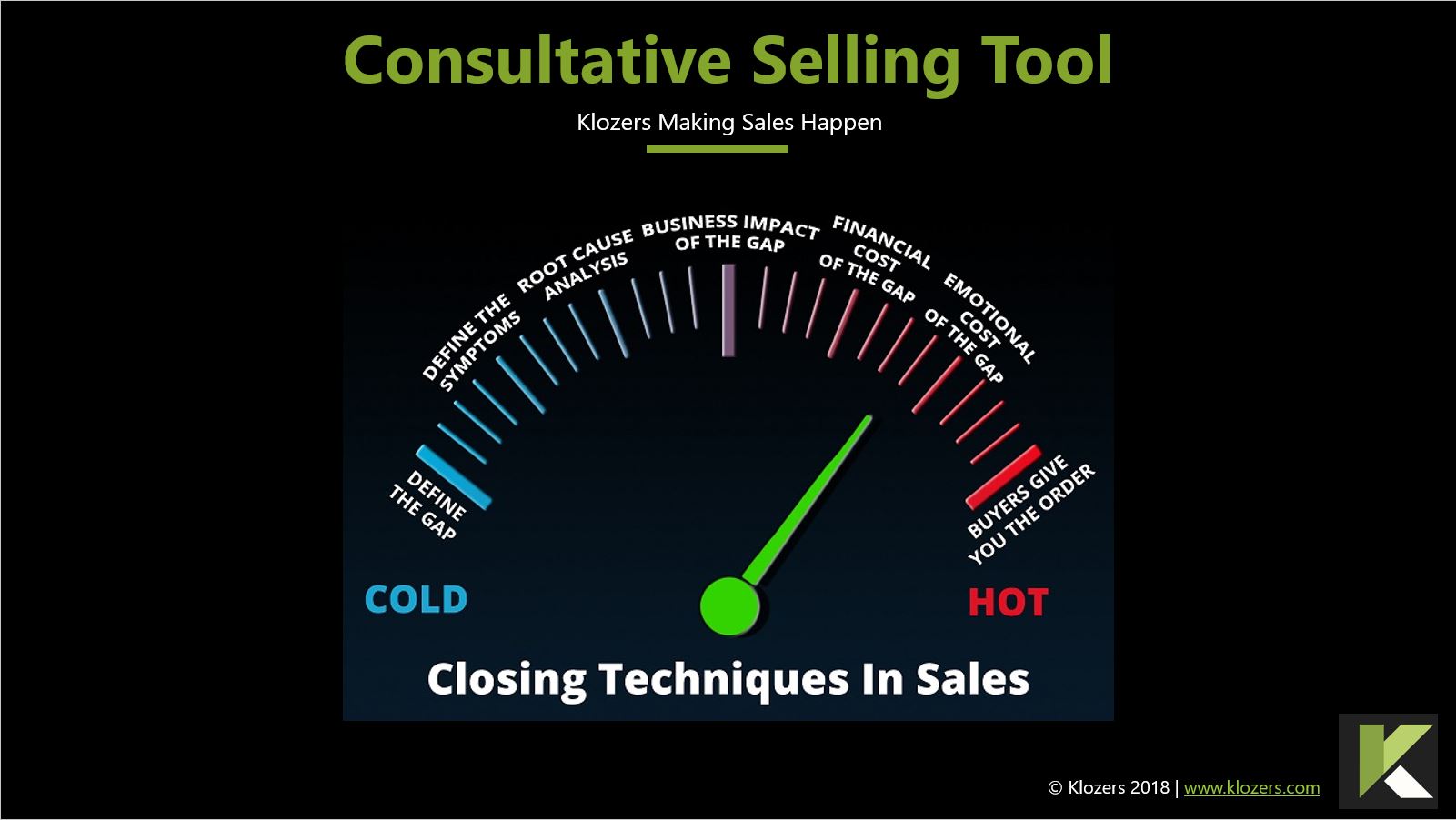
We recommend a Consultative Sales Approach which focuses the sales conversation around 5 critical questions.

  1. What are the symptoms of the business problem?

Prospects find it easier to identify symptoms however it’s the role of the expert to ask questions and dig deeper.

  1. What is the Root Cause of the Problem?

The Consultant should use Root Cause Analysis techniques to identify the underlying causes of the problems.

  1. How is this problem impacting the business?  

These questions should focus on what way the problem limits growth, profits or damage the brand in any way.

  1. Financial Impact

The consultant and the prospect need to do a basic cost-benefit analysis to ensure the client will see a return on any investment they make.  

  1. Personal Impact

Lastly, the Consultant needs to uncover any personal motives or drivers that are important to the client.

Often by simply asking these questions, the Consultant will get the opportunity to position themselves as the expert at the same time building rapport and trust with the prospect. 

Sales Training for Consultants

8. Sales Training Courses for Consultants

We have training and coaching courses available to help your consultants overcome their sales challenges.

We deliver our sales training and coaching via our Online Sales gym so we can provide support throughout and after the training period.

This helps you embed the new skills and sales behaviours in your organisation to maximise the impact of our training.

You can learn more about our Sales Training for Consultants via the following articles:

Consultative Sales process here

Consultative Selling Skills Course

Bespoke Sales Training

Sales Training for Consultants

Expert Guide to Fix Your Sales Pipeline FAST

B2B-Sales-Pipeline
Pipeline and route to market

Sales Pipeline: How to Build and Manage Opportunities That Can Actually Close

A sales pipeline is the sales team’s working view of the opportunities it is actively trying to win. A useful pipeline is not the one with the biggest headline value. It is the one where opportunities deserve to be there, stages are supported by evidence and the next action is clear.

By Iain Swanston, Founder, Klozers

6 minute read
What is a sales pipeline?

A sales pipeline is a structured view of individual sales opportunities that are being actively managed towards a buying decision. It normally records the opportunity, value, stage, owner, expected timing and next action. Unlike a sales funnel, which measures conversion across groups of leads and prospects, a pipeline helps salespeople decide what to do with specific opportunities.

On this page
Key takeaways
  1. A large pipeline is not necessarily a strong pipeline. Qualification and buyer evidence matter more than headline value.
  2. Opportunities should progress because something meaningful has changed in the customer’s buying process, not because the salesperson feels positive.
  3. Removing an opportunity that will not close does not weaken the pipeline. It reveals that the pipeline was already weaker than reported.
  4. A pipeline concentrated in old late-stage deals should trigger investigation into qualification, access to decision-makers and buyer progression.
  5. A stronger pipeline gives salespeople more credible alternatives. That can improve their negotiating position, although pipeline strength alone does not determine negotiation outcomes.

What makes a good sales pipeline?

A good pipeline contains qualified opportunities that justify sales time. Each opportunity should have enough evidence to support its current stage, a clear next action and a credible reason to believe the customer is still progressing towards a decision.

This is different from trying to make the CRM look full. A pipeline can show impressive coverage while containing old opportunities, weakly qualified prospects and deals where the seller has had no meaningful customer interaction for weeks.

Do not judge pipeline health by how full the CRM looks. Ask whether the opportunities deserve to be there.

The wider question of where opportunities should come from sits in our go-to-market strategy hub. This page starts once a genuine sales opportunity exists.

How should sales pipeline stages work?

Pipeline stages should help the salesperson and manager understand what has actually happened in the buying process. They should not simply record seller activity.

For example, sending a proposal does not automatically prove that an opportunity deserves to move forward. The customer may not have agreed the problem, involved the right stakeholders, confirmed the decision process or validated the proposed solution.

A practical approach is to define what must be true before an opportunity enters each stage. Depending on your sales process, that might include evidence that the problem and required outcome are understood before moving from discovery, or evidence that the relevant stakeholders have validated the solution before moving into commercial discussions.

Illustrative sales pipeline showing evidence required before an opportunity progresses
Illustrative stages only. The principle is evidence before progression, not a universal Klozers pipeline model.

The labels and criteria should reflect your own market and buying process. What matters is that the team uses the same definitions and that progression is based on evidence rather than optimism.

Why do salespeople hold on to deals that are unlikely to close?

There is rarely one reason. Poor qualification, optimism, sunk effort, unclear stage criteria and reluctance to record a loss can all keep weak opportunities open.

There is also a practical pressure that managers should recognise. Removing an opportunity makes the salesperson’s reported pipeline smaller. If there are not enough genuine opportunities underneath it, disqualifying the deal exposes the need to create new pipeline.

That can create a temptation to keep marginal opportunities alive. Continuing to follow up an existing deal can also feel easier than returning to prospecting. We treat this as a behavioural risk to investigate, not as an assumption about every salesperson.

Removing a dead deal does not create the pipeline gap. It exposes it.

This is why pipeline coverage is only useful when the opportunities included in the calculation are genuinely qualified. A large multiple of target provides little reassurance if a significant part of the value no longer meets the agreed qualification and stage criteria.

We do not recommend a universal pipeline coverage ratio. The appropriate level depends on your conversion rates, sales cycle, opportunity definition, deal mix and timing.

What does the shape of your sales pipeline tell you?

The distribution of opportunities across stages can highlight where to investigate, but it does not prove the cause.

If a large proportion of deals remain near the end of the pipeline without closing, ask three questions. First, should those opportunities still be qualified? Second, are salespeople working with the people involved in the decision rather than relying on a contact who cannot progress it? Third, has the customer actually moved forward, or has only the seller completed another activity?

Late-stage congestion can have other causes, including changes in customer priorities, internal approval, procurement, funding or a buying process that has paused. The pipeline should prompt investigation rather than automatic diagnosis.

Diagnostic comparison of healthy, inflated and late-stage congested sales pipelines
Pipeline shape suggests where to investigate. It does not establish a single cause.

How does pipeline quality affect sales negotiation?

A strong pipeline does not guarantee a strong negotiation. Negotiation outcomes also depend on customer value, alternatives, differentiation, authority, preparation and skill. But pipeline quality can affect the salesperson’s position.

If one opportunity represents most of a salesperson’s realistic chance of making target, there is greater pressure to protect that deal. That can make it harder to walk away from poor terms or resist unnecessary concessions.

Negotiation research supports the underlying principle. Harvard Law School’s Program on Negotiation describes a strong BATNA, the best alternative to a negotiated agreement, as a source of bargaining power because credible alternatives improve the ability to reject an unattractive agreement.

In sales, a healthy pipeline can contribute to those alternatives. This is an inference from negotiation research rather than evidence that pipeline size directly determines sales negotiation outcomes.

External evidence: Program on Negotiation at Harvard Law School: BATNA and sources of negotiating power.

Pipeline creates options. Options can strengthen your negotiating position.

Is sales pipeline the same as sales forecast?

No. Pipeline value is the value of active opportunities. A forecast is an assessment of what is expected to close within a defined period.

Simply multiplying each opportunity by a standard stage probability can create a weighted pipeline, but that should not be confused with certainty. A £100,000 opportunity shown at 50% does not mean £50,000 of revenue will arrive.

Accurate opportunity data still matters. In a Klozers survey of 40 B2B sales leaders across 15 countries, 77.5% rated forecasting as highly critical while only 20% reported full confidence in forecast accuracy. This research studied sales leaders and forecasting, not individual salesperson pipeline behaviour.

The practical lesson for this page is narrower: if stage, value, timing and qualification are unreliable, any forecast built from that data starts with a weak foundation.

How should salespeople manage their sales pipeline?

  1. Requalify opportunitiesDo not assume a deal remains qualified because it qualified when it entered the pipeline. Customer circumstances change.
  2. Check the stage evidenceAsk what has changed in the customer’s buying process and whether that evidence supports the recorded stage.
  3. Record the next actionAn active opportunity should have a meaningful next step. Repeated seller follow-up without customer commitment is not the same as progression.
  4. Remove opportunities that no longer qualifyDo not preserve reported coverage by retaining deals that no longer justify sales time.
  5. Respond to the real gapIf cleaning the pipeline leaves too little genuine opportunity, address prospecting and opportunity creation rather than putting dead deals back into the number.

For the wider planning connection, see how to write a sales plan. SaaS teams looking specifically at recurring-revenue funnel structure can use our SaaS sales funnel guide.

Sales pipeline FAQs

What should be included in a sales pipeline?

Include genuine sales opportunities that meet your agreed qualification criteria. Record the information needed to manage them, such as value, stage, owner, expected timing and next action.

There is no universal review frequency we recommend. The cadence should reflect sales-cycle length, deal velocity and management needs. The important point is that stale information is corrected before it drives decisions.

No. Leads belong upstream until there is sufficient evidence that a genuine sales opportunity exists. The exact qualification threshold should be defined by the business.

Investigate whether opportunities are genuinely qualified, whether stage progression is supported by buyer evidence, whether deals are ageing without movement and whether the team has access to the people involved in the decision.

No. A funnel measures aggregate conversion across groups of leads and prospects. A pipeline manages individual active opportunities.

A useful pipeline tells you what is real, what should happen next and where new opportunity is required.
Need help improving the quality of your sales pipeline?

We will start with what already works, define the gaps and build the workshop around your live opportunities.