
Sales Training Case Studies
Real B2B sales training results from real client teams. Every programme below was built from the client’s own best practice and applied to their live deals, in person or online, not delivered from slides. Filter by industry to find yours.
What these sales training case studies show
These are real B2B sales training case studies from Klozers client engagements, across manufacturing and industrial, technology and SaaS, professional services, distribution, and channel or dealer networks. Each programme is bespoke: built from the client’s own best practice and applied to their real deals rather than delivered from slides, in person or live online.
The results on this page are the clients’ own reported outcomes. They range from a 400% increase in sales pipeline and a 27% rise in new deal creation to six-figure deals closed and new pipeline worth half of a company’s annual turnover, most of it inside a 90-day window.
Measured outcomes, not feedback scores.
Teams we have trained.


Built on what already works in your team.
Built from your best practice
We start from what your top performers already do, then add structure only where there is a genuine gap. Experienced teams recognise themselves instead of resisting an imported method.
Applied to real deals, not slides
Every programme is worked on the team's own live accounts, so the skills transfer to the pipeline rather than staying in a workbook.
We practise what we teach
We only teach what we use in our own business, which is why our trainers will make live cold calls in front of the room when it counts.
Sales training case studies in full.
James Latham PLC: sales leadership and transformation programme
The UK’s largest distributor of timber and panel products, around £400m turnover across 14 regional depots.
James Latham PLC is the UK’s largest distributor of timber and panel products. The business is organised around two divisions, Panel Products and Timber Products, and sells through a network of 14 regional depots. Each depot runs on its own profit-and-loss basis and carries responsibility for its region, customers and product development. Group turnover is around £400 million. The company holds a strong market reputation built on product quality, operational excellence and service reliability, supported by its Lignum Service Charter. At the time of the engagement, James Latham had announced a £45 million investment in a new national distribution centre to improve routes to market, customer service and internal distribution efficiency.
As the saying goes, good is the enemy of great. Lathams had built a highly successful business on operational excellence, and sales had become predominantly reactive rather than proactive. The business was strong at responding to inbound enquiries but struggled to create them consistently. Leadership described a period of high inbound volume during COVID that reinforced reactive habits, and a subsequent struggle to return to proactive selling when the market turned. In a rising market the depots performed well. In a falling market the gap showed.
Sales capability had not been developed. The leadership team admitted that little formal sales training had taken place in around ten years, and that product training had substituted for it. Depot teams were product experts rather than trained sellers, and salespeople were routinely pulled into internal, reactive work, described internally as depot life getting in the way. The account base compounded the problem. Between 6,000 and 7,000 accounts were dormant. The CRM held names and numbers but little commercial intelligence, so those accounts could not be segmented, tiered or targeted. The business also carried a target of 60 new trading accounts per month, and estimated a marketing spend of £1.2 million per year that it struggled to attribute to any revenue figure.
A new £45 million distribution centre changes capacity, not demand. Without proactive selling, the investment would carry cost without recovering it in volume. Growth ambitions ran from £400 million toward £500 million and beyond. Dormant accounts, unconverted market share and unmeasured marketing spend represented revenue already available to competitors. Doing nothing meant paying for growth infrastructure while the sales behaviour that fills it stayed unchanged.
Klozers began with discovery rather than content. Stakeholder sessions with the CEO, senior product leadership and HR established what already worked inside the business. The principle was to build from the inside out, codifying existing best practice before adding external methodology, with ownership of all content transferred to James Latham PLC.
The constraint that shaped the design was depot autonomy and reactive pull. Depots run their own regions and their own numbers. Salespeople taken off site stop generating cash, and reactive work reliably reclaims anyone left in the building, so long residential programmes were not viable. The programme was built as single-day workshops, spaced roughly monthly, cascading from the top down so that each layer was managed by a layer already trained. Delivery travelled to the regions rather than centralising, with the leadership cohort meeting in London, Leeds and Hemel Hempstead. Commitments between workshops were work-based and made in the depot, not in the classroom. A second constraint shaped measurement: the CRM could not segment dormant accounts, and an IT dependency would have stalled the programme, so Klozers built the measurement framework from depot dashboards already in use rather than waiting for a new system.
The architecture connected four layers: a Commercial Leadership Programme of six one-day workshops for around 19 site, regional and senior leaders running March to August 2026; a Sales Management Programme of four one-day modules; a Sales Team Programme for around 59 salespeople; and an Internal Staff Programme for around 69 internal sales and customer service staff. Content was structured around five commercial pillars and a Latham-specific TIMBER framework covering target, intelligence, messaging, buying process, engagement and relationship. Commercial decisions were held to a single standard: one percent of £400 million is £4 million, and each workshop had to produce a decision capable of moving the business by that amount.
Across all 14 regional depots the programme drove increases in active trading accounts, reactivation of dormant accounts, customer wallet share and sales coaching hours by sales managers, with revenue up in 12 of the 14 depots
James Latham PLC entered the programme as a business that sold well when the market came to it, and is building the capability to sell when the market does not. The engagement shows that commercial capability in a depot business is built through the management line rather than the training room, and that measurement can start from what a business already has rather than a system it has yet to buy. James Latham now has an agreed measurement standard, a leadership group holding itself to commercial decisions, and a sales culture charter written by its own leaders.

#SalesTransformation
#SalesLeadership
#B2BSales
#SalesCulture
#SalesManagementTraining
#AccountGrowth
#MarginDiscipline
TikTok Shop: sales skills workshop
TikTok Shop’s UK seller acquisition and account management team, across beauty, FMCG, fashion and home.
TikTok operates a UK seller acquisition and account management function, working with e-commerce brands that sell through TikTok Shop. The team sells across several verticals, and four were identified as representative of its ideal client profile: beauty, fast-moving consumer goods, fashion, and home, living and electronics.
TikTok had a young sales team who in many cases had never been trained on B2B sales outside of TikTok’s own internal training. As a team they were low in confidence and struggling with outbound activity and conversion rather than with product knowledge. Sales activity was inconsistent, and in many cases the team defaulted to email rather than picking up the telephone and talking to prospects.
Like most technology companies, TikTok had aggressive growth targets that depended on new customer acquisition. Online e-commerce businesses had multiple channel options, and TikTok needed to win market share quickly to drive revenue.
Klozers built a one-day in-person workshop with participant workbooks and a supporting slide deck. The client required the same content delivered twice on the same day, to two separate groups. That split imposed two design decisions: each session had to stand alone in roughly three and a half hours, with no reliance on the other group’s output, and every module had to reach an applied outcome fast, because there was no second day to recover lost time.
The second constraint was vertical spread. Because the four target verticals have different economics, generic scripts would not transfer. Beauty and fashion brands are judged on content-to-purchase conversion, FMCG brands on cost per acquisition, and an affiliate-only seller has different concerns again. Workbook exercises were therefore built to be completed against the participant’s own vertical rather than a single worked example. Content was drawn from existing Klozers intellectual property: the mindset module used the Klozers conceptual and functional model, and the objection-handling module used the Klozers LAER framework, Listen, Acknowledge, Explore, Respond, with the playbook’s five objection categories and their root causes as the diagnostic layer. The trainer made live cold calls in front of the group to demonstrate what had been taught during the day.
On-the-day feedback from the group was described as transformational. While demonstrating the cold-calling techniques the trainer made 15 calls: 11 no answer, 1 a definite no, 2 asking for callbacks from a product expert, and 1 new deal closed on the day. The single closed deal amazed the participants and helped them believe they could do the same.
Klozers only teaches sales strategies and techniques it uses in its own business. That not only gives a deep understanding of what works and what does not, it allows Klozers to demonstrate live to audiences in real scenarios. Sales trainers prepared to cold call live on behalf of their clients immediately win the respect of the room.

#SalesTransformation
#ObjectionHandling
#ColdCalling
#SalesMindset
#B2BSales
#SalesEnablement
#TechnologySales
Husqvarna: bespoke dealer sales simulation
Husqvarna’s Automower robotic mowers, sold through a UK network of independent, multi-brand dealers.
Husqvarna manufactures the Automower range of robotic lawnmowers. In the UK the range reaches end customers through a network of independent dealers who sell in store, install the machines and provide aftercare, including servicing and parts. Many are multi-brand: they stock Automower alongside competing robotic mower brands, and sell those competing brands too. Husqvarna positions Automower as a premium product, resting on a ten-year machine life, ten-year parts availability, a stocked dealer parts channel and local dealer service, and supports the network with a dealer parts portal and periodic dealer events.
Husqvarna surveyed 65 attendees at registration and shared the baseline with Klozers before the event. The pattern was consistent. Dealers were confident in the areas they had been trained in: they could recommend the right model, handle installation and answer product questions. That confidence was not converting into sales. The failures were happening in specific conversations. Deals were dying on price, on competitor comparison, and on customer scepticism about whether robotic mowing was the right choice at all. When challenged on price, dealers dropped into feature-by-feature comparison against cheaper machines, a fight they cannot win, because it moves the conversation onto the competitor’s ground where the cheapest mower is the rational choice. The market had also moved, with lower-cost robotic mowers positioning themselves as good enough for less at price points under a thousand pounds, so customers arrived already carrying competitor messaging.
A dealer who cannot defend a premium price defends it with discount instead, which erodes margin across the network and undermines the premium positioning Husqvarna has invested in building. Every deal lost on a feature-by-feature comparison is a customer handed to a cheaper entrant at the moment they were ready to buy.
Klozers built the programme from the dealers’ own survey responses, not from a standard curriculum, with every scenario drawn from a moment the survey showed dealers were losing. Two constraints shaped the design. The first was the dealers themselves: as multi-brand retailers they sell the competing machines they were being asked to sell against, so any content that attacked a rival brand by name would ask a dealer to argue against a product on their own shop floor. Klozers stripped every competitor brand name out of the material and built the language generically, around the cheaper option and online-only brands, teaching dealers to change the conversation rather than attack a competitor.
The second constraint was the room: the session ran in a lecture theatre, in a single slot, to a mixed audience with a wide spread of selling experience. Using its experience of building and delivering sales simulations, Klozers designed a bespoke competition rather than a workshop. Dealers were grouped into five regional teams, so the rivalry was already there; teams debated each decision on their own devices, locked in one collective answer, and watched the leaderboard update on the main screen. The simulation ran five customer moments, each scored on commercial impact and each followed by a breakdown of why an answer worked, reinforced with objection-handling battlecards and a price-objection handler for the shop floor. The teaching principle throughout was value before product.
On-the-day feedback from both Husqvarna staff and dealers was positive. The Brand Manager said the simulation immediately sparked engagement and discussion rather than being someone presenting on stage. The Dealer Sales Manager said the way the training was delivered opened the conversation up, and one dealer said the training was interactive from the very first minute.
Husqvarna’s investment in a bespoke sales simulation helped make the dealer event both interactive and valuable from a learning perspective. In a competitive environment, the progressive approach of the simulation helped reinforce Husqvarna’s position as a premium brand with its dealer network.

#SalesSimulation
#DealerSalesTraining
#ValueSelling
#PriceObjectionHandling
#PremiumPositioning
#ChannelEnablement
Bray Controls UK Ltd: consultative selling workshop
The UK business of a global industrial valve manufacturer, near Glasgow, growing a valve automation business.
Bray Controls UK Ltd is the UK business of Bray International, a global manufacturer of industrial valves and valve automation, based at Inchinnan near Glasgow. Its established trade is the supply of industrial valves. It also operates a Valve Automation Centre, which designs and builds automated valve and control systems and provides installation, commissioning and UK-based support.
Bray Controls UK had a very successful valve business but needed to expand into valve automation. Customers bought their valves from Bray, then bought the automation that went with those valves from other vendors, and Bray was becoming a line item on somebody else’s project. The sales problem sat underneath the business problem: a valve sale and an automation sale are not the same sale. Valve business can be transactional, price-led, decided by a single contact and closed quickly. An automation sale can run to a nine-month cycle with a new prospect, involves multiple stakeholders, and only works if the salesperson opens with questions rather than a quote. Deal values are around ten times larger. The sales team was experienced and successful at transactional selling, but struggled to work consistently to a sales plan with longer cycles and added complexity.
Bray had already built the automation capability. The revenue to justify it was going to competitors, through Bray’s own customer relationships. Every quarter the pattern held, those competitors were embedded further into accounts Bray already owned. Left alone, the automation investment stayed unrecovered and the valve business stayed exposed to price competition.
Klozers diagnosed the problem as one of execution and mindset rather than product knowledge. The team knew the automation offer; they were not selling it, because selling it required a different set of behaviours from the ones that had made them successful. The constraint that shaped the design was the nine-month sales cycle: no closed revenue could appear inside a 90-day programme. Two design decisions followed. First, the programme was built to drive and measure leading indicators, using individual 90-day sales plans and monthly coaching reviews rather than a single training event. Second, half of each sales plan targeted existing valve customers, where trust already existed and the cycle was shorter, so the team could achieve early progress while the longer new-business campaigns matured.
A second constraint was resistance: experienced salespeople were being asked to put a working book of business at risk, so Klozers placed David Rock’s SCARF model in the first session of day one, with the leadership team in the room, so the concerns were named openly before any skills content began. Delivery was a two-day in-person workshop at Inchinnan, run as four 90-minute sessions per day for 21 participants with leadership present throughout, using campaign-based training: participants built two real sales campaigns, one for new-customer acquisition and one for converting existing valve customers, working on named accounts in Salesforce rather than case examples. Each participant left with a 90-day plan, a target account list and a public commitment to the team, supported by a 21-section workbook of exercises, templates and reference tools, followed by 90 days of monthly coaching.
Bray Controls UK had the automation capability and the customer relationships. What it lacked was a repeatable way of turning one into the other. The programme gave the sales team two bespoke live campaigns, named target accounts, individual 90-day plans and monthly coaching against them.
#SalesTraining
#ConsultativeSelling
#InPersonTraining
#SalesCoaching
#CampaignBasedTraining
#ManufacturingSales
#SolutionSelling
Alysian: bespoke consultative selling skills workshop
A boutique advisory and digital-transformation consultancy serving private equity firms and their portfolio companies.
Alysian is a boutique advisory and digital transformation consultancy serving private equity firms and their portfolio companies. The firm sells structured services and outcomes rather than individual consultants, spanning value creation and value assurance, including diagnostics, ERP pre-implementation, cost-out programmes, transformation control towers and post-merger integration assurance. Alysian targets operating partners and deal teams at large PE funds, typically those above €10 billion AUM, alongside portfolio companies with active transformation agendas such as carve-outs, integrations and ERP change. The firm deliberately positions between two models it regards as failing the market: contractor-based delivery, and the MBB and Big Four consultancies.
Alysian’s commercial model creates a three-way relationship most consultancies never have to navigate. The PE firm buys the work but does not consume it. The portfolio company receives the work but did not choose the supplier. The delivery team then has to earn the right to expand inside a company that never initiated the relationship. Klozers conducted discovery interviews with five members of the team and identified five execution gaps: conversations consistently starting at CIO level rather than CEO or CFO, which limited Alysian’s positioning as strategic advisers; follow-on work not planned before diagnostics began, with the diagnostic-to-implementation conversion rate falling over the year; competitive pitches under-prepared; PE relationships not used to secure executive access or strategic context; and pricing discussed before the cost of the client’s problem had been quantified, producing avoidable price objections. A further constraint sat behind all five: most of the Alysian team are technical subject matter experts who do not regard themselves as salespeople and preferred to deliver work than actively sell.
Alysian’s growth model depends on diagnostics converting into implementation work. Entering at CIO level rather than CEO or CFO also caps deal size, because technical buyers cannot authorise transformation budgets tied to the investment thesis. And 80% of sales were being won by the senior leadership team, which was not scalable.
Klozers ran the engagement as a change management project rather than a sales training project. To diagnose, Klozers analysed the existing sales playbook and interviewed five senior members of the team, presenting the findings back as an analysis before any content was written, so Alysian could confirm or correct the diagnosis first. To design, Klozers built an eight-module programme grounded entirely in Alysian’s own playbook, terminology and frameworks, including the Diagnostic-to-Value Sales Model, the Stakeholder Access Strategy, the Pre-Diagnostic Hypothesis and the 7-Step Storytelling Blueprint, of which four modules were commissioned. A fictional case study, Titanium Industries, was written as the working scenario so participants could practise and role-play realistically.
The constraint that shaped delivery was that Alysian’s team is dispersed across Europe and only came together once a year. Klozers had two 90-minute slots on a single day in Barcelona, so every remaining module had to work without a facilitator, standalone and self-paced, inside Alysian’s own LMS, Zoho Learn. That forced the rebuild of Modules 2 and 3 from facilitator-led simulations into a narrative story arc with quiz points handled natively in the LMS. Modules 1 and 2 were delivered face to face in Barcelona, and Modules 3 and 4 live online and then converted into LMS content, supported by participant workbooks, module quizzes and a 20-question end-of-programme assessment with an answer key and a four-band scoring guide.
Feedback from participants on the day was very positive, with the majority of consultants asking for more training. Increased confidence translated into improvements in sales conversations and an increase in sales pipeline. Alysian returned to Klozers to commission a further four bespoke training modules beyond the original scope.
The engagement shows that sales training for consultants and technical subject matter experts works when it is built from the firm’s own successes rather than a generic methodology imposed from outside. Alysian now has a codified commercial method, taught in its own language, available to every consultant on demand rather than only to those in the room on the day.

#SalesTraining
#SalesTransformation
#ConsultativeSelling
#SalesEnablement
#ProfessionalServices
#ConsultativeSales
PTV Logistics: SaaS sales kick-off
Transport and logistics optimisation software. 76 salespeople and 16 leaders across the USA, Canada and Europe.
PTV Logistics builds transport and logistics optimisation software. The company had historically sold to technical buyers inside logistics operations, including heads of logistics, heads of dispatch and transport division leaders, who understood and valued technical capability, and PTV’s sales approach was built around demonstrating it. The company had introduced new products, more focused in scope, carrying a higher total cost of ownership and suited to a different customer profile. PTV’s commercial organisation numbers 76 salespeople and 16 sales leaders, operating across the USA, Canada and European markets in the UK, Germany, France, Italy, Holland and Belgium.
PTV’s salespeople had spent careers, in some cases 20 to 25 years, selling features to technical buyers. The new SaaS propositions required them to sell business outcomes to economic buyers at CEO, CFO and COO level. Three specific gaps emerged. Access: the team struggled to consistently get past the technical buyer to reach the C-suite economic buyer who signs off subscription commitments. Language: salespeople defaulted to feature and capability discussions and struggled to articulate business value, ROI or strategic impact in terms an executive would engage with. Consensus: SaaS purchases involved multiple stakeholders and board-level sign-off, and the team’s existing process was built for a single technical evaluation, not a multi-stakeholder buying decision.
PTV had invested in new SaaS products but had a sales team still selling the old way. Without the shift to executive-level value conversations, that product investment would not convert into recurring revenue. New investors were demanding growth, and doing nothing was not an option for the leadership team.
Klozers diagnosed the problem as a SaaS transformation challenge rather than a methodology gap. The brief PTV issued was for value-based selling; Klozers reframed it around the actual behaviour change required, moving salespeople from feature conversations with technical buyers to value conversations with executive buyers. Three constraints shaped the design. First, the sales team was dispersed across five language markets and only assembled once, at a company sales kickoff in Karlsruhe, Germany on 9 and 10 February 2026. Klozers built the in-person delivery as seven parallel workshops inside the two-day kickoff: two in English, two in German, one in Dutch, one in Italian and one in French, each delivered by a Klozers trainer working in the participants’ native language. Second, Klozers positioned the training as the Executive Access Programme, framing it around something the team wanted, access to executives, rather than a correction of how they were selling. Third, credibility with a sceptical, long-tenured team was the failure point for previous training, so Klozers’ method of building from the inside out ensured credible, practical examples were included and developed internal champions who advocated the new strategies.
The programme ran in three phases. Phase 1 was research and content creation, including stakeholder interviews with sales managers and leaders, a tailored survey of all 76 salespeople, and four bespoke modules built on PTV’s own scenarios and language. Phase 2 enabled the 16 sales managers first, through a one-day leadership workshop in Paris before the kickoff, so they could coach and hold salespeople accountable. Phase 3 delivered the transformation to the sales team, starting with the seven interactive, 100% PowerPoint-free workshops in Germany.
After the training PTV surveyed all participants, and Klozers received the highest-scored feedback compared to three previous sales-kickoff providers. Klozers scored highest on content, tailored around real PTV deal sizes, customer types, challenges and market conditions, which helped the learning transfer to real deals; on delivery, 100% PowerPoint-free because salespeople learn by interacting and doing; and on the simulation, where each country team competed throughout the day to deliver an engaging, interactive experience alongside the learning.
The engagement demonstrates that a sales kickoff can deliver genuine impact when delivered as part of a wider programme using change management to embed behaviour change. PTV now has a sales team addressed in its own language, a leadership layer enabled to coach the new approach, and full ownership of content it can continue to run internally.

SaaSTransformation
#SalesKickoff
#ValueBasedSelling
#ExecutiveSelling
#SaaSSalesTraining
#ChangeManagement
Coats Digital: bespoke SaaS sales training
Software for garment and apparel manufacturers, sold across Asia, MENA and Western Europe to three buyer levels.
Coats Digital sells software into the garment and apparel manufacturing industry, helping manufacturers improve planning and deliver production efficiencies. Its buyers are garment manufacturers supplying the largest clothing brands in the world. The commercial team sells across South Asia, South East Asia, Korea, MENA, Pakistan and Western Europe. Deals involve three distinct buyer levels: CXOs, department heads and operational users, and the sales team is a mix of people with software backgrounds and people with apparel-industry experience. Coats Digital competes with established vendors, but its most common competitor is not a vendor at all: it is the decision to change nothing and stay with an Excel spreadsheet and manual processes.
The sales problem was not a lack of talent, it was the lack of a common sales methodology. Salespeople used the same presentation regardless of the prospect. Pre-meeting research was inconsistent, so conversations opened with generic questions rather than informed ones. There was no structured framework for engaging CEOs and managing directors, and no shared language for engaging different stakeholder levels. Klozers ran discovery interviews with five members of the commercial team, which surfaced two problems leadership had not identified. The first was qualification: there was no agreed standard for what made an opportunity real, so pipelines carried opportunities that had never been tested, and forecasts followed. The second was value articulation: the team could describe what a customer would gain, but could not quantify what the customer was losing today, so there was no convincing cost-of-inaction story and no reliable ROI conversation. A third finding was a route to market the business was not using: the Coats thread account relationships offered access to economic buyers the software teams were not exploiting.
Selling change to an industry comfortable with manual processes requires a quantified argument. Without one, deals do not go to a competitor, they go nowhere, and the sales cycle absorbs cost with no return. Unqualified pipeline compounds the problem: forecasts become unreliable, management attention goes to the wrong deals, and discounting is used to rescue opportunities that were never qualified in the first place.
To diagnose, Klozers interviewed five commercial team members across Vietnam, Bangladesh, Korea, Europe, MENA and Pakistan, wrote the findings up as a discovery report and compared them line by line against the original leadership proposal, marking each topic confirmed, partially confirmed or divergent. Two divergences were significant: qualification was almost absent from the leadership proposal but ranked first in the field, and the Coats thread ecosystem was not in the proposal at all. The constraint that shaped the design was time: the teams were spread across multiple countries and time zones, so a long residential format was not viable. The workshop was compressed to one intensive day in Bangkok, with core skills delivered in the workshop and remaining topics embedded in the playbook for online reinforcement, each tied to activity-based assignments that feed Coats Digital’s HR certification system and its 75% attendance requirement.
To design, Klozers built a Coats Digital Sales Playbook as the spine of the programme rather than a set of slides, with the workshop as its launch event. A second constraint shaped the content: Coats Digital did not want another imported methodology, and the team already used MEDDIC, albeit inconsistently, so Klozers aligned to MEDDIC rather than replacing it and built industry-specific question content on top of it using Coats Digital’s own field material. To deliver, the programme ran as three streams: a train-the-trainer programme for three managers who co-delivered the workshop, the one-day Bangkok workshop for the full commercial team, and a separate four-session sales manager programme for five managers, sequenced one session before Bangkok and three after, with all practice and role-plays run against a single fictional prospect, Vertex Apparel Group, so the narrative held across every module.
To measure impact, Klozers defined six KPIs with Coats Digital, four leading and two lagging: Economic Buyer Engagement Rate, tied to stakeholder navigation; MEDDIC Qualification Score, tied to opportunity qualification; Cost of Inaction Completion Rate, tied to value articulation; Pipeline Stall Rate, tied to deal discipline; Average Discount Rate, a lagging commercial outcome; and Forecast Accuracy, a lagging outcome with a target of 80% or above at six months post-training, rising to 85% at twelve months.
The engagement demonstrates the benefit of building from the inside out, capturing existing best practice and then complementing it. Coats Digital now has a sales playbook built from its own evidence, three internal facilitators who can deliver it, and a manager programme that reinforces it.

#B2BSalesTraining
#SalesEnablement
#SaaSSales
#TrainTheTrainer
#SalesPlaybook
#OpportunityQualification
#SalesManagerCoaching
Marangoni: bespoke sales training
A global leader in tyre retreading systems, delivering through a network of independent partners.
Marangoni, a global leader in retreading systems and tyre services, operates a vast network of independent partners who deliver its products and services worldwide. With a legacy of innovation and a commitment to sustainability, Marangoni recognised the need to evolve its sales approach to align with growing demand for sustainable solutions in the tyre industry.
Marangoni was transitioning from a traditional transactional sales model to a more strategic, consultative approach. This shift required a deep understanding of sustainability principles, the circular economy, and the ability to articulate the value proposition of Marangoni’s retreading solutions. While Marangoni had developed a new sales strategy, effectively cascading this knowledge and skillset to its diverse partner network posed a significant challenge.
Klozers was engaged to design and deliver a tailored training programme for the partner network. Klozers conducted in-depth research, including interviews with key stakeholders and analysis of market trends, to identify the knowledge gaps and skill deficiencies within the network. This informed a comprehensive programme covering sustainability and circular-economy principles and their relevance to the tyre industry; Marangoni’s value proposition and its alignment with sustainability goals; consultative selling techniques for building rapport, identifying needs and presenting value; and industry-specific sales strategies for the tyre retreading market. To enhance engagement and cultural relevance, Klozers developed multilingual training materials that incorporated Marangoni’s brand identity and messaging, and worked with Marangoni’s marketing team to promote the programme to partners.
The initial response from the partner network was overwhelmingly positive, and partners signed up in large numbers. The first workshops, held in Hamburg with the Swedish partner Dacknor, received exceptional feedback. Key outcomes included increased partner engagement and a stronger sense of shared purpose within the network; enhanced sales skills, with partners reporting significant improvements in articulating the value proposition and holding consultative conversations; and early business growth, with the initial workshops suggesting a positive impact on sales performance and partners reporting increased customer interest.
By partnering with Klozers, Marangoni navigated a complex sales transformation, equipping its partner network with the knowledge and skills to thrive in an evolving industry. The bespoke programme equipped partners to sell more effectively and strengthened their alignment with Marangoni’s brand values and commitment to sustainability.

#SalesTraining
#InPersonTraining
#ConsultativeSelling
#ChannelPartnerTraining
#BespokeSalesTraining
#SuccessStories
Lucid Motors: sales kickoff
A luxury electric-vehicle manufacturer headquartered in Palo Alto, expanding into Europe.
Lucid Motors, headquartered in Palo Alto, California, emerged as a disruptive force in the electric-vehicle market. Its commitment to innovation, design and sustainable mobility positioned it as a challenger to traditional auto brands, and Lucid had recently expanded its operations to Europe, introducing its range of luxury EVs to discerning customers.
Two challenges stood out. Sales team development: Lucid recognised that its success hinged on the effectiveness of its salespeople and that investing in their development was crucial, and as a startup it needed to back its sales force to maintain momentum. Market entry and competition: entering the European market was a strategic move, but Lucid faced stiff competition from established players, so the challenge was twofold, establishing brand presence and driving sales in a highly competitive landscape.
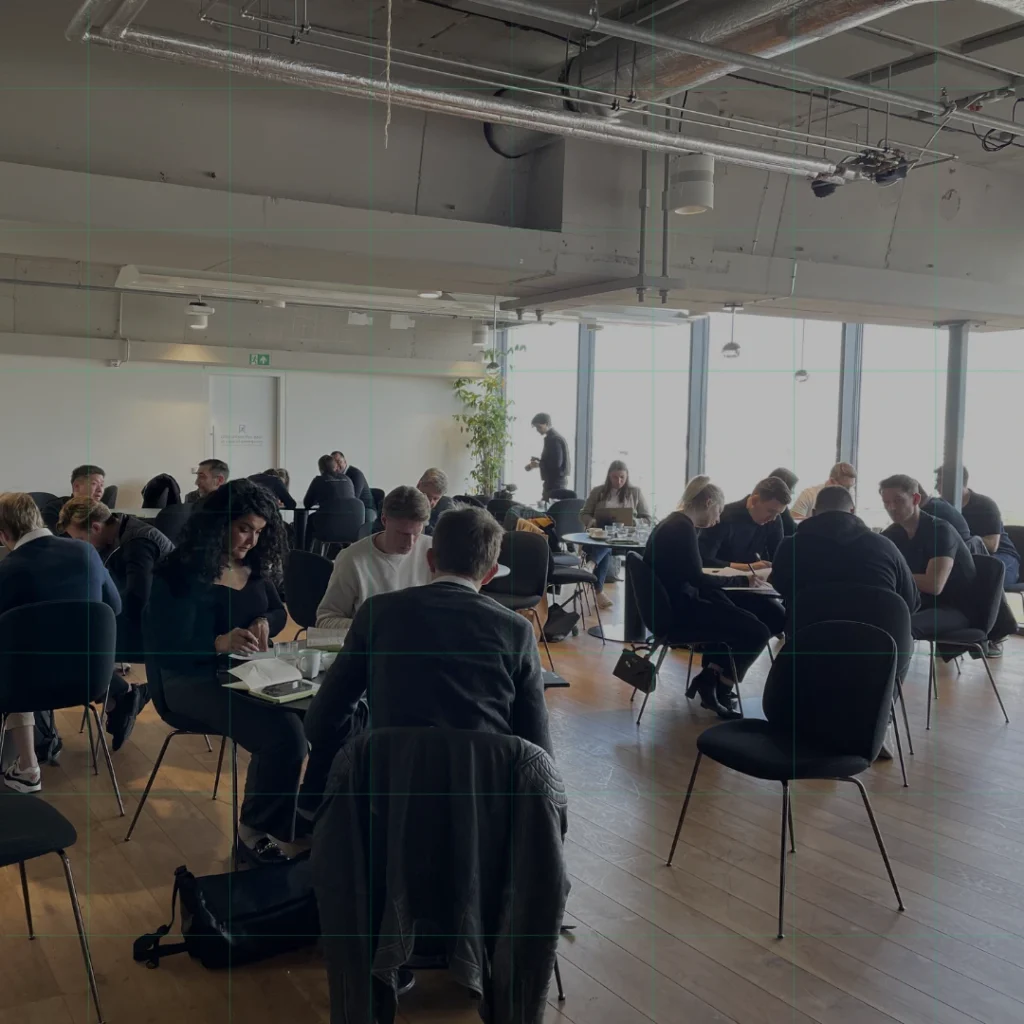
Klozers collaborated closely with Lucid’s sales enablement team to create a tailored sales kickoff. A bespoke theme, “Sales Drive”, encapsulated motivation, determination and a relentless pursuit of excellence, and set the tone for the event. Klozers worked with Lucid leadership to create a bespoke agenda covering product knowledge (Lucid’s unique selling points, technical specifications and competitive advantages), sales techniques (communication, objection handling and closing), and market insights (European customer preferences and market dynamics), balancing education, motivation and practical skills. Working closely with Lucid’s internal team, Klozers developed engaging content, with interactive workshops, role-playing and real-world scenarios that kept participants engaged and emphasised Lucid’s brand story, product features and the art of effective selling.
Because of the event’s success, Lucid repeated it for employees who could not attend initially, and its sales studios across Europe applied the insights gained.
A sales kickoff is not just about information, it is about building energy, teamwork and alignment toward shared goals. Lucid Motors’ expansion mirrors Klozers’ own commitment to doing the work rather than presenting it.
#SalesTraining
#InPersonTraining
#ConsultativeSelling
#SalesKickoff
#SuccessStories
Logicalware: sales campaigns
A SaaS message-automation business serving global brands including Booking.com, Ryanair and WWF.
Logicalware is a software-as-a-service business providing message-automation software for global brands such as Booking.com, Ryanair, Maplin and WWF. The software is used to drive efficiencies, savings and regulatory validation within customer service teams.
While the company had a solid customer base, new client acquisition was much lower than the leadership team’s aspirations. Despite an extensive marketing campaign the number of new enquiries was low, and so the number of new customers was disappointing. The leadership team knew the business had a problem but could not pinpoint it, which was frustrating.
Company growth had plateaued, which meant the owners could not move forward with their ambitious plans. It was also not possible to sell the business, as the lack of sales had limited its value.
From the outset Logicalware were clear that they needed Klozers not only to diagnose the sales problems correctly, but to come in, create a new sales strategy, and then execute it in partnership with the Logicalware team. Logicalware got their own team completely behind the new sales improvement programme and worked closely with the Klozers consultants to share product and domain knowledge. The Klozers team spent one week researching and planning, and in the second week started to execute the new strategy.
By the end of the third week both Klozers and Logicalware decided to wind down their first lead-generation campaign to the retail market. The campaign had already engaged and arranged meetings with senior-level decision-makers in Halfords, 3 Mobile, Thorntons Chocolates, Bose, Lands’ End, The Post Office, Ocado and eight other national retailers. The combined value of the new opportunities was equal to 50% of Logicalware’s existing turnover. Logicalware extended their initial contract with Klozers and jointly planned new campaigns for the utilities and financial services markets.
The engagement shows that a correctly diagnosed sales problem, followed by a strategy Klozers helped execute rather than only recommend, can rebuild a stalled new-business pipeline quickly and give owners back their growth options.
#SalesCampaigns
#LeadGeneration
#SaaSSales
#B2BSales
#SalesStrategy
#SuccessStories
FQE Chemicals: sales growth initiative
A Texas-based global supplier of chemical solutions for refineries, with buyers across sites worldwide.
FQE Chemicals, based in Deer Park, Texas, is a global supplier of innovative chemical solutions for large refineries worldwide. Its clients rely on its award-winning products to enhance efficiency, safety and environmental compliance.
FQE faced several challenges. Ambitious growth plans: it aimed to expand its global customer base while focusing on high-value clients. A unique client base: its clients were primarily large refineries, with buying teams of local engineers at each site. A need for a new approach: to succeed, FQE recognised the need for a different sales approach and decided to invest in its people. Geographic dispersal: with staff located globally, it was easier and more cost-effective to deliver training online.
Klozers partnered with FQE to address these challenges. For sales strategy, Klozers worked closely with FQE to develop a new customer-centric, consultative sales strategy. For training, Klozers delivered a bespoke version of its Consultative Selling Skills course. For delivery, recognising the dispersed workforce, Klozers broke the one-day course into four 90-minute modules, delivered twice per week over a two-week period, which removed Zoom fatigue and kept attendees engaged. Klozers scheduled the online sessions to accommodate FQE’s global team across different time zones.
Within just three months, measurable results included a 400% increase in the sales pipeline, actual six-figure deals closed, and improved satisfaction, with salespeople reporting better relationship-building and improved customer satisfaction.
This case study highlights how Klozers’ tailored online sales training supported FQE Chemicals’ sales team, resulting in strong growth and an improved customer experience.
#SalesTraining
#OnlineSalesTraining
#ConsultativeSelling
#SalesStrategy
#SalesProcess
#SuccessStories
CAEM: sales coaching
A 30-year UK manufacturer of retail shelving and racking, serving Tier 1 retailers.
For over 30 years, CAEM has been a UK go-to choice for retail shelving and racking. CAEM designs, manufactures and installs solutions tailored to its clients’ needs, from sleek and modern to heavy-duty and functional, creating efficient and attractive retail spaces for the UK’s Tier 1 retailers that help boost sales and brand image.
CAEM, known for high-quality solutions and a tailored client approach, faced a series of critical challenges. Aggressive competition from foreign imports undermined its traditional pricing, while changing buyer behaviours reduced the impact of established outreach. The decline in the retail sector exacerbated these challenges by affecting client spending. The rise of bespoke solutions demanded a reassessment of product offerings and a move toward greater customisation, forcing CAEM to redefine its value proposition. Part of this had led CAEM to invest heavily in new state-of-the-art production machinery, and those costs needed to be recovered.
Overcoming these challenges was not just about immediate problems, it was about ensuring CAEM’s long-term sustainability, growth and leadership in the industry. By adapting and redefining its value proposition, CAEM could emerge stronger and more prepared for the future.
Klozers worked with the directors at CAEM to build a bespoke sales strategy tailored to the complex challenges of enterprise selling into a competitive market. Once the strategy was agreed, Klozers worked with the CAEM sales team and created a 90-day sales plan that tackled the long sales cycles and intricate processes of enterprise deals, with prospects and customers segmented on a revised ideal client profile and a new value proposition, alongside changes in CRM, sales behaviours and processes and a targeted sales campaign.
CAEM’s new bespoke sales strategy targeted the enterprise market within a 90-day timeframe and delivered measurable results. On new customer acquisition, from a targeted list of 102 Tier 1 enterprise accounts, CAEM secured £167,000 in sales from three new customers, navigating complex decision-making to convert high-value prospects. On pipeline expansion, active sales conversations were established with 19 additional accounts. On strategic flexibility, CAEM categorised six prospects as temporarily closed due to evolving needs or existing supplier commitments, focusing effort on active opportunities while maintaining long-term relationships. And on sustainable growth, with 62 accounts still actively pursued, the pipeline for future success remained robust.
These results demonstrate the value of a bespoke sales approach. By working with Klozers, CAEM positioned itself for continued success in a competitive landscape, one strategic deal at a time.
#SalesCoaching
#OnlineSalesCoaching
#SalesStrategy
#SalesProcess
#EnterpriseSales
#SuccessStories
Husqvarna: bespoke dealer sales simulation
Husqvarna’s Automower robotic mowers, sold through a UK network of independent, multi-brand dealers.
Husqvarna manufactures the Automower range of robotic lawnmowers. In the UK the range reaches end customers through a network of independent dealers who sell in store, install the machines and provide aftercare, including servicing and parts. Many are multi-brand: they stock Automower alongside competing robotic mower brands, and sell those competing brands too. Husqvarna positions Automower as a premium product, resting on a ten-year machine life, ten-year parts availability, a stocked dealer parts channel and local dealer service, and supports the network with a dealer parts portal and periodic dealer events.
Husqvarna surveyed 65 attendees at registration and shared the baseline with Klozers before the event. The pattern was consistent. Dealers were confident in the areas they had been trained in: they could recommend the right model, handle installation and answer product questions. That confidence was not converting into sales. The failures were happening in specific conversations. Deals were dying on price, on competitor comparison, and on customer scepticism about whether robotic mowing was the right choice at all. When challenged on price, dealers dropped into feature-by-feature comparison against cheaper machines, a fight they cannot win, because it moves the conversation onto the competitor’s ground where the cheapest mower is the rational choice. The market had also moved, with lower-cost robotic mowers positioning themselves as good enough for less at price points under a thousand pounds, so customers arrived already carrying competitor messaging.
A dealer who cannot defend a premium price defends it with discount instead, which erodes margin across the network and undermines the premium positioning Husqvarna has invested in building. Every deal lost on a feature-by-feature comparison is a customer handed to a cheaper entrant at the moment they were ready to buy.
Klozers built the programme from the dealers’ own survey responses, not from a standard curriculum, with every scenario drawn from a moment the survey showed dealers were losing. Two constraints shaped the design. The first was the dealers themselves: as multi-brand retailers they sell the competing machines they were being asked to sell against, so any content that attacked a rival brand by name would ask a dealer to argue against a product on their own shop floor. Klozers stripped every competitor brand name out of the material and built the language generically, around the cheaper option and online-only brands, teaching dealers to change the conversation rather than attack a competitor.
The second constraint was the room: the session ran in a lecture theatre, in a single slot, to a mixed audience with a wide spread of selling experience. Using its experience of building and delivering sales simulations, Klozers designed a bespoke competition rather than a workshop. Dealers were grouped into five regional teams, so the rivalry was already there; teams debated each decision on their own devices, locked in one collective answer, and watched the leaderboard update on the main screen. The simulation ran five customer moments, each scored on commercial impact and each followed by a breakdown of why an answer worked, reinforced with objection-handling battlecards and a price-objection handler for the shop floor. The teaching principle throughout was value before product.
On-the-day feedback from both Husqvarna staff and dealers was positive. The Brand Manager said the simulation immediately sparked engagement and discussion rather than being someone presenting on stage. The Dealer Sales Manager said the way the training was delivered opened the conversation up, and one dealer said the training was interactive from the very first minute.
Husqvarna’s investment in a bespoke sales simulation helped make the dealer event both interactive and valuable from a learning perspective. In a competitive environment, the progressive approach of the simulation helped reinforce Husqvarna’s position as a premium brand with its dealer network.
#SalesSimulation
#DealerSalesTraining
#ValueSelling
#PriceObjectionHandling
#PremiumPositioning
#ChannelEnablement
Bray Controls UK Ltd: consultative selling workshop
The UK business of a global industrial valve manufacturer, near Glasgow, growing a valve automation business.
Bray Controls UK Ltd is the UK business of Bray International, a global manufacturer of industrial valves and valve automation, based at Inchinnan near Glasgow. Its established trade is the supply of industrial valves. It also operates a Valve Automation Centre, which designs and builds automated valve and control systems and provides installation, commissioning and UK-based support.
Bray Controls UK had a very successful valve business but needed to expand into valve automation. Customers bought their valves from Bray, then bought the automation that went with those valves from other vendors, and Bray was becoming a line item on somebody else’s project. The sales problem sat underneath the business problem: a valve sale and an automation sale are not the same sale. Valve business can be transactional, price-led, decided by a single contact and closed quickly. An automation sale can run to a nine-month cycle with a new prospect, involves multiple stakeholders, and only works if the salesperson opens with questions rather than a quote. Deal values are around ten times larger. The sales team was experienced and successful at transactional selling, but struggled to work consistently to a sales plan with longer cycles and added complexity.
Bray had already built the automation capability. The revenue to justify it was going to competitors, through Bray’s own customer relationships. Every quarter the pattern held, those competitors were embedded further into accounts Bray already owned. Left alone, the automation investment stayed unrecovered and the valve business stayed exposed to price competition.
Klozers diagnosed the problem as one of execution and mindset rather than product knowledge. The team knew the automation offer; they were not selling it, because selling it required a different set of behaviours from the ones that had made them successful. The constraint that shaped the design was the nine-month sales cycle: no closed revenue could appear inside a 90-day programme. Two design decisions followed. First, the programme was built to drive and measure leading indicators, using individual 90-day sales plans and monthly coaching reviews rather than a single training event. Second, half of each sales plan targeted existing valve customers, where trust already existed and the cycle was shorter, so the team could achieve early progress while the longer new-business campaigns matured.
A second constraint was resistance: experienced salespeople were being asked to put a working book of business at risk, so Klozers placed David Rock’s SCARF model in the first session of day one, with the leadership team in the room, so the concerns were named openly before any skills content began. Delivery was a two-day in-person workshop at Inchinnan, run as four 90-minute sessions per day for 21 participants with leadership present throughout, using campaign-based training: participants built two real sales campaigns, one for new-customer acquisition and one for converting existing valve customers, working on named accounts in Salesforce rather than case examples. Each participant left with a 90-day plan, a target account list and a public commitment to the team, supported by a 21-section workbook of exercises, templates and reference tools, followed by 90 days of monthly coaching.
Bray Controls UK had the automation capability and the customer relationships. What it lacked was a repeatable way of turning one into the other. The programme gave the sales team two bespoke live campaigns, named target accounts, individual 90-day plans and monthly coaching against them.
#SalesTraining
#ConsultativeSelling
#InPersonTraining
#SalesCoaching
#CampaignBasedTraining
#ManufacturingSales
#SolutionSelling
Marangoni: bespoke sales training
A global leader in tyre retreading systems, delivering through a network of independent partners.
Marangoni, a global leader in retreading systems and tyre services, operates a vast network of independent partners who deliver its products and services worldwide. With a legacy of innovation and a commitment to sustainability, Marangoni recognised the need to evolve its sales approach to align with growing demand for sustainable solutions in the tyre industry.
Marangoni was transitioning from a traditional transactional sales model to a more strategic, consultative approach. This shift required a deep understanding of sustainability principles, the circular economy, and the ability to articulate the value proposition of Marangoni’s retreading solutions. While Marangoni had developed a new sales strategy, effectively cascading this knowledge and skillset to its diverse partner network posed a significant challenge.
Klozers was engaged to design and deliver a tailored training programme for the partner network. Klozers conducted in-depth research, including interviews with key stakeholders and analysis of market trends, to identify the knowledge gaps and skill deficiencies within the network. This informed a comprehensive programme covering sustainability and circular-economy principles and their relevance to the tyre industry; Marangoni’s value proposition and its alignment with sustainability goals; consultative selling techniques for building rapport, identifying needs and presenting value; and industry-specific sales strategies for the tyre retreading market. To enhance engagement and cultural relevance, Klozers developed multilingual training materials that incorporated Marangoni’s brand identity and messaging, and worked with Marangoni’s marketing team to promote the programme to partners.
The initial response from the partner network was overwhelmingly positive, and partners signed up in large numbers. The first workshops, held in Hamburg with the Swedish partner Dacknor, received exceptional feedback. Key outcomes included increased partner engagement and a stronger sense of shared purpose within the network; enhanced sales skills, with partners reporting significant improvements in articulating the value proposition and holding consultative conversations; and early business growth, with the initial workshops suggesting a positive impact on sales performance and partners reporting increased customer interest.
By partnering with Klozers, Marangoni navigated a complex sales transformation, equipping its partner network with the knowledge and skills to thrive in an evolving industry. The bespoke programme equipped partners to sell more effectively and strengthened their alignment with Marangoni’s brand values and commitment to sustainability.
#SalesTraining
#InPersonTraining
#ConsultativeSelling
#ChannelPartnerTraining
#BespokeSalesTraining
#SuccessStories
CAEM: sales coaching
A 30-year UK manufacturer of retail shelving and racking, serving Tier 1 retailers.
For over 30 years, CAEM has been a UK go-to choice for retail shelving and racking. CAEM designs, manufactures and installs solutions tailored to its clients’ needs, from sleek and modern to heavy-duty and functional, creating efficient and attractive retail spaces for the UK’s Tier 1 retailers that help boost sales and brand image.
CAEM, known for high-quality solutions and a tailored client approach, faced a series of critical challenges. Aggressive competition from foreign imports undermined its traditional pricing, while changing buyer behaviours reduced the impact of established outreach. The decline in the retail sector exacerbated these challenges by affecting client spending. The rise of bespoke solutions demanded a reassessment of product offerings and a move toward greater customisation, forcing CAEM to redefine its value proposition. Part of this had led CAEM to invest heavily in new state-of-the-art production machinery, and those costs needed to be recovered.
Overcoming these challenges was not just about immediate problems, it was about ensuring CAEM’s long-term sustainability, growth and leadership in the industry. By adapting and redefining its value proposition, CAEM could emerge stronger and more prepared for the future.
Klozers worked with the directors at CAEM to build a bespoke sales strategy tailored to the complex challenges of enterprise selling into a competitive market. Once the strategy was agreed, Klozers worked with the CAEM sales team and created a 90-day sales plan that tackled the long sales cycles and intricate processes of enterprise deals, with prospects and customers segmented on a revised ideal client profile and a new value proposition, alongside changes in CRM, sales behaviours and processes and a targeted sales campaign.
CAEM’s new bespoke sales strategy targeted the enterprise market within a 90-day timeframe and delivered measurable results. On new customer acquisition, from a targeted list of 102 Tier 1 enterprise accounts, CAEM secured £167,000 in sales from three new customers, navigating complex decision-making to convert high-value prospects. On pipeline expansion, active sales conversations were established with 19 additional accounts. On strategic flexibility, CAEM categorised six prospects as temporarily closed due to evolving needs or existing supplier commitments, focusing effort on active opportunities while maintaining long-term relationships. And on sustainable growth, with 62 accounts still actively pursued, the pipeline for future success remained robust.
These results demonstrate the value of a bespoke sales approach. By working with Klozers, CAEM positioned itself for continued success in a competitive landscape, one strategic deal at a time.
#SalesCoaching
#OnlineSalesCoaching
#SalesStrategy
#SalesProcess
#EnterpriseSales
#SuccessStories
TikTok Shop: sales skills workshop
TikTok Shop’s UK seller acquisition and account management team, across beauty, FMCG, fashion and home.
TikTok operates a UK seller acquisition and account management function, working with e-commerce brands that sell through TikTok Shop. The team sells across several verticals, and four were identified as representative of its ideal client profile: beauty, fast-moving consumer goods, fashion, and home, living and electronics.
TikTok had a young sales team who in many cases had never been trained on B2B sales outside of TikTok’s own internal training. As a team they were low in confidence and struggling with outbound activity and conversion rather than with product knowledge. Sales activity was inconsistent, and in many cases the team defaulted to email rather than picking up the telephone and talking to prospects.
Like most technology companies, TikTok had aggressive growth targets that depended on new customer acquisition. Online e-commerce businesses had multiple channel options, and TikTok needed to win market share quickly to drive revenue.
Klozers built a one-day in-person workshop with participant workbooks and a supporting slide deck. The client required the same content delivered twice on the same day, to two separate groups. That split imposed two design decisions: each session had to stand alone in roughly three and a half hours, with no reliance on the other group’s output, and every module had to reach an applied outcome fast, because there was no second day to recover lost time.
The second constraint was vertical spread. Because the four target verticals have different economics, generic scripts would not transfer. Beauty and fashion brands are judged on content-to-purchase conversion, FMCG brands on cost per acquisition, and an affiliate-only seller has different concerns again. Workbook exercises were therefore built to be completed against the participant’s own vertical rather than a single worked example. Content was drawn from existing Klozers intellectual property: the mindset module used the Klozers conceptual and functional model, and the objection-handling module used the Klozers LAER framework, Listen, Acknowledge, Explore, Respond, with the playbook’s five objection categories and their root causes as the diagnostic layer. The trainer made live cold calls in front of the group to demonstrate what had been taught during the day.
On-the-day feedback from the group was described as transformational. While demonstrating the cold-calling techniques the trainer made 15 calls: 11 no answer, 1 a definite no, 2 asking for callbacks from a product expert, and 1 new deal closed on the day. The single closed deal amazed the participants and helped them believe they could do the same.
Klozers only teaches sales strategies and techniques it uses in its own business. That not only gives a deep understanding of what works and what does not, it allows Klozers to demonstrate live to audiences in real scenarios. Sales trainers prepared to cold call live on behalf of their clients immediately win the respect of the room.
#SalesTransformation
#ObjectionHandling
#ColdCalling
#SalesMindset
#B2BSales
#SalesEnablement
#TechnologySales
PTV Logistics: SaaS sales kick-off
Transport and logistics optimisation software. 76 salespeople and 16 leaders across the USA, Canada and Europe.
PTV Logistics builds transport and logistics optimisation software. The company had historically sold to technical buyers inside logistics operations, including heads of logistics, heads of dispatch and transport division leaders, who understood and valued technical capability, and PTV’s sales approach was built around demonstrating it. The company had introduced new products, more focused in scope, carrying a higher total cost of ownership and suited to a different customer profile. PTV’s commercial organisation numbers 76 salespeople and 16 sales leaders, operating across the USA, Canada and European markets in the UK, Germany, France, Italy, Holland and Belgium.
PTV’s salespeople had spent careers, in some cases 20 to 25 years, selling features to technical buyers. The new SaaS propositions required them to sell business outcomes to economic buyers at CEO, CFO and COO level. Three specific gaps emerged. Access: the team struggled to consistently get past the technical buyer to reach the C-suite economic buyer who signs off subscription commitments. Language: salespeople defaulted to feature and capability discussions and struggled to articulate business value, ROI or strategic impact in terms an executive would engage with. Consensus: SaaS purchases involved multiple stakeholders and board-level sign-off, and the team’s existing process was built for a single technical evaluation, not a multi-stakeholder buying decision.
PTV had invested in new SaaS products but had a sales team still selling the old way. Without the shift to executive-level value conversations, that product investment would not convert into recurring revenue. New investors were demanding growth, and doing nothing was not an option for the leadership team.
Klozers diagnosed the problem as a SaaS transformation challenge rather than a methodology gap. The brief PTV issued was for value-based selling; Klozers reframed it around the actual behaviour change required, moving salespeople from feature conversations with technical buyers to value conversations with executive buyers. Three constraints shaped the design. First, the sales team was dispersed across five language markets and only assembled once, at a company sales kickoff in Karlsruhe, Germany on 9 and 10 February 2026. Klozers built the in-person delivery as seven parallel workshops inside the two-day kickoff: two in English, two in German, one in Dutch, one in Italian and one in French, each delivered by a Klozers trainer working in the participants’ native language. Second, Klozers positioned the training as the Executive Access Programme, framing it around something the team wanted, access to executives, rather than a correction of how they were selling. Third, credibility with a sceptical, long-tenured team was the failure point for previous training, so Klozers’ method of building from the inside out ensured credible, practical examples were included and developed internal champions who advocated the new strategies.
The programme ran in three phases. Phase 1 was research and content creation, including stakeholder interviews with sales managers and leaders, a tailored survey of all 76 salespeople, and four bespoke modules built on PTV’s own scenarios and language. Phase 2 enabled the 16 sales managers first, through a one-day leadership workshop in Paris before the kickoff, so they could coach and hold salespeople accountable. Phase 3 delivered the transformation to the sales team, starting with the seven interactive, 100% PowerPoint-free workshops in Germany.
After the training PTV surveyed all participants, and Klozers received the highest-scored feedback compared to three previous sales-kickoff providers. Klozers scored highest on content, tailored around real PTV deal sizes, customer types, challenges and market conditions, which helped the learning transfer to real deals; on delivery, 100% PowerPoint-free because salespeople learn by interacting and doing; and on the simulation, where each country team competed throughout the day to deliver an engaging, interactive experience alongside the learning.
The engagement demonstrates that a sales kickoff can deliver genuine impact when delivered as part of a wider programme using change management to embed behaviour change. PTV now has a sales team addressed in its own language, a leadership layer enabled to coach the new approach, and full ownership of content it can continue to run internally.
SaaSTransformation
#SalesKickoff
#ValueBasedSelling
#ExecutiveSelling
#SaaSSalesTraining
#ChangeManagement
Coats Digital: bespoke SaaS sales training
Software for garment and apparel manufacturers, sold across Asia, MENA and Western Europe to three buyer levels.
Coats Digital sells software into the garment and apparel manufacturing industry, helping manufacturers improve planning and deliver production efficiencies. Its buyers are garment manufacturers supplying the largest clothing brands in the world. The commercial team sells across South Asia, South East Asia, Korea, MENA, Pakistan and Western Europe. Deals involve three distinct buyer levels: CXOs, department heads and operational users, and the sales team is a mix of people with software backgrounds and people with apparel-industry experience. Coats Digital competes with established vendors, but its most common competitor is not a vendor at all: it is the decision to change nothing and stay with an Excel spreadsheet and manual processes.
The sales problem was not a lack of talent, it was the lack of a common sales methodology. Salespeople used the same presentation regardless of the prospect. Pre-meeting research was inconsistent, so conversations opened with generic questions rather than informed ones. There was no structured framework for engaging CEOs and managing directors, and no shared language for engaging different stakeholder levels. Klozers ran discovery interviews with five members of the commercial team, which surfaced two problems leadership had not identified. The first was qualification: there was no agreed standard for what made an opportunity real, so pipelines carried opportunities that had never been tested, and forecasts followed. The second was value articulation: the team could describe what a customer would gain, but could not quantify what the customer was losing today, so there was no convincing cost-of-inaction story and no reliable ROI conversation. A third finding was a route to market the business was not using: the Coats thread account relationships offered access to economic buyers the software teams were not exploiting.
Selling change to an industry comfortable with manual processes requires a quantified argument. Without one, deals do not go to a competitor, they go nowhere, and the sales cycle absorbs cost with no return. Unqualified pipeline compounds the problem: forecasts become unreliable, management attention goes to the wrong deals, and discounting is used to rescue opportunities that were never qualified in the first place.
To diagnose, Klozers interviewed five commercial team members across Vietnam, Bangladesh, Korea, Europe, MENA and Pakistan, wrote the findings up as a discovery report and compared them line by line against the original leadership proposal, marking each topic confirmed, partially confirmed or divergent. Two divergences were significant: qualification was almost absent from the leadership proposal but ranked first in the field, and the Coats thread ecosystem was not in the proposal at all. The constraint that shaped the design was time: the teams were spread across multiple countries and time zones, so a long residential format was not viable. The workshop was compressed to one intensive day in Bangkok, with core skills delivered in the workshop and remaining topics embedded in the playbook for online reinforcement, each tied to activity-based assignments that feed Coats Digital’s HR certification system and its 75% attendance requirement.
To design, Klozers built a Coats Digital Sales Playbook as the spine of the programme rather than a set of slides, with the workshop as its launch event. A second constraint shaped the content: Coats Digital did not want another imported methodology, and the team already used MEDDIC, albeit inconsistently, so Klozers aligned to MEDDIC rather than replacing it and built industry-specific question content on top of it using Coats Digital’s own field material. To deliver, the programme ran as three streams: a train-the-trainer programme for three managers who co-delivered the workshop, the one-day Bangkok workshop for the full commercial team, and a separate four-session sales manager programme for five managers, sequenced one session before Bangkok and three after, with all practice and role-plays run against a single fictional prospect, Vertex Apparel Group, so the narrative held across every module.
To measure impact, Klozers defined six KPIs with Coats Digital, four leading and two lagging: Economic Buyer Engagement Rate, tied to stakeholder navigation; MEDDIC Qualification Score, tied to opportunity qualification; Cost of Inaction Completion Rate, tied to value articulation; Pipeline Stall Rate, tied to deal discipline; Average Discount Rate, a lagging commercial outcome; and Forecast Accuracy, a lagging outcome with a target of 80% or above at six months post-training, rising to 85% at twelve months.
The engagement demonstrates the benefit of building from the inside out, capturing existing best practice and then complementing it. Coats Digital now has a sales playbook built from its own evidence, three internal facilitators who can deliver it, and a manager programme that reinforces it.
#B2BSalesTraining
#SalesEnablement
#SaaSSales
#TrainTheTrainer
#SalesPlaybook
#OpportunityQualification
#SalesManagerCoaching
Logicalware: sales campaigns
A SaaS message-automation business serving global brands including Booking.com, Ryanair and WWF.
Logicalware is a software-as-a-service business providing message-automation software for global brands such as Booking.com, Ryanair, Maplin and WWF. The software is used to drive efficiencies, savings and regulatory validation within customer service teams.
While the company had a solid customer base, new client acquisition was much lower than the leadership team’s aspirations. Despite an extensive marketing campaign the number of new enquiries was low, and so the number of new customers was disappointing. The leadership team knew the business had a problem but could not pinpoint it, which was frustrating.
Company growth had plateaued, which meant the owners could not move forward with their ambitious plans. It was also not possible to sell the business, as the lack of sales had limited its value.
From the outset Logicalware were clear that they needed Klozers not only to diagnose the sales problems correctly, but to come in, create a new sales strategy, and then execute it in partnership with the Logicalware team. Logicalware got their own team completely behind the new sales improvement programme and worked closely with the Klozers consultants to share product and domain knowledge. The Klozers team spent one week researching and planning, and in the second week started to execute the new strategy.
By the end of the third week both Klozers and Logicalware decided to wind down their first lead-generation campaign to the retail market. The campaign had already engaged and arranged meetings with senior-level decision-makers in Halfords, 3 Mobile, Thorntons Chocolates, Bose, Lands’ End, The Post Office, Ocado and eight other national retailers. The combined value of the new opportunities was equal to 50% of Logicalware’s existing turnover. Logicalware extended their initial contract with Klozers and jointly planned new campaigns for the utilities and financial services markets.
The engagement shows that a correctly diagnosed sales problem, followed by a strategy Klozers helped execute rather than only recommend, can rebuild a stalled new-business pipeline quickly and give owners back their growth options.
#SalesCampaigns
#LeadGeneration
#SaaSSales
#B2BSales
#SalesStrategy
#SuccessStories
Alysian: bespoke consultative selling skills workshop
A boutique advisory and digital-transformation consultancy serving private equity firms and their portfolio companies.
Alysian is a boutique advisory and digital transformation consultancy serving private equity firms and their portfolio companies. The firm sells structured services and outcomes rather than individual consultants, spanning value creation and value assurance, including diagnostics, ERP pre-implementation, cost-out programmes, transformation control towers and post-merger integration assurance. Alysian targets operating partners and deal teams at large PE funds, typically those above €10 billion AUM, alongside portfolio companies with active transformation agendas such as carve-outs, integrations and ERP change. The firm deliberately positions between two models it regards as failing the market: contractor-based delivery, and the MBB and Big Four consultancies.
Alysian’s commercial model creates a three-way relationship most consultancies never have to navigate. The PE firm buys the work but does not consume it. The portfolio company receives the work but did not choose the supplier. The delivery team then has to earn the right to expand inside a company that never initiated the relationship. Klozers conducted discovery interviews with five members of the team and identified five execution gaps: conversations consistently starting at CIO level rather than CEO or CFO, which limited Alysian’s positioning as strategic advisers; follow-on work not planned before diagnostics began, with the diagnostic-to-implementation conversion rate falling over the year; competitive pitches under-prepared; PE relationships not used to secure executive access or strategic context; and pricing discussed before the cost of the client’s problem had been quantified, producing avoidable price objections. A further constraint sat behind all five: most of the Alysian team are technical subject matter experts who do not regard themselves as salespeople and preferred to deliver work than actively sell.
Alysian’s growth model depends on diagnostics converting into implementation work. Entering at CIO level rather than CEO or CFO also caps deal size, because technical buyers cannot authorise transformation budgets tied to the investment thesis. And 80% of sales were being won by the senior leadership team, which was not scalable.
Klozers ran the engagement as a change management project rather than a sales training project. To diagnose, Klozers analysed the existing sales playbook and interviewed five senior members of the team, presenting the findings back as an analysis before any content was written, so Alysian could confirm or correct the diagnosis first. To design, Klozers built an eight-module programme grounded entirely in Alysian’s own playbook, terminology and frameworks, including the Diagnostic-to-Value Sales Model, the Stakeholder Access Strategy, the Pre-Diagnostic Hypothesis and the 7-Step Storytelling Blueprint, of which four modules were commissioned. A fictional case study, Titanium Industries, was written as the working scenario so participants could practise and role-play realistically.
The constraint that shaped delivery was that Alysian’s team is dispersed across Europe and only came together once a year. Klozers had two 90-minute slots on a single day in Barcelona, so every remaining module had to work without a facilitator, standalone and self-paced, inside Alysian’s own LMS, Zoho Learn. That forced the rebuild of Modules 2 and 3 from facilitator-led simulations into a narrative story arc with quiz points handled natively in the LMS. Modules 1 and 2 were delivered face to face in Barcelona, and Modules 3 and 4 live online and then converted into LMS content, supported by participant workbooks, module quizzes and a 20-question end-of-programme assessment with an answer key and a four-band scoring guide.
Feedback from participants on the day was very positive, with the majority of consultants asking for more training. Increased confidence translated into improvements in sales conversations and an increase in sales pipeline. Alysian returned to Klozers to commission a further four bespoke training modules beyond the original scope.
The engagement shows that sales training for consultants and technical subject matter experts works when it is built from the firm’s own successes rather than a generic methodology imposed from outside. Alysian now has a codified commercial method, taught in its own language, available to every consultant on demand rather than only to those in the room on the day.
#SalesTraining
#SalesTransformation
#ConsultativeSelling
#SalesEnablement
#ProfessionalServices
#ConsultativeSales
James Latham PLC: sales leadership and transformation programme
The UK’s largest distributor of timber and panel products, around £400m turnover across 14 regional depots.
James Latham PLC is the UK’s largest distributor of timber and panel products. The business is organised around two divisions, Panel Products and Timber Products, and sells through a network of 14 regional depots. Each depot runs on its own profit-and-loss basis and carries responsibility for its region, customers and product development. Group turnover is around £400 million. The company holds a strong market reputation built on product quality, operational excellence and service reliability, supported by its Lignum Service Charter. At the time of the engagement, James Latham had announced a £45 million investment in a new national distribution centre to improve routes to market, customer service and internal distribution efficiency.
As the saying goes, good is the enemy of great. Lathams had built a highly successful business on operational excellence, and sales had become predominantly reactive rather than proactive. The business was strong at responding to inbound enquiries but struggled to create them consistently. Leadership described a period of high inbound volume during COVID that reinforced reactive habits, and a subsequent struggle to return to proactive selling when the market turned. In a rising market the depots performed well. In a falling market the gap showed.
Sales capability had not been developed. The leadership team admitted that little formal sales training had taken place in around ten years, and that product training had substituted for it. Depot teams were product experts rather than trained sellers, and salespeople were routinely pulled into internal, reactive work, described internally as depot life getting in the way. The account base compounded the problem. Between 6,000 and 7,000 accounts were dormant. The CRM held names and numbers but little commercial intelligence, so those accounts could not be segmented, tiered or targeted. The business also carried a target of 60 new trading accounts per month, and estimated a marketing spend of £1.2 million per year that it struggled to attribute to any revenue figure.
A new £45 million distribution centre changes capacity, not demand. Without proactive selling, the investment would carry cost without recovering it in volume. Growth ambitions ran from £400 million toward £500 million and beyond. Dormant accounts, unconverted market share and unmeasured marketing spend represented revenue already available to competitors. Doing nothing meant paying for growth infrastructure while the sales behaviour that fills it stayed unchanged.
Klozers began with discovery rather than content. Stakeholder sessions with the CEO, senior product leadership and HR established what already worked inside the business. The principle was to build from the inside out, codifying existing best practice before adding external methodology, with ownership of all content transferred to James Latham PLC.
The constraint that shaped the design was depot autonomy and reactive pull. Depots run their own regions and their own numbers. Salespeople taken off site stop generating cash, and reactive work reliably reclaims anyone left in the building, so long residential programmes were not viable. The programme was built as single-day workshops, spaced roughly monthly, cascading from the top down so that each layer was managed by a layer already trained. Delivery travelled to the regions rather than centralising, with the leadership cohort meeting in London, Leeds and Hemel Hempstead. Commitments between workshops were work-based and made in the depot, not in the classroom. A second constraint shaped measurement: the CRM could not segment dormant accounts, and an IT dependency would have stalled the programme, so Klozers built the measurement framework from depot dashboards already in use rather than waiting for a new system.
The architecture connected four layers: a Commercial Leadership Programme of six one-day workshops for around 19 site, regional and senior leaders running March to August 2026; a Sales Management Programme of four one-day modules; a Sales Team Programme for around 59 salespeople; and an Internal Staff Programme for around 69 internal sales and customer service staff. Content was structured around five commercial pillars and a Latham-specific TIMBER framework covering target, intelligence, messaging, buying process, engagement and relationship. Commercial decisions were held to a single standard: one percent of £400 million is £4 million, and each workshop had to produce a decision capable of moving the business by that amount.
Across all 14 regional depots the programme drove increases in active trading accounts, reactivation of dormant accounts, customer wallet share and sales coaching hours by sales managers, with revenue up in 12 of the 14 depots
James Latham PLC entered the programme as a business that sold well when the market came to it, and is building the capability to sell when the market does not. The engagement shows that commercial capability in a depot business is built through the management line rather than the training room, and that measurement can start from what a business already has rather than a system it has yet to buy. James Latham now has an agreed measurement standard, a leadership group holding itself to commercial decisions, and a sales culture charter written by its own leaders.
#SalesTransformation
#SalesLeadership
#B2BSales
#SalesCulture
#SalesManagementTraining
#AccountGrowth
#MarginDiscipline
Husqvarna: bespoke dealer sales simulation
Husqvarna’s Automower robotic mowers, sold through a UK network of independent, multi-brand dealers.
Husqvarna manufactures the Automower range of robotic lawnmowers. In the UK the range reaches end customers through a network of independent dealers who sell in store, install the machines and provide aftercare, including servicing and parts. Many are multi-brand: they stock Automower alongside competing robotic mower brands, and sell those competing brands too. Husqvarna positions Automower as a premium product, resting on a ten-year machine life, ten-year parts availability, a stocked dealer parts channel and local dealer service, and supports the network with a dealer parts portal and periodic dealer events.
Husqvarna surveyed 65 attendees at registration and shared the baseline with Klozers before the event. The pattern was consistent. Dealers were confident in the areas they had been trained in: they could recommend the right model, handle installation and answer product questions. That confidence was not converting into sales. The failures were happening in specific conversations. Deals were dying on price, on competitor comparison, and on customer scepticism about whether robotic mowing was the right choice at all. When challenged on price, dealers dropped into feature-by-feature comparison against cheaper machines, a fight they cannot win, because it moves the conversation onto the competitor’s ground where the cheapest mower is the rational choice. The market had also moved, with lower-cost robotic mowers positioning themselves as good enough for less at price points under a thousand pounds, so customers arrived already carrying competitor messaging.
A dealer who cannot defend a premium price defends it with discount instead, which erodes margin across the network and undermines the premium positioning Husqvarna has invested in building. Every deal lost on a feature-by-feature comparison is a customer handed to a cheaper entrant at the moment they were ready to buy.
Klozers built the programme from the dealers’ own survey responses, not from a standard curriculum, with every scenario drawn from a moment the survey showed dealers were losing. Two constraints shaped the design. The first was the dealers themselves: as multi-brand retailers they sell the competing machines they were being asked to sell against, so any content that attacked a rival brand by name would ask a dealer to argue against a product on their own shop floor. Klozers stripped every competitor brand name out of the material and built the language generically, around the cheaper option and online-only brands, teaching dealers to change the conversation rather than attack a competitor.
The second constraint was the room: the session ran in a lecture theatre, in a single slot, to a mixed audience with a wide spread of selling experience. Using its experience of building and delivering sales simulations, Klozers designed a bespoke competition rather than a workshop. Dealers were grouped into five regional teams, so the rivalry was already there; teams debated each decision on their own devices, locked in one collective answer, and watched the leaderboard update on the main screen. The simulation ran five customer moments, each scored on commercial impact and each followed by a breakdown of why an answer worked, reinforced with objection-handling battlecards and a price-objection handler for the shop floor. The teaching principle throughout was value before product.
On-the-day feedback from both Husqvarna staff and dealers was positive. The Brand Manager said the simulation immediately sparked engagement and discussion rather than being someone presenting on stage. The Dealer Sales Manager said the way the training was delivered opened the conversation up, and one dealer said the training was interactive from the very first minute.
Husqvarna’s investment in a bespoke sales simulation helped make the dealer event both interactive and valuable from a learning perspective. In a competitive environment, the progressive approach of the simulation helped reinforce Husqvarna’s position as a premium brand with its dealer network.
#SalesSimulation
#DealerSalesTraining
#ValueSelling
#PriceObjectionHandling
#PremiumPositioning
#ChannelEnablement
Marangoni: bespoke sales training
A global leader in tyre retreading systems, delivering through a network of independent partners.
Marangoni, a global leader in retreading systems and tyre services, operates a vast network of independent partners who deliver its products and services worldwide. With a legacy of innovation and a commitment to sustainability, Marangoni recognised the need to evolve its sales approach to align with growing demand for sustainable solutions in the tyre industry.
Marangoni was transitioning from a traditional transactional sales model to a more strategic, consultative approach. This shift required a deep understanding of sustainability principles, the circular economy, and the ability to articulate the value proposition of Marangoni’s retreading solutions. While Marangoni had developed a new sales strategy, effectively cascading this knowledge and skillset to its diverse partner network posed a significant challenge.
Klozers was engaged to design and deliver a tailored training programme for the partner network. Klozers conducted in-depth research, including interviews with key stakeholders and analysis of market trends, to identify the knowledge gaps and skill deficiencies within the network. This informed a comprehensive programme covering sustainability and circular-economy principles and their relevance to the tyre industry; Marangoni’s value proposition and its alignment with sustainability goals; consultative selling techniques for building rapport, identifying needs and presenting value; and industry-specific sales strategies for the tyre retreading market. To enhance engagement and cultural relevance, Klozers developed multilingual training materials that incorporated Marangoni’s brand identity and messaging, and worked with Marangoni’s marketing team to promote the programme to partners.
The initial response from the partner network was overwhelmingly positive, and partners signed up in large numbers. The first workshops, held in Hamburg with the Swedish partner Dacknor, received exceptional feedback. Key outcomes included increased partner engagement and a stronger sense of shared purpose within the network; enhanced sales skills, with partners reporting significant improvements in articulating the value proposition and holding consultative conversations; and early business growth, with the initial workshops suggesting a positive impact on sales performance and partners reporting increased customer interest.
By partnering with Klozers, Marangoni navigated a complex sales transformation, equipping its partner network with the knowledge and skills to thrive in an evolving industry. The bespoke programme equipped partners to sell more effectively and strengthened their alignment with Marangoni’s brand values and commitment to sustainability.
#SalesTraining
#InPersonTraining
#ConsultativeSelling
#ChannelPartnerTraining
#BespokeSalesTraining
#SuccessStories
FQE Chemicals: sales growth initiative
A Texas-based global supplier of chemical solutions for refineries, with buyers across sites worldwide.
FQE Chemicals, based in Deer Park, Texas, is a global supplier of innovative chemical solutions for large refineries worldwide. Its clients rely on its award-winning products to enhance efficiency, safety and environmental compliance.
FQE faced several challenges. Ambitious growth plans: it aimed to expand its global customer base while focusing on high-value clients. A unique client base: its clients were primarily large refineries, with buying teams of local engineers at each site. A need for a new approach: to succeed, FQE recognised the need for a different sales approach and decided to invest in its people. Geographic dispersal: with staff located globally, it was easier and more cost-effective to deliver training online.
Klozers partnered with FQE to address these challenges. For sales strategy, Klozers worked closely with FQE to develop a new customer-centric, consultative sales strategy. For training, Klozers delivered a bespoke version of its Consultative Selling Skills course. For delivery, recognising the dispersed workforce, Klozers broke the one-day course into four 90-minute modules, delivered twice per week over a two-week period, which removed Zoom fatigue and kept attendees engaged. Klozers scheduled the online sessions to accommodate FQE’s global team across different time zones.
Within just three months, measurable results included a 400% increase in the sales pipeline, actual six-figure deals closed, and improved satisfaction, with salespeople reporting better relationship-building and improved customer satisfaction.
This case study highlights how Klozers’ tailored online sales training supported FQE Chemicals’ sales team, resulting in strong growth and an improved customer experience.
#SalesTraining
#OnlineSalesTraining
#ConsultativeSelling
#SalesStrategy
#SalesProcess
#SuccessStories
Lucid Motors: sales kickoff
A luxury electric-vehicle manufacturer headquartered in Palo Alto, expanding into Europe.
Lucid Motors, headquartered in Palo Alto, California, emerged as a disruptive force in the electric-vehicle market. Its commitment to innovation, design and sustainable mobility positioned it as a challenger to traditional auto brands, and Lucid had recently expanded its operations to Europe, introducing its range of luxury EVs to discerning customers.
Two challenges stood out. Sales team development: Lucid recognised that its success hinged on the effectiveness of its salespeople and that investing in their development was crucial, and as a startup it needed to back its sales force to maintain momentum. Market entry and competition: entering the European market was a strategic move, but Lucid faced stiff competition from established players, so the challenge was twofold, establishing brand presence and driving sales in a highly competitive landscape.
Klozers collaborated closely with Lucid’s sales enablement team to create a tailored sales kickoff. A bespoke theme, “Sales Drive”, encapsulated motivation, determination and a relentless pursuit of excellence, and set the tone for the event. Klozers worked with Lucid leadership to create a bespoke agenda covering product knowledge (Lucid’s unique selling points, technical specifications and competitive advantages), sales techniques (communication, objection handling and closing), and market insights (European customer preferences and market dynamics), balancing education, motivation and practical skills. Working closely with Lucid’s internal team, Klozers developed engaging content, with interactive workshops, role-playing and real-world scenarios that kept participants engaged and emphasised Lucid’s brand story, product features and the art of effective selling.
Because of the event’s success, Lucid repeated it for employees who could not attend initially, and its sales studios across Europe applied the insights gained.
A sales kickoff is not just about information, it is about building energy, teamwork and alignment toward shared goals. Lucid Motors’ expansion mirrors Klozers’ own commitment to doing the work rather than presenting it.
#SalesTraining
#InPersonTraining
#ConsultativeSelling
#SalesKickoff
#SuccessStories
New case studies are added regularly. With thanks to the sales teams who did the hard work: learned their clients’ pain points, made every call, let us challenge their approach, and delivered the results.
How B2B sales training delivers measurable results.
Sales training case studies are only useful if they show what actually changed. The engagements on this page are chosen because they name the client, the problem and the outcome, and because the outcome is a commercial number or a documented behaviour change rather than a satisfaction score. This section explains what to look for and how our programmes produce it.
What results should sales training deliver?
The honest measure is behaviour change that shows up in the pipeline: weak deals qualified out sooner, the economic buyer reached earlier, value articulated instead of price discounted, and larger, better-progressed opportunities. Where clients have shared figures, that has meant a 400% pipeline increase (FQE Chemicals), a 27% rise in new deal creation (Bray Controls), and six-figure and multi-account wins inside 90 days. Feedback scores measure the day; these measure the outcome.
What makes a sales training case study credible?
Named clients, real numbers, and a clear line from the intervention to the result. The stronger studies also define leading indicators, not just lagging ones. The Coats Digital engagement, for example, set six KPIs across economic-buyer engagement, qualification, cost-of-inaction and forecast accuracy, so progress is visible long before the revenue lands.
Which industries do these case studies cover?
Manufacturing and industrial (Bray Controls, Marangoni, Husqvarna), technology and SaaS (PTV, Coats Digital, TikTok Shop, Logicalware), professional services and consulting (Alysian), distribution (James Latham), chemicals (FQE Chemicals), automotive (Lucid Motors) and retail (CAEM). The common thread is considered, multi-stakeholder B2B selling, not transactional sales. Use the industry filter above to jump to yours.
Are the programmes delivered in person or online?
Both. In-person examples include Bangkok (Coats Digital), Barcelona (Alysian) and the Karlsruhe kickoff (PTV); FQE Chemicals was delivered entirely online as four 90-minute modules across time zones. Most combine live delivery with reinforcement so the training does not fade.
How soon do results appear?
Many land inside a 90-day window, because programmes end in a working 90-day plan tied to real accounts and are reinforced by manager coaching. Logicalware saw a pipeline worth half its turnover build in three weeks; CAEM secured £167,000 from three new Tier 1 accounts in 90 days.
Sales training case studies, answered.
Are these real sales training case studies?
Yes. Every case study names a real Klozers client and describes their own reported results. Where a figure is given, it is a number the client shared, not an estimate.
Do you have a case study in my industry?
Training and methodology improve capability and structure. The system governs execution, connecting observation, defined standards and leadership inspection into one operating framework rather than a set of separate interventions.
What results does B2B sales training actually deliver?
Behaviour change that reaches the pipeline: more and larger qualified deals, better executive access, less discounting and more reliable forecasting. Reported figures here include a 400% pipeline increase, a 27% rise in new deal creation, and six-figure deals closed within 90 days.
Can I speak to a reference before committing?
Yes. After a discovery call, and where the client agrees, we can put you in touch with a comparable reference so you can hear it first-hand.
Are the programmes bespoke or off the shelf?
Bespoke. We interview your leaders and top performers, build the programme from what already works, and apply it to your real accounts. No slides, no generic case studies.
See what this could look like for your team.
Tell us what your team is working on, and we will scope a bespoke programme built on your own pipeline.