Sales Performance
This category of our content is focussed on Sales Performance. The content in this category is primarily tagged as:
Sales Management
Sales Training
Sales Coaching
Sales Tools
Why B2B Sales Leadership Development Training Is Essential in Today’s Buying Environment
B2B Sales Leadership Development Training - Top Question From Google:
What does B2B sales leadership development training entail?
B2B sales leadership development training equips sales leaders and managers with the skills and knowledge they need to successfully manage sales teams within the context of business-to-business selling. It teaches skills like strategic thinking, sales planning, coaching, and performance management, among others.
Free access to our best tools and templates
Introduction: B2B sales leadership development training
B2B selling is not as straightforward as it used to be, as buyers no longer rely on salespeople for information. Instead, they do their research and compare options before making a decision. Deals often involve multiple decision-makers and high expectations, with each buyer wanting a personalised experience. They also want to feel confident that the product or service will solve their problems and deliver value.
To be successful, B2B sales managers have a big role to play. They guide their teams, make strategic decisions, and ensure that every rep understands the buyer’s needs. Without skilled leadership, sales teams can become disorganised and lose deals. That’s why leadership training designed for B2B sales is no longer optional. It’s a must-have.

Core Competencies Built Through B2B Sales Leadership Development Training
Strategic thinking
Strategic thinking is integral to effective B2B sales leadership. Sales leaders need to see beyond individual deals and understand how their team’s efforts fit into the bigger business picture. This means learning to analyze market trends, identify new opportunities, and make decisions that help the company grow over time. They also develop skills in resource allocation, helping them decide where to invest time and energy for the best results.
Strategic thinking training teaches leaders how to balance short-term sales targets with long-term relationship building. This is especially important in B2B sales, where customer relationships can last for years and generate significant recurring revenue. Leaders learn to think about customer lifetime value, not just immediate sales numbers.
Coaching and mentoring sales reps
One of the most important jobs of a B2B sales leader is developing their team members. Good coaching can turn average performers into top sellers, while poor coaching can cause talented reps to leave or underperform. Training programs teach leaders how to identify each rep’s strengths and weaknesses, then provide support to help them improve. They also discover how to recognize when team members need different types of support, whether that’s skill development, motivation, or help with specific challenges. Sales leaders learn to create environments where reps feel comfortable sharing their struggles and asking for help. This builds trust and makes the whole team more effective.
Data-driven decision making
B2B sales leadership development training programs teach sales managers how to use sales data to make better decisions about everything. Leaders learn to spot trends in their data that can help predict future sales performance and identify potential problems before they become serious. Forecasting accuracy is important for B2B companies because it affects inventory planning, resource allocation, and investor confidence. Training helps leaders understand different forecasting methods and choose the right approach for their business. They learn to combine hard data with insights from their team to create realistic predictions. Data-driven leadership also means knowing which metrics matter most. This helps them take action to improve performance before problems show up in the final sales numbers.
Leading with emotional intelligence
Recent research shows that emotional intelligence is responsible for 58% of professional success, with the World Economic Forum ranking it as one of the most important skills needed by 2025. In B2B sales, where relationships are everything, emotional intelligence becomes even more important for leaders.
Training programs teach leaders how to recognize and manage their own emotions, especially during stressful situations like missed targets or difficult customer negotiations. They also learn to read the emotions of their team members and customers, helping them respond appropriately to different situations. They discover how to have difficult conversations without damaging relationships and how to motivate team members who are struggling.
Sales managers also learn how to enhance cross-functional collaboration. They learn to work effectively with marketing, customer service, product development, and other teams. This requires understanding different perspectives and finding ways to align everyone around common goals.
Adapting to tech
Technology changes quickly, and B2B sales leaders need to stay current with new tools and platforms. Training programs help leaders understand how to evaluate new technologies and decide which ones will actually help their teams sell more effectively. They learn to avoid getting caught up in every new trend while still embracing innovations that provide real value.
Modern training also teaches how to leverage trends like AI, automation, and personalization to make sales processes more efficient. Leaders discover how to use customer relationship management systems, sales analytics tools, and communication platforms to support their teams better.
The Effect: How Better Leadership Elevates Sales Teams
When B2B sales leaders receive proper training, the positive effects ripple through their entire organization. Teams with well-trained leaders consistently outperform those with untrained managers, often by significant margins. This happens because good leadership creates a cycle of improvement that benefits everyone involved.
Better leadership leads to improved team morale and lower turnover rates. Sales reps want to work for managers who support their growth and help them succeed. When leaders know how to coach effectively and provide meaningful feedback, their team members feel more valued and engaged. This reduces the costs and disruption associated with hiring and training new reps.
Research found that salespeople with high emotional intelligence receive more customer referrals than those with lower emotional intelligence levels. When leaders model and encourage emotional intelligence, it spreads throughout the team and improves customer relationships. This leads to more repeat business and referrals, which are often the most profitable types of sales.
Well-trained leaders also make better strategic decisions that improve long-term performance. They allocate resources more effectively, identify opportunities faster, and help their companies avoid costly mistakes. Their teams become more adaptable and resilient, better able to handle changes in the market or competitive landscape.
Customer satisfaction improves when sales teams are led by trained professionals. These leaders ensure their reps understand customer needs and deliver solutions that actually work. They create processes that make it easier for customers to buy and get the support they need after the sale. This leads to stronger relationships and more predictable revenue growth.
Actionable Tip
Integrate coaching and data-driven decision-making into leadership training to boost team performance and retention.
Final Thoughts
Strong leadership is the difference between an average sales team and a high-performing one. B2B sales leadership development training builds the strategic thinking, coaching ability, emotional intelligence, and tech adaptability today’s environment demands. When leaders are well equipped, teams thrive, customers receive better experiences, and businesses see sustainable growth. Investing in leadership training isn’t optional, it’s a strategic necessity.
B2B sales onboarding programs for new hires that actually work
What are the 4 C’s for onboarding - Top Question From Google:
The 4 C’s of onboarding are Compliance, Clarification, Culture, and Connection. These are the pillars that help your new hires transition smoothly into a new role. Compliance covers legal and procedural setup. Clarification ensures role expectations are clear. Culture helps them understand how things are done at the company. And Connection makes sure they build meaningful relationships from day one.
Free access to our best tools and templates
Introduction: B2B sales onboarding programs
In B2B sales, first impressions are incredibly important. When new reps join the team, the way they’re welcomed, trained, and supported can have a direct impact on how quickly they ramp up, how well they perform, and how long they stay. Yet many organizations still rely on outdated or informal onboarding processes, expecting new hires to figure it out as they go.
That approach doesn’t work in B2B sales settings. B2B selling is complex, with long sales cycles, specialized tools, and sophisticated buyers. Reps need more than enthusiasm to succeed. They need guidance, clarity, and a sense of connection. That’s where a thoughtful, well-structured onboarding program comes in.
In this guide, we’ll explore what makes B2B sales onboarding effective, from compliance basics to culture and coaching. Whether you’re designing a program from scratch or improving what you already have, these principles will help you set your team up for success.
Why B2B sales onboarding needs a strong framework
Getting up to speed in B2B sales is no small task. Reps have to learn about your product or service in depth, understand the market, use CRM tools efficiently, and build relationships with leads who may have already done hours of independent research. All of this happens under the pressure of early performance targets.
Without a solid onboarding framework, new hires are left guessing. That leads to confusion, poor early performance, and higher turnover, all of which affect your bottom line. On the other hand, a structured onboarding program helps reps feel confident, connected, and ready to contribute.
The numbers speak for themselves: organizations with a strong onboarding process improve new hire retention by up to 82% and productivity by over 70% (Harvard Business Review). Simply put, great onboarding drives better outcomes for individuals and the business.
The 4 C’s of the sales onboarding program and what they mean
An effective onboarding process is a journey that introduces your reps to the tools, expectations, people, and culture of your organization.
Below are the five core pillars of a strong program.
Compliance: Get the basics out of the way fast
Every onboarding program needs to start with the basics, but the goal here is to make this part seamless, not slow. Reps should quickly receive access to tools, systems, and accounts they’ll use every day. Legal documentation, internal policies, and data compliance protocols should be covered early, ensuring reps understand the boundaries they’ll work within.
This stage isn’t glamorous, but it’s important. When done well, it clears the path so reps can focus their energy on learning how to sell, not waiting for system logins or chasing HR paperwork.
Clarification: Define the role clearly
Once the setup is complete, the next step is clarity. New reps need to understand what they’ll sell and what is expected of them. That means clearly defining:
- What success looks like (KPIs, quotas, milestones)
- Their target market and buyer personas
- Their territory (geographic, vertical, or account-based)
- Key tools and daily workflows (CRM, sales enablement platforms, etc.)
Giving reps this structure early helps reduce uncertainty and builds a sense of purpose. Many companies benefit from using a process-first onboarding model, where reps learn the exact steps involved in discovery calls, demos, follow-ups, and closing. This reduces the need for trial-and-error and accelerates performance.
Culture: Help them understand the “how”
Culture can be harder to teach than systems, but it’s just as important, especially in hybrid or remote teams. Every sales organization has its own rhythm: how people communicate, when meetings happen, how feedback is given, and what’s celebrated.
Help new hires absorb this by assigning mentors, encouraging participation in team huddles, and including them in informal Slack channels or coffee chats. The goal is to help them feel like part of the team early, so they’re more likely to ask questions, share challenges, and stay engaged.
If your company has specific values, rituals, or traditions, whether it’s Friday wins, monthly demos, or internal awards, this is a great time to showcase them.
Connection: Don’t let them drift
Sales rarely work in a vacuum. Your reps will interact with marketing, product, operations, customer success, and more. Giving them opportunities to connect with these teams early helps them see the bigger picture and ask smarter questions.
This could look like:
- Intro sessions with marketing to understand campaign goals
- Briefings from product managers on upcoming releases
- Ride-alongs with customer success reps
- A welcome message from the CEO or leadership team
These interactions reinforce that sales is part of a broader ecosystem, and that everyone is working toward shared goals.
Sales-specific training and practice
This is the heart of the onboarding experience. Once foundational topics are covered, it’s time to dig into real sales training. This includes:
- Product immersion: Encourage hands-on experience. Reps should see, use, and test the product the way a customer would, not just read about it in a deck.
- Process walkthroughs: Use real examples from your pipeline to walk through a full deal cycle. Reps should understand what happens at every stage, what materials to use, and what signals to watch for.
- Objection handling: Equip reps to manage pushback with confidence. Practice sessions, peer role-plays, and recordings of top performers can help build this skill quickly.
- CRM training in context: Avoid siloed tech modules. Instead, teach the CRM as reps build their pipeline or log calls. This makes the tool relevant and memorable.
Measuring onboarding success
Completing onboarding doesn’t mean a rep is fully up to speed. That’s why it’s important to track progress with both data and feedback. Key metrics to monitor include:
- Time to first deal
- Pipeline activity by the end of week 4
- Quota attainment within the first 90 days
- Satisfaction surveys from new hires
- Qualitative manager feedback from shadowing or coaching sessions
Beyond metrics, regular check-ins make a big difference. Managers should ask new hires where they feel confident and where they feel stuck. These conversations surface gaps in the program that can be improved for future hires.
Organizations with strong onboarding cultures see onboarding as a living process, one that evolves based on real input, not just checklists.
Scaling without losing the human touch
As your sales team grows, it’s tempting to streamline everything into an automated course. And while automation has its place, onboarding should never feel like a one-size-fits-all box to check.
Some elements can and should be standardized:
- Recorded product demos
- Sales playbooks
- Onboarding checklists and FAQs
- CRM walkthrough videos
But others need to stay personal:
- One-on-one coaching
- Personalized feedback on early calls
- Territory planning and goal-setting sessions
- Shadowing with senior reps
Many successful companies use a hybrid approach, combining self-paced modules with scheduled group sessions, mentorship calls, and live workshops. This model gives new hires flexibility while still keeping them connected to the team and leadership.
Onboarding as a strategic advantage
An effective onboarding process drives long-term success.
When reps are supported from day one, they feel more capable, more connected, and more motivated. That translates into stronger results, better customer relationships, and higher retention.
The most effective programs will inform, build clarity, and foster real connection without overwhelming your new reps.
When you’re designing or updating your onboarding strategy, remember that you’re also shaping confidence, trust, and performance. Get it right, and your reps won’t just learn faster, they’ll stay longer and sell better.
Actionable Tip
Use the 4 C’s—Compliance, Clarification, Culture, and Connection—as a framework to build onboarding that equips reps with clarity and confidence from day one.
Final Thoughts
B2B sales onboarding should be more than a checklist. It’s the foundation that shapes how quickly new hires ramp up, how confident they feel, and how long they stay. By building programs around the 4 C’s: Compliance, Clarification, Culture, and Connection. you create structure without losing the human touch. When reps are supported from day one, they learn faster, perform better, and become lasting contributors to the success of your sales organization.
Strategies for Driving Growth Through Partner/Channel Sales Enablement
Partner/Channel Sales Enablement - Top Question From Google:
What is Channel Sales Enablement?
Channel sales enablement is the process of equipping your partner network with the tools, training, and resources they need to sell your products effectively. It requires giving partners the same level of knowledge and support that your internal sales team gets, so they can represent your brand confidently and close deals successfully.
Free access to our best tools and templates
Introduction: Partner/Channel Sales Enablement
Many companies today thrive on partner and channel sales. Instead of hiring and managing large internal sales teams, businesses are turning to external partners who already have relationships with target customers. However, these partners often work with multiple vendors and may not prioritize your products without proper support.
This is why you need a strong partner enablement program that makes your partners feel like an extension of your team. When partners understand your products, know how to handle objections, and have access to the right tools, they become powerful advocates for your business.
Core Elements of Effective Partner/Channel Sales Enablement
Comprehensive Training Programs
Effective partner enablement starts with training. Your partners need to understand the problems your solution solves and the business impact it creates. They also need to know how to communicate that value to different types of buyers.
You can create regular training programs such as webinars and workshops to keep partners up-to-date on new products, market trends, and sales strategies. This training should be practical and immediately useful. Instead of lengthy presentations about technical specifications, focus on real scenarios that partners encounter with their customers.
Role-playing exercises also work well. Partners can practice in a safe environment so that when they face similar situations with actual prospects, they’ll respond with confidence.
Easy Access to Sales Tools and Resources
Partners need the same quality of sales materials that your internal team uses, and they need them to be easily accessible. You can create a partner portal where they can quickly find case studies, competitive battle cards, pricing information, and presentation templates.
Make sure your materials are customizable so partners feel ownership over the sales process, but still ensure consistency in how your product is presented to the market.
Ongoing Support and Communication
Your most successful partners will be those who receive consistent support and regular communication from your team. This includes responding quickly to their questions and providing updates about product changes and market trends.
Consider assigning dedicated partner managers who can build relationships with partners and understand their specific challenges. These managers can then provide support and additional training or resources.
Checking in with partners regularly also helps you understand what’s working and what isn’t in your enablement program. Partners will tell you if the tools are difficult to use, or if they need support in areas you haven’t considered.
Strategies for Driving Growth Through Partner/Channel Sales Enablement
Create Tiered Partner Programs
Not all partners are the same, and your enablement approach shouldn’t treat them as if they are. Certification programs add credibility, help assess partner capabilities, and identify top performers, fostering engagement and commitment. Use these programs to create different tiers based on partner performance, commitment level, and strategic importance.
Your top-tier partners might receive exclusive training sessions, early access to new products, and higher commission rates, while mid-tier partners get standard training and support, and newer partners start with basic onboarding programs. This approach motivates partners to increase their engagement with your program.
Make the requirements for each tier clear and achievable. Partners should understand exactly what they need to do to move up to the next level and what additional benefits they’ll receive when they get there.
Focus on Solution Selling Skills
Today’s buyers don’t want to hear about product features; they want to understand how your solution will solve their specific problems. Sales enablement teams should focus on these essential skills for differentiating your product or service and closing deals.
Train your partners to ask better discovery questions and listen carefully to the answers. They should learn how to uncover the real business challenges their prospects face, not just the surface-level problems they initially describe. Once they understand these deeper issues, they can position your solution as the path to achieving the prospect’s goals.
Implement Joint Planning and Account Management
Your most strategic accounts deserve coordinated attention from both your internal team and your partners. Create joint account planning processes where you work together to identify opportunities and coordinate your approach.
This collaboration ensures that prospects receive consistent messaging whether they’re talking to your direct sales team or your partners. It also helps partners learn from your more experienced salespeople and understand how to manage complex, multi-stakeholder sales processes.
Leverage Technology for Scalability
Use technology platforms to train partners, track their performance, and provide support when partners need it. Consider implementing chatbots or AI-powered tools that can answer common partner questions instantly. This reduces the burden on your partner management team while ensuring partners get help when they need it, regardless of time zones or business hours.
Make your platforms mobile-friendly so that partners can access training and resources from their phones or tablets while traveling between customer meetings. Make sure your partner portal and training materials work well on all devices.
Measure and Optimize Performance
Establish clear, measurable objectives for the partner sales enablement program, such as increasing sales, expanding market reach, or improving partner satisfaction. Set KPIs to track progress, such as sales growth, partner engagement rates, and deal close rates.
Track both leading indicators (like training completion rates and partner portal usage) and lagging indicators (like revenue generated and deal close rates) to get a complete picture of your program’s effectiveness. Use this data to identify which partners need additional support and which enablement activities drive the best results.
Share these metrics with your partners so they can see how they compare to others and understand where they have opportunities to improve.
Actionable Tip
Create a partner portal with customizable sales resources, making it easy for partners to access the tools they need to represent your brand confidently.
Final Thoughts
When properly implemented, partner and channel sales enablement can help businesses capture more market share and reduce customer acquisition costs. To make the best of it, treat partner enablement as an ongoing process rather than a one-time project. Your partners’ needs will change as markets evolve, and your enablement program needs to adapt accordingly.
Remember that the best partner enablement programs create mutual value. When your partners are successful in selling your products, they’ll naturally want to invest more time and energy into the relationship
Solution Selling vs. Value-Based Selling: Which Approach Wins in Today’s Market?
Solution Selling vs. Value-Based Selling - Top Question From Google
What is the difference between value-based selling and solution selling?
Solution selling focuses on identifying customer problems and presenting solutions to address those challenges. Value-based selling, on the other hand, centers on showing measurable business value and ROI that customers will receive from your product or service. While solution selling asks, “What problems can we solve?” value-based selling asks, “What specific value can we deliver?”
Free access to our best tools and templates
Introduction: Solution Selling vs. Value-Based Selling
According to Forrester’s 2024 Marketing Survey, three-quarters of B2B marketers say buyers are taking longer to commit to a purchase than they did in 2023. This shift means sales teams need to be smarter about how they approach conversations with potential customers.
Solution selling and value-based selling have proven to be particularly effective in this environment. Both approaches move away from traditional product-focused pitches, but they take different paths to get there. Sales teams need to understand when to use each approach to close more deals easil
Understanding the Basics – What Each Approach Means
What is Solution Selling?
Solution selling is built around the idea that customers buy to solve problems, not to acquire products. This approach starts with discovery conversations where you uncover the challenges your prospect is facing. Instead of jumping straight into product features, you spend time understanding their pain points, current processes, and what’s not working in their business.
The methodology follows a clear progression. First, you qualify whether the prospect has problems you can solve. Then, you dig deep to understand those challenges and their impact on the business. After that, you present your offering as a complete solution that addresses their specific situation.
For example, let’s say you’re selling project management software to a marketing agency. Instead of starting with a demo of your tool’s features, you’d begin by asking about their current project workflow. You might discover they’re struggling with missed deadlines, poor communication between team members, and clients who feel left out of the process. Only after understanding these specific challenges would you show how your software addresses each pain point.
What is Value-Based Selling?
Value-based selling takes a different approach entirely. Instead of starting with problems, it starts with outcomes. This method focuses on the measurable business value your solution will deliver. That is, things like increased revenue, cost savings, improved efficiency, or faster time to market.
Value-based selling requires you to think like a business consultant. You need to understand how your product translates into bottom-line results for your customer. This means being able to quantify the impact of your solution in terms that matter to decision-makers.
Using the same marketing agency example, a value-based approach would focus on the financial impact of better project management. You might calculate that reducing project delays by 20% would save the agency $50,000 annually in rushed work and client penalties. Or you could show how improved efficiency would allow them to take on three additional clients per year without hiring new staff. The conversation becomes about ROI rather than software capabilities.
Key Differences Between Solution Selling vs. Value-Based Selling
The Sales Conversation
The most obvious difference between these approaches is how conversations unfold. Solution-selling conversations tend to be exploratory and diagnostic. In this case, the focus is on getting the prospect to acknowledge that they have issues that need fixing. You’re asking questions to identify problems and understand their implications.
These conversations often start with questions like: “What’s your biggest challenge with your current process?” or “How is this problem affecting your team’s productivity?” The goal is to create problem awareness.
Value-based selling conversations are more analytical and forward-looking. Instead of dwelling on problems, you quickly move to discussing outcomes and measuring potential impact. You might ask questions like: “What would a 25% improvement in efficiency be worth to your business?” or “How would faster project completion affect your client retention?”
For example, take a sales rep selling customer service software to a retail company. In solution selling, you’d spend time identifying their current customer service challenges, such as long wait times, frustrated customers, and overwhelmed support staff. You’d help them see how these problems hurt their business.
In value-based selling, you’d quickly acknowledge these challenges exist, then shift focus to the business impact of solving them. You might present data showing that companies with excellent customer service see 23% higher customer retention rates, translating to $2 million in additional annual revenue for a company of their size.
Buyer Engagement
The two approaches also engage buyers differently throughout the sales process. Solution selling tends to create more collaborative relationships because you’re working together to diagnose problems and design solutions. Prospects often appreciate feeling heard and understood, which builds trust and rapport.
However, this collaborative approach can sometimes slow down the sales process. Some buyers, particularly senior executives, don’t want to spend time discussing problems they already know exist. They want to see results and understand the business case for change.
Value-based selling meets this expectation by speaking directly to business outcomes that matter to decision-makers. It engages buyers by appealing to their desire for measurable results. This approach works particularly well with financially-oriented buyers who think in terms of ROI and business metrics.
Measurement of Success
How you measure success differs between the two approaches. Solution selling success is often measured by how well you’ve addressed the customer’s stated problems. Did you solve their pain points? Are they satisfied with the solution? Is the problem truly resolved?
Value-based selling success is measured in business metrics and the actual value delivered to the customer. This might include revenue increases, cost savings, productivity improvements, or other quantifiable benefits.
Strengths and Weaknesses of Each Approach
When Solution Selling Works Best
Solution selling is particularly effective when you’re dealing with complex, technical products where the buying process involves multiple stakeholders who need to understand exactly how your solution addresses their specific challenges.
This approach works well in industries where operational efficiency and problem-solving are top priorities. For example, if you’re selling manufacturing equipment, healthcare technology, or enterprise software, buyers often need to understand precisely how your solution will integrate with their existing processes and solve their operational challenges.
Solution selling also shines when you’re working with buyers who are early in their research process. These prospects may know they have problems but haven’t fully defined them or understood their implications. Your consultative approach helps them clarify their needs while positioning your solution as the answer.
When Value-Based Selling Delivers More Impact
Value-based selling is the stronger choice when you’re dealing with sophisticated buyers who clearly understand their challenges and want to focus on business outcomes. This approach works particularly well with senior executives and financial decision-makers who value ROI.
This approach is especially powerful when selling to companies facing competitive pressure or economic constraints. Instead of asking them to invest in solving problems, you’re asking them to invest in measurable business improvements. The conversation becomes about growth and competitive advantage rather than fixing what’s broken.
Final Thoughts
You don’t have to choose between solution selling and value-based selling and stick with it forever. The most successful sales professionals understand when to use each method and how to blend them effectively.
In many cases, you can even combine elements of both methodologies. You might start with solution selling to build rapport and understand the customer’s situation, then transition to value-based selling to quantify the business impact and create urgency around the decision.
The key is reading your buyer and understanding what motivates them. Some buyers want to feel heard and understood before they consider any solution. Others want to cut straight to the business case and understand what you can do for their bottom line. Your job is to adapt your approach to match their preferences and buying style.
ACTIONABLE TIP
Actionable Tip:
Train your sales team to use a dual-track conversation map — one path for uncovering problems (solution selling) and another for quantifying business impact (value-based selling). Switching tracks based on buyer preference keeps conversations relevant and maximises close rates.
Why Value-Based Selling Training is Outperforming Old-School Sales Tactics
Value-Based Selling Training - Top Question From Google:
What is Value-Based Selling?
Value-based selling is a sales approach that focuses on understanding what matters most to your customers and showing them how your product or service solves their specific problems. Instead of talking about features and price, you spend time learning about their challenges and connecting your solution to the outcomes they want to achieve. The goal is to help customers see the real worth of what you’re offering in terms of the results it will deliver for their business.
Free access to our best tools and templates
Introduction to Value Based Selling Training
Today’s buyers are more informed, more skeptical, and have access to more options than ever before. They can research products online, read reviews, and compare competitors without ever talking to a salesperson. This is why traditional sales tactics are less effective, leading sales teams to rethink their approach.
Value-based selling training is one of the most effective ways to adapt to these changes. This approach teaches salespeople to understand their customers’ business challenges and show clear value to prospects. Companies that have made this shift are seeing higher win rates, increased revenue growth, and better sales force retention.
Why Traditional Sales Tactics Are Failing
Buyers Have More Control Than Ever
The old model of sales relied on salespeople controlling information. Sales reps would schedule meetings, deliver presentations, and guide prospects through a predetermined process. Today, buyers do most of their research before they ever speak with a salesperson. They know about your product, your competitors, and often have a good idea of what they want before that first call happens.
This means that showing up with a generic pitch often backfires because the buyer has already learnt the content of your pitch from a Google search. Buyers expect salespeople to add value beyond what they can find online. They want insights, strategic thinking, and solutions that are tailored to their specific situation.
Product-Focused Selling Creates Commodity Competition
When sales conversations focus primarily on features and specifications, your product becomes a commodity. Buyers start comparing you mainly on price because they don’t see meaningful differences between options. This puts sales teams in a difficult position where they have to defend their pricing or offer discounts to close deals.
Traditional sales training often emphasizes memorizing product features and benefits, but this approach assumes that customers will make buying decisions based on what your product can do. In reality, customers care more about what your product can do for them specifically. They want to understand how it will solve their problems, save them money, or help them achieve their goals.
Pressure Tactics Damage Trust
The old-school approach to sales often relied on creating urgency through pressure tactics. Phrases like “this offer expires soon” or “I can only give you this price today” were common ways to push prospects toward a decision. While these tactics might have worked when buyers had fewer options and less information, they now often damage trust and credibility.
Modern buyers are sophisticated enough to recognize these techniques, and they typically respond negatively to them. They want to work with salespeople who respect their decision-making process and provide value throughout the buying journey, not just at the moment of purchase.
Measurable Benefits of Value-Based Selling Training
Shorter Sales Cycles
Value-based selling can reduce your sales cycle by up to 75%. When salespeople focus on understanding customer challenges and showing clear value, deals often move faster through the pipeline. This happens because prospects see the connection between their problems and your solution more quickly. Instead of spending time on product demos that may not be relevant, sales conversations focus on the outcomes that matter most to the customer.
Value-based selling also helps qualify prospects more effectively early in the process. When you understand what someone is trying to achieve and what success looks like to them, you can determine whether your solution is a good fit much sooner. This means less time spent on deals that aren’t going to close and more time invested in opportunities with real potential.
Higher Win Rates and Deal Values
Value-based sales training teaches sellers to connect to a prospect’s business problems, needs, wants, and desires. This deeper understanding leads to proposals that are more aligned with what customers actually need, and this naturally improves win rates.
When salespeople can articulate the specific value their solution will deliver, they’re also able to justify higher prices. Instead of competing primarily on cost, they’re competing on the outcomes they can deliver. This often results in larger deal values and better profit margins for the company.
For instance, Weir Group PLC achieved 25% faster sales cycles, 21% more revenue, and a 25% increase in operating profit after employing value-driven conversations. Similarly, Hitachi Vantara saw a threefold increase in bookings and improved win rates within months of the training rollout.
Stronger Customer Relationships
Traditional sales approaches often treat the sale as the end of the relationship. Once the deal is closed, the salesperson moves on to the next prospect. Value-based selling is built on understanding customer challenges and delivering outcomes, so it naturally leads to ongoing relationships.
Customers who feel understood and who see real value from their purchase are more likely to buy additional products, renew contracts, and refer new business. This creates a foundation for long-term growth that goes beyond individual transactions.
Better Sales Team Performance and Retention
Salespeople often struggle with traditional approaches because they feel like they’re pushing products rather than helping customers. This can lead to burnout and high turnover rates. Value-based selling training changes this dynamic by giving sales teams a framework for having meaningful conversations with prospects.
When salespeople understand how to identify customer challenges and present solutions that address real problems, they feel more confident and effective in their roles. This confidence translates into better performance and higher job satisfaction, which ultimately benefits the entire organization.
Key Components of Effective Value-Based Selling Training
Discovery and Questioning Skills
The foundation of value-based selling is the ability to understand what customers are trying to achieve and what’s preventing them from getting there. This requires strong discovery skills and the ability to ask thoughtful questions that go beyond surface-level challenges.
Effective training programs teach salespeople how to prepare for discovery conversations, what types of questions to ask, and how to listen actively to the responses they receive.
Business Acumen Development
To sell value effectively, salespeople need to understand how businesses operate and how their solutions impact different aspects of a customer’s organization. This means going beyond product knowledge to develop a broader understanding of business challenges, industry trends, and financial considerations.
Training programs should include components that help sales teams understand common business metrics, how purchasing decisions are made, and what factors influence those decisions. This knowledge allows salespeople to have more strategic conversations and position their solutions in terms that resonate with business buyers.
Value Communication and Storytelling
Once salespeople understand customer challenges, they need to be able to communicate how their solution addresses those challenges in a compelling way. This often involves using stories, examples, and case studies to illustrate the value that similar customers have received.
Effective training programs teach salespeople how to structure these conversations, how to use data and examples effectively, and how to tailor their communication style to different types of buyers. The goal is to help prospects visualize what success will look like with your solution in place.
Objection Handling Through Value Reinforcement
Traditional objection handling often involves overcoming resistance through persuasion techniques. Value-based selling takes a different approach by addressing concerns through continued focus on value and outcomes.
When a prospect raises an objection, instead of immediately trying to counter it, value-based salespeople first seek to understand the underlying concern. They then address that concern by reinforcing the value their solution provides and, when necessary, adjusting their approach to better align with what the customer needs.
ROI and Business Case Development
Many B2B purchases require prospects to build a business case for their decision. Value-based selling training should include components that teach salespeople how to help customers develop these business cases by quantifying the expected return on investment.
This might involve helping customers calculate cost savings, revenue increases, or efficiency improvements that your solution will deliver. The goal is to make it easier for customers to justify their purchase internally and to demonstrate the financial impact of moving forward with your solution.
Actionable Tip:
Equip your sales team with a value calculator they can use in client conversations. Quantifying savings, efficiency gains, or revenue impact makes the value tangible, shifts focus away from price, and helps buyers build an internal business case quickly.
Final Thoughts
Value-based selling isn’t about having the perfect pitch or memorizing the right responses to every objection. It’s about developing the skills and mindset needed to understand what matters most to your customers and then showing them how your solution helps them achieve those outcomes. When you get this right, selling becomes less about convincing and more about helping, which benefits everyone involved in the process.
A Guide to Sales Kick-off Planning & Execution for High-Performing Teams
Sales Kick-Off Planning for High-Performing Teams
Do not fill valuable kickoff time with information that could have been delivered beforehand. Start with what needs to change after the event, then use the time together for alignment, decisions, practice and application.
By Iain Swanston, Founder, Klozers
- Updated 30 August 2026
A high-performing sales team does not need more content simply because everyone is together. Define the business outcome and the few behaviours, decisions or capabilities that need to change. Use the kickoff for work that benefits from people being together, then build manager reinforcement and follow-through into the plan before the event begins.
Start with what should change after the kickoff
Before you choose speakers, activities or an agenda, define what should be different after the event. The answer might be a clearer approach to qualification, better account planning, stronger discovery, a new go-to-market priority or more consistent management of opportunities.
Then separate what the team already does well from what needs to change. This matters because a kickoff should not replace effective internal practice with a new methodology simply for the sake of novelty. Preserve what works. Add new methods where there is a genuine capability or execution gap.
If you need the wider architecture for the event, use our complete sales kickoff guide. This article focuses specifically on planning the work that happens before, during and after the event.
Decide what actually deserves kickoff time
Time with the whole sales team is limited. Treat it accordingly. Routine information, reference material and basic updates can often be delivered before the event. The kickoff itself is better suited to activities that require people to work together.
Consider moving before the event
Routine information, reference material, basic updates and material people can read or watch without discussion.
Protect kickoff time for
Alignment, discussion, decisions, practice, application and work on real sales situations.
This is not a rule that every presentation is unnecessary. Leadership context can be important. The test is whether the format serves the outcome or simply occupies the agenda.
Involve the right stakeholders before you build the agenda
HR and L&D should not have to infer the commercial priorities alone. Speak with the sales leader, relevant managers and other stakeholders who own the outcomes the kickoff is expected to support.
Ask what is changing in the market, what the team is struggling to execute consistently, what good performance already looks like internally and what managers need to reinforce afterwards. These conversations give you the evidence needed to decide what belongs in the event.
Build the agenda around participation, not presentations
Once the outcomes are clear, design the agenda backwards from the work participants need to do. If the objective is alignment, create structured discussion. If the objective is a decision, give the group the information and process needed to reach it. If the objective is capability development, create time to practise and apply the skill.
A sequence of presentations can communicate information, but it does not automatically create application. The agenda should make clear what participants are expected to contribute, practise, decide or produce.
Use real sales situations when capability development is required
Where appropriate, use live accounts, opportunities, prospecting situations or customer conversations as the material for practice. This reduces the distance between the session and the work people return to afterwards.
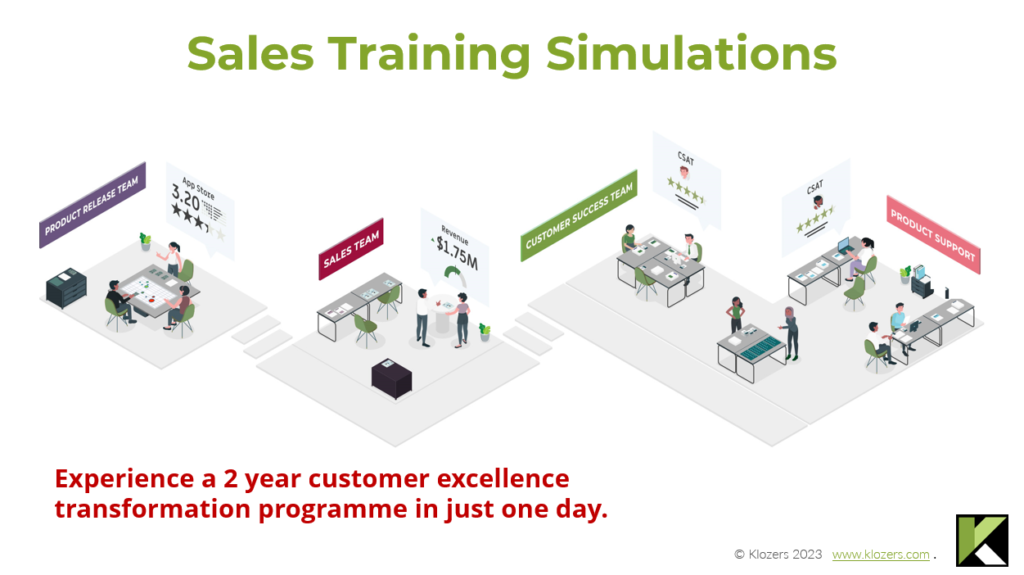
Sales training simulations can provide a structured way to practise realistic situations and receive feedback without turning the whole kickoff into a lecture.
Adjacent-skill evidence: this evidence is about workplace learning and development, not sales kickoffs specifically. The CIPD defines learning transfer as applying newly acquired knowledge and skills to real workplace situations and argues that transfer should be an integral part of the L&D process. That supports designing follow-through and application into capability-focused kickoff sessions rather than treating attendance as the end point. CIPD: evidence-based L&D and learning transfer.
Choose speakers against the job they need to perform
Do not begin with a speaker list. Decide what the session needs to achieve, then choose the person and format that fit the brief. You may need a speaker for perspective or challenge, a trainer for capability and practice, or a facilitator for structured discussion and decisions.
Our guide to choosing sales kickoff speakers sets out the selection criteria in more detail.
Get the logistics right without letting logistics drive the event
Venue, room layout, travel, technology, timing and breaks all matter because poor logistics can obstruct participation. But they are delivery constraints, not the purpose of the kickoff.
Design the work first. Then choose the environment and schedule that make that work possible. For example, a session built around small-group opportunity work needs a different room layout from a leadership briefing.
Build follow-through before the kickoff starts
If participants are expected to use something differently after the event, decide in advance how that expectation will be reinforced. Managers need to know what to observe, what to discuss and when progress will be reviewed.
This is especially important when the kickoff includes training. The event can introduce and practise a capability, but the working environment determines whether people continue to use it. Build manager involvement into the design rather than adding a follow-up email after the event.
Measure what happens after the event
Attendee feedback can tell you how people experienced the event. It does not tell you whether the required behaviour, decision or commercial action happened afterwards.
Return to the outcome defined at the start. If the requirement was a new account-planning discipline, inspect whether account plans are being used. If it was stronger discovery, managers need a way to observe and coach discovery. If it was alignment around priority opportunities, review whether the agreed actions were completed.
The measure should match the outcome. Do not claim revenue impact where the evidence only shows attendance, satisfaction or completion.
Sales kickoff planning checklist
- Define the business outcome.
- Identify the required behaviour or decision.
- Capture existing good practice.
- Identify what must be learned, decided or practised.
- Move routine information before the event where appropriate.
- Create participation around the priority.
- Practise where capability development is required.
- Use relevant sales situations.
- Make required decisions.
- Agree actions and ownership.
- Give managers a reinforcement role.
- Observe the required behaviour.
- Review agreed actions.
- Check progress at an agreed point.
- Measure against the original outcome.
When should sales training be part of the kickoff?
Include training when a capability gap is genuinely preventing the team from executing the commercial priority. Do not add training simply because a kickoff agenda needs another session.
For teams that need practical development around their own sales environment, Klozers can run your kickoff as a bespoke programme. The starting point is the outcome, the existing internal best practice and the sales situations the team needs to handle more effectively.
Iain has spent over 30 years in B2B sales, selling, training and leading teams both domestically and internationally. He serves as an Associate at Strathclyde University Business School, where he has delivered the sales content for the Masters in Entrepreneurship since 2015. Klozers builds sales programmes from what a client’s own top performers already do, and delivers them on the client’s live deals.
If your kickoff includes sales development, we can help you turn the commercial priorities into practical sessions built around your team’s real sales work.
Top 10 AI Skills Every Sales Professional Needs to Crush It in 2025
AI SKILLs - Top Question FRom Google
What are the most important AI skills sales professionals need to stay competitive in 2025?
Sales in 2025 will be defined by how well professionals can combine human expertise with AI capability. Buyers expect speed, precision, and personalisation that simply can’t be delivered through traditional selling methods alone. That’s why mastering the right AI skills is no longer optional: it’s the difference between hitting quota and being left behind. In this guide, we’ll break down the top 10 AI skills every sales professional should focus on, how they translate into day-to-day results, and which tools can help you get there faster.
Free access to our best tools and templates
Introduction: Top 10 AI Skills Every Sales Professional Needs
Artificial intelligence isn’t just a trendy topic anymore; it’s a must-have strategic tool for every business.
And nowhere is this more evident than in B2B sales, where the pressure to work faster, personalise more deeply, and forecast more accurately is relentless.
If you’re a sales professional or revenue leader, it’s no longer enough to rely on charm, product knowledge, or relationship-building alone. The most successful salespeople today are blending those traditional skills with AI capabilities to gain a competitive edge.
Buyers are savvier, entire sales cycles are tighter, and the amount of sales and customer data available is staggering. AI helps make sense of this modern sales landscape.
AI can make your job easier and your results stronger, whether you’re a business development rep sending dozens of outreach emails daily, an account executive managing multi-stakeholder deals, or a sales manager coaching a remote team.
In this article, we’ll explore exactly how B2B sales teams can leverage AI, the top 10 AI skills you’ll need in 2025, the real-world benefits of acquiring these skills, and a rundown of the AI tools and technologies reshaping sales as we know it.
How your sales team can leverage AI
The smartest B2B sales organisations aren’t just experimenting with AI, they’re integrating it into the core of their growth and sales strategies.
Rather than treating AI as a set of disconnected tools, they’re using it to transform how they find opportunities, engage prospects, and drive sales performance at scale.
When AI is mentioned in sales, the conversation often jumps straight to tools. However, the true opportunity lies in transforming workflows. AI empowers sales teams to do more of what works and less of what doesn’t.
Here are some of the key ways B2B sales teams are harnessing AI:
Smarter Sales Prospecting
AI can crawl company websites, scan job boards, and even monitor funding news to identify new prospects or trigger events worth pursuing. Rather than spending hours trawling LinkedIn or databases, sales reps can use AI tools to generate targeted lead lists in minutes.
AI Powered Opportunity Identification
Top-performing sales teams are using AI to uncover new sources of revenue, both in their core markets and in emerging segments.
Analysing customer behaviour, purchase history, and market signals helps sales professionals spot untapped potential that might otherwise be missed.
AI can help identify dormant accounts with renewed interest or flag cross-sell opportunities, bringing precision to opportunity discovery.
Personal Outreach At Scale
Sales innovators are leveraging generative AI to tailor offerings and outreach to increasingly niche customer needs. No more one-size-fits-all messaging.
AI enables reps to craft communications that speak directly to the buyer’s role, industry, business pain points, and intent, resulting in higher engagement and trust from the first touchpoint.
Combined with human review and contextual adjustments, this enables scalable yet authentic outreach.
Value-based, AI-enabled pricing
Gone are the days of flat pricing models and guesswork. With AI, companies are leveraging advanced data analysis and machine learning tools to shift toward dynamic, value-based pricing that adjusts based on customer segment, buying context, and perceived value.
This not only sharpens pricing discipline but also gives sellers more confidence in structuring deals that align with customer preferences and business objectives.
Digitally enabled task automation
AI is a powerful tool for freeing up sellers’ time to focus on relationship-building and closing deals.
From prioritising leads and scheduling follow-ups to summarising meetings and drafting proposals, task automation powered by AI allows sellers to deliver value more quickly and consistently.
It also helps teams build better sales and marketing alignment and sync together day-to-day activities with AI-powered sales strategies.
Meeting Intelligence & Coaching
Sales calls are full of insight if you know where to look. Tools like Gong and Chorus use AI to analyse meetings, flag competitive mentions, and highlight talk-to-listen ratios. Sales managers no longer need to manually review recordings to coach their team effectively.
Pipeline & Forecasting Accuracy
By analysing patterns across deals, AI can highlight which opportunities are most likely to close and which are at risk. This helps sales leaders provide more accurate forecasts, identify red flags early, and better allocate resources.
Data Driven Talent Development
Sales organisations are also using AI to improve how they assess and develop talent. Performance data can now be analysed in real time, revealing which behaviours lead to sales success and where coaching is needed.
AI also supports capability-building at scale, delivering personalised learning paths and targeted feedback that continuously improve seller and sales effectiveness.
At Klozers, our AI training for sales reps goes beyond theory. We help B2B teams embed AI into their sales processes without disrupting what already works.
Top AI skills for sales professionals in 2025
Mastering AI in sales doesn’t mean becoming a data scientist. It means acquiring practical, job-relevant, and human skills that align with how sales is done today.
Here are the 10 most valuable AI skills for sales professionals in 2025:
1. Prompt Engineering
Crafting effective prompts is key to generating useful outputs from AI tools. The best sales reps will know how to structure prompts to get nuanced and contextually relevant responses.
Example: Instead of typing “write a follow-up email,” a well-crafted prompt might be: “Write a concise, friendly follow-up email to a marketing manager at a B2B SaaS company who expressed mild interest in a demo last week but hasn’t replied.”
2. AI-aided research and insight gathering
Sales professionals must know how to use AI to gather valuable insights about accounts, market trends, and competitor activity. Tools like ChatGPT, Apollo, and LinkedIn Sales Navigator (with AI overlays) allow for rapid, surface-level and deeper research.
3. AI-enhanced email writing and sequencing
While anyone can generate an email with AI, few can fine-tune it into a message that gets opened, read, and replied to. Skill lies in editing for tone, clarity, and value, while maintaining personalisation and professionalism.
4. AI-driven task management and workflow optimisation
AI won’t replace salespeople, but those who can delegate low-value tasks to automation will have a major edge. Sales professionals must learn how to integrate AI tools into their daily routines to automate admin tasks, generate follow-up actions from meetings, and maintain clean, accurate CRM data.
5. Customising sales collateral with AI
Whether it’s a proposal, case study, or slide deck, AI tools like Canva AI, ChatGPT, or Beautiful.ai can generate or assist in tailoring content for specific clients, thus saving time and making it contextually relevant to each client and their needs.
6. Simulating sales scenarios with AI
Salespeople can use AI to roleplay challenging conversations or practice objection handling in private. This allows for skill development in a low-pressure environment and with real-world examples before stepping into high-stakes meetings.
7. Analysing conversational data
Reps and managers should learn how to review and interpret the insights surfaced by conversation intelligence tools: keyword frequency, objection patterns, competitor mentions, and buyer sentiment trends.
8. Forecasting and deal risk assessment
Understanding how AI models flag deal risks, perhaps due to buyer inactivity, weak multi-threading, or poor timing, enables reps to take pre-emptive action to re-engage or reposition.
9. Fluency in sales tech stack
Reps don’t need to be IT experts, but they should be comfortable using AI-driven tools inside the CRM or enablement platform. This includes configuring email cadences, running AI-assisted reporting, or setting up alerts.
10. Ethical AI
AI should enhance trust, not erode it. Sales professionals need a strong grasp of where AI fits and where it doesn’t, ensuring privacy, compliance, and transparency in all sales operations.
Benefits of AI skills for sales professionals
Sales teams that are equipped to use AI effectively don’t just work faster, they work smarter, with greater precision and impact across every stage of the funnel.
Here’s what businesses typically gain when their salespeople are trained to harness AI:
- Increased sales productivity with AI: By automating time-consuming admin and repetitive tasks, AI frees up reps to focus on what really matters: engaging prospects and closing deals.
- Shorter sales cycles: AI accelerates research, sharpens messaging, and improves buyer targeting, enabling sales conversations to progress faster and more efficiently.
- Higher win rates: Personalised outreach, real-time objection handling, and data-backed follow-ups give reps the edge needed to convert more opportunities into wins.
- Smarter coaching and performance development: With AI-generated insights from calls, emails, and CRM activity, sales leaders can deliver targeted, real-time coaching that directly improves individual and team performance.
- Greater commercial agility: Teams become more responsive to shifts in buyer behaviour and market dynamics, using AI to adapt messaging, reprioritise efforts, and seize emerging opportunities without delay.
At Klozers, we focus not just on introducing new tools but on developing the skills and confidence your team needs to turn those tools into measurable outcomes.
Types of generative AI used in sales
Different types of generative AI are utilised at various stages of the sales funnel, each delivering value in distinct ways. They include:
- Text generation: Used for crafting AI-powered outreach emails, LinkedIn messages, call scripts, and value propositions. Text-based AI is the most widely adopted in sales today.
- Speech and voice analysis: AI tools analyse sales calls for sentiment, talk ratios, filler words, and buying signals, transforming conversation data into coaching opportunities.
- Image and visual content: Used to quickly generate visuals for sales decks, social media posts, or case studies, particularly valuable for BDRs who work closely with marketing.
- Multimodal AI: The next frontier, combining voice, text, and visual AI. Tools like Fireflies, Zoom AI Companion, and Microsoft Copilot are beginning to offer integrated sales support across formats.
Top generative AI tools for sales teams in 2025
Here’s a curated list of some of the best AI tools for sales teams in 2025:
- Gong: For real-time call intelligence, deal tracking, and rep coaching based on actual conversations.
- ChatGPT Enterprise: Customisable AI chatbots used for drafting emails, summarising content, and brainstorming ideas.
- Lavender: Enhances cold email writing with AI-driven scoring, tone correction, and personalisation tips.
- Salesforce Einstein: Native AI embedded in Salesforce, supporting lead scoring with AI, opportunity insights, and sales analytics.
- HubSpot AI: Offers predictive lead scoring, content generation, and AI-powered chatbots that are ideal for SMEs.
- Apollo AI: Combines prospecting and outreach tools with intelligent lead recommendations.
- Fireflies: Transcribes meetings and provides searchable, shareable notes with AI-driven highlights.
- Pipedrive: AI sales assistant.
These sales AI tools are only as powerful as the humans behind them. That’s why at Klozers, our AI Skills for Sales course focuses on sales techniques and skills before software, ensuring teams get the most out of every tool they use.
ACTIONABLE TIP
Start practicing prompt engineering today. Take one AI tool you already use, whether it’s ChatGPT, Salesforce Einstein, or Apollo, and experiment with writing more specific prompts for a single task like follow-up emails. Track which versions get higher open or reply rates. Small daily tests will sharpen your AI prompting skill and translate directly into better sales outcomes.
Takeaway: Master these 10 AI skills to outsell the competition in 2025
2025 won’t reward sales teams that dabble in AI. It will reward those who embed it into their culture, sales training, and everyday workflows.
Your team doesn’t need to be tech geniuses; they need to be curious, coachable, and empowered.
Investing in AI fluency today will yield better engagement, more conversions, faster onboarding, and stronger forecasting. But above all, it will futureproof your sales team in an increasingly competitive, AI-enhanced marketplace.
At Klozers, we’re helping forward-thinking sales teams across sectors turn AI into a competitive advantage. Through tailored workshops, executive coaching, and practical sales enablement, we’ll help your team develop the AI skills that drive results.
Do you want to unlock your team’s full potential with AI? Explore our AI Sales Skills Training and Coaching Programmes today.
FAQ's AI Skills
Here are the answers to some common questions about AI in sales:
How can AI help with finding and closing leads
AI identifies promising leads by analysing behaviour, demographics, and buying intent. It helps sales teams prioritise outreach, personalise messaging, and suggest next steps. This makes prospecting more efficient and improves close rates by enabling reps to engage the right people with the right message at the right time.
What is prompt engineering, and how does it apply in sales?
Prompt engineering involves crafting clear, specific instructions to get better results from AI tools. In sales, it helps reps generate personalised emails, summarise meetings, or simulate objections. Strong prompts save time and improve content quality, making AI a more reliable assistant in everyday sales activities.
Will AI replace sales reps, or just support them?
AI supports and will most likely not outrightly replace sales reps. It handles repetitive tasks and surfaces useful insights, freeing up time for reps to focus on building relationships and closing deals. Those who embrace AI will have a thriving sales career; those who ignore it may fall behind as tech-savvy peers outperform them using smarter tools.
What soft skills still matter when using AI in sales?
When using AI, sales reps must apply critical thinking to interpret data and question AI-generated suggestions. Adaptability is also key to mastering new tools and workflows, turning AI insights into strategic digital selling techniques and personalised customer engagement and human-led conversations that build trust.
Can AI make sales feel less personal?
AI can feel impersonal if overused or poorly implemented. However, when used effectively, it enhances personalisation by providing deeper insights into each prospect. The key is combining AI efficiency with human empathy, ensuring customer interactions are relevant, timely, and aligned with each customer’s specific needs.
What tools are best for automating sales tasks with AI?
Top tools include Gong for call analysis, ChatGPT for content creation, Apollo.io, an AI tool for lead generation, and Salesforce Einstein for pipeline insights and CRM automation. These platforms help reps automate routine work, stay organised, and engage and understand customers more effectively, so they can focus on data-driven selling.
.
Mental Health in Sales FREE Training
Mental Health in Sales - Top Question from Google
How stressful is a sales job?
Here’s the short answer:
Sales can be stressful due to pressure, rejection, and long hours. However, it offers high earning potential, accomplishment, variety, and personal development. Whether it suits you depends on your personality and stress tolerance.
In this article we will cover...
There’s a new way to deliver sales growth…
Don’t buy Sales Training until you’ve watched this video…
1. The Hidden Toll - Why Mental Health Matters
The fast-paced, high-pressure world of sales can take a significant toll on mental health. While the pursuit of success and exceeding quotas can be motivating, the relentless pursuit of performance can often come at a cost.
Statistics paint a concerning picture:
- 42% of sales professionals experience symptoms of anxiety and 36% experience symptoms of depression, according to the National Alliance on Mental Illness (NAMI) https://www.nami.org/Home. This is significantly higher than the national average of adults experiencing anxiety (31.1%) and depression (8.4%) in the past year according to the National Institute of Mental Health https://www.nimh.nih.gov/health/statistics.
- Chronic stress, a common experience in sales, can lead to decreased motivation, cognitive decline, and increased vulnerability to mental health issues, according to a study published in the Journal of Personality and Social Psychology https://www.frontiersin.org/journals/psychology/articles/10.3389/fpsyg.2018.01702/full.
These statistics illustrate the hidden toll that the demands of sales can take on mental wellbeing. Ignoring these concerns can have detrimental consequences, not only for individual salespeople but also for the entire organization.
2. The Unique Challenges of Sales & Mental Wellbeing
Sales professionals face a unique set of challenges that contribute to elevated stress and risk factors for mental health issues compared to other professions. Here are some key factors:
- Pressure to Perform: Sales are often commission-based, creating significant pressure to meet or exceed individual quotas. This constant pressure to perform can lead to anxiety, burnout, and feelings of inadequacy if they miss their sales goals.
- Rejection Sensitivity: Sales involves frequent customer rejection, which can be emotionally draining and impact your self-esteem. A study published in the Journal of Personality and Social Psychology found that salespeople experience higher levels of rejection sensitivity compared to individuals in other professions [https://psycnet.apa.org/record/2010-18724-001].
- Unpredictable Work Schedules: Many sales roles require long hours, travel, and unpredictable schedules. This work-life imbalance can disrupt sleep patterns, create difficulty maintaining healthy habits, and contribute to feelings of isolation and loneliness.
- Highly Competitive Environment: The competitive nature of the sales industry can breed feelings of inadequacy, envy, and imposter syndrome, further contributing to stress and anxiety.
By understanding these unique challenges, organizations and individuals can prioritize mental health support and create a more supportive work environment for sales professionals.
3. The Impact of Poor Mental Health on Sales Performance
The negative impact of poor mental health on sales performance is well-documented and can have significant consequences for both individual salespeople and organizations. Here’s a breakdown of some key effects:
- Decreased Productivity: A study published in the Journal of Occupational and Environmental Medicine found that employees experiencing symptoms of depression are 37% less productive than their healthy counterparts. This translates to decreased sales calls, missed opportunities, and lower overall revenue generation.
- Increased Absenteeism and Turnover: Mental health issues can lead to increased absenteeism and employee turnover, further disrupting team dynamics and impacting overall sales performance. A 2018 report by the National Alliance on Mental Illness (NAMI) estimated that depression alone costs U.S. employers $170 billion annually due to absenteeism, presenteeism (reduced productivity while at work), and medical expense.
- Diminished Decision-Making: Chronic stress and anxiety associated with poor mental health can impair cognitive function and decision-making abilities. A study published in the journal Nature Reviews Neuroscience found that stress can lead to impaired judgment, reduced creativity, and difficulty focusing, all of which can negatively impact sales strategies and negotiations.
These detrimental effects highlight the importance of prioritizing mental health support within sales teams. By creating a culture of well-being and offering resources and support systems, organizations can empower their salespeople to thrive and improve their performance.
4. Building Resilience: Strategies for Salespeople
The demanding nature of sales can undoubtedly test mental resilience. Fortunately, by developing coping mechanisms and adopting healthy habits, salespeople can learn to thrive in a high-pressure environment. Here are some key strategies:
1. Cultivate a Growth Mindset: Embrace challenges as opportunities to learn and grow. A study published in the Journal of Personality and Social Psychology found that individuals with a growth mindset demonstrate greater resilience in the face of setbacks and are more likely to persist towards achieving their goals.
2. Practice Mindfulness and Stress Management: Techniques like meditation, deep breathing exercises, and regular physical activity can effectively reduce stress and improve emotional regulation. A 2017 meta-analysis published in the Journal of the American College of Cardiology found that mindfulness-based interventions can significantly reduce stress, anxiety, and depression.
3. Seek Social Support: Building strong relationships with colleagues, friends, and family can provide invaluable support and a sense of belonging. A study published in the American Journal of Public Health found that individuals with strong social networks experience lower levels of depression and anxiety.
4. Celebrate Wins and Focus on Progress: Acknowledge and celebrate even small victories to maintain motivation and build confidence. Focusing on progress, not just the end goal, helps maintain a positive outlook and fosters resilience in the face of challenges.
5. Prioritize Self-Care: Make time for activities that promote relaxation and well-being, such as hobbies, spending time in nature, or getting enough sleep. Prioritizing self-care helps manage stress and prevent burnout, leading to increased resilience and overall well-being.
By adopting these strategies, salespeople can cultivate mental resilience and navigate the challenges of their profession with greater confidence and well-being. However, if in doubt please seek professional help here https://www.wellityglobal.com
5. Creating a Supportive Sales Culture
Beyond individual strategies, building and maintaining a supportive sales culture is crucial for promoting mental well-being and optimizing team performance. Here’s how organizations can create a more positive and empowering environment for their salespeople:
- Open Communication and Feedback: Encourage open communication and regular feedback sessions. This allows salespeople to voice concerns, receive constructive criticism in a safe space, and feel supported by management.
- Focus on Collaboration: Promote collaboration over cutthroat competition. Encourage knowledge sharing, team problem-solving, and celebrate collective wins. This fosters a sense of camaraderie and reduces feelings of isolation.
- Work-Life Balance: Implement flexible work arrangements and discourage practices that lead to burnout, such as excessive overtime or constant after-hours communication.
- Recognition and Appreciation: Recognize and celebrate individual and team achievements. Public acknowledgement of successes reinforces positive behaviors and motivates continued effort.
- Mental Health Resources: Provide access to mental health resources such as Employee Assistance Programs (EAPs) or online resources on stress management and mental well-being.
- Destigmatize Seeking Help: Normalize conversations about mental health and encourage open communication about challenges. This reduces stigma and creates a safe space for salespeople to seek help when needed.
By prioritizing these elements, organizations can create a supportive sales culture that fosters mental well-being, boosts employee morale, and ultimately, drives improvements in sales performance.
6. Benefits of Prioritising Mental Health in Sales
Investing in the mental well-being of your sales team isn’t just the humane thing to do, it’s a strategic decision with demonstrably positive outcomes for both employees and the organization. Here’s how prioritizing mental health in sales can benefit your company:
- Enhanced Sales Performance: Studies have shown a clear link between mental well-being and sales success. A happier, less stressed salesforce is more productive, resilient, and capable of handling rejection. A study by the American Psychological Association (APA) found that employees who report higher levels of well-being are significantly more likely to be high performers [https://www.apa.org/].
- Reduced Absenteeism and Turnover: Mental health issues can lead to increased absences and employee churn. By addressing these concerns, companies can experience significant cost savings and maintain a stable, experienced sales team. A 2020 report by the World Health Organization (WHO) estimates that depression and anxiety cost the global economy $1 trillion in lost productivity each year [https://www.who.int/news-room/fact-sheets/detail/depression].
- Improved Decision-Making: Chronic stress and anxiety can negatively impact cognitive function. By prioritizing mental health, you empower your salespeople to make sound decisions, develop effective sales strategies, and ultimately close more deals.
- Enhanced Customer Relationships: A happier, more well-balanced salesperson is more likely to project positive energy and build rapport with customers. This fosters trust, strengthens relationships, and increases customer satisfaction.
- Stronger Employer Brand: Companies that prioritize employee well-being attract and retain top talent. By fostering a supportive environment, you build a positive employer brand that makes your organization more competitive in the talent marketplace.
These benefits highlight the strategic value of prioritizing mental health in sales. By investing in the well-being of your salespeople, you’re not just doing the right thing; you’re also creating a high-performing, successful sales team.
7. Getting Help: Resources for Sales Professionals
Prioritizing mental health is key to success in sales. If you’re struggling, know that you’re not alone. Numerous resources exist to support sales professionals across the globe.
For Sales Professionals in the UK:
- Mind: A leading mental health charity offering information and support services: https://www.mind.org.uk/
- The Samaritans: Provides 24/7 confidential emotional support via phone, email, or text: https://www.samaritans.org/about-samaritans/
- The Chartered Institute of Personnel and Development (CIPD): Offers resources and guidance on workplace mental health for both employees and employers: https://www.cipd.org/en/
- Business Partners Online: Provides free and confidential mental health support services specifically for small business owners and self-employed individuals: https://www.nerdwallet.com/article/small-business/how-to-find-a-business-partner-online
For Sales Professionals in the US:
- National Alliance on Mental Illness (NAMI): A national organization offering support groups, educational resources, and advocacy for mental health: https://www.nami.org/Home
- National Institute of Mental Health (NIMH): Provides mental health information and resources, including a treatment locator tool: https://www.nimh.nih.gov/
- The Jed Foundation: Focuses on mental health resources and support specifically for teenagers and young adults, including those entering the workforce: https://jedfoundation.org/
- The Trevor Project: Provides crisis intervention and suicide prevention services specifically for LGBTQ+ youth, a demographic with higher rates of mental health concerns: https://www.thetrevorproject.org/
For Sales Professionals in Australia:
- Beyond Blue: A national organization providing information and support services for depression and anxiety: https://www.beyondblue.org.au/about-us/contact-us
- Lifeline: Offers 24/7 confidential support for anyone experiencing emotional distress: https://www.lifeline.org.au/131114/
- Headspace: Provides mental health services and resources specifically for young people aged 12-25: https://headspace.org.au/headspace-centres/
- Black Dog Institute: Focuses on mental health research and education, with resources tailored for workplaces: https://www.blackdoginstitute.org.au/
Additional Resources:
- Headspace National Support Line (Australia): 1300 22 4636
- National Suicide Prevention Lifeline (US): 988
- Samaritans 24/7 Helpline (UK): 116 123
In addition to these resources, many Employee Assistance Programs (EAPs) offered by employers can provide confidential counseling and support services. Don’t hesitate to reach out to your HR department to see what resources are available to you.
Remember, seeking help is a sign of strength, not weakness. Taking care of your mental well-being is essential for success in both your personal and professional life.
8. FREE TRAINING
As part of our giving back Klozers are proud to offer free sales training for the B2B sales community. Course details:
Building a Sales Mindset & Mastering the Pressure Cooker of Sales
Learning Objectives:
By the end of your training session, your sales team will be able to:
- Identify the unique stressors faced by B2B sales professionals.
- Understand the negative impact of chronic stress on performance and health.
- Apply five practical strategies to manage stress, anxiety, and pressure.
- Develop a personalized plan to prioritize your mental well-being.
Course Duration – 90 minutes
Delivery – Live Online
To Request a FREE Course – >>>Contact Us Here<<<
“A fantastic learning experience”
Amanda – Account Manager
Online Sales Training – Supercharge Your Sales Team
Online Sales Training, how much does it cost?- Top Question from Google
How much does online sales training cost?
Here’s the short answer:
Online sales training varies in cost from free for a recorded program, to $2000 per participant, for live training customised to your needs.
In this article we will cover...
There’s a new way to deliver sales growth…
Don’t buy Sales Training until you’ve watched this video…
1. Online Sales Training Courses
Online training became popular during the covid lockdowns of 2020, when sales professionals were no longer able to work from their traditional office, or field based roles.
Overnight the lockdowns made B2B selling much tougher and employers needed to find online solutions to support their teams.
Whilst the lockdowns have thankfully gone, what has remained are sales teams who now work remotely. Working remotely is often not just working from home. More often than not working remotely means working from your home in another region or country.
With increases in flights and hotel charges, bringing remote sales teams together has become very expensive.
“Companies that move sales training online save 30 to 70 percent on travel costs and lost productivity.” – Brevit Group
This is where online training courses come into their own, and can give your sales professionals and sales managers the support they need to grow and develop.
If you’re wondering whether online sales training is an inferior alternative to traditional In-person training, read on to find out can still be an effective tool in your learning arsenal.
2. Online Sales Courses Available via Klozers
As a business we now have the ability to deliver our entire portfolio of training courses for online delivery. These courses are delivered live online with one of our sales trainers. Each of our sales courses is modular, which means that you can easily swap modules in and out to build a bespoke sales course that meets your exact needs.
We have 17 sales courses available and 65 modules as shown below:
COURSE NAME | TRAINING MODULES (90 mins each) | |||
Sales Fundamentals (Level 100) | Building your Sales Pipeline | Questioning Techniques | Objection Handling Techniques | The Art of Klozing |
AI for Sales (Level 200) | Pre-call Intelligence & Strategic Targeting | Data Driven Negotiation and Deal Structuring | Hyper personalised engagement & Relationship Building | Competitive Intelligence and Strategic Differentiation |
Consultative Selling Skills (Level 200) | Consultative Selling Intro | Perfecting your Value Proposition | Collaborative Problem Solving | Negotiation, Klozing & Customer Success |
Story Telling for Sales Skills (Level 200) | The Science of Storytelling: Why Stories Sell | Crafting Your Compelling Sales Narrative | Putting Your Stories to Work in the Sales Cycle | Storytelling Mastery: Taking It to the Next Level |
Solution Selling (Level 200) | Uncovering Customer Buying Motives | Perfecting your Value Proposition | Mastering the Sales Conversation | Klozing & Building Long Term Partnerships |
SaaS Sales Training (SDRs) (Level 200) | Sales Mindset of a Winner | Perfecting your Value Proposition | Outbound Sales Prospecting | Needs Assessment Discovery & Qualifying |
SaaS Sales Training (AEs) (Level 200) | Pre-demo Preparation | Selling Value not Price | SaaS Product Demos | Objection Handling Techniques |
LinkedIn Sales Training (Level 200) | Building your LinkedIn Sales Arsenal | The Art of Persuasive Communication | Mastering the Sales Conversation | LinkedIn Sales Navigator |
Telephone Sales Training (Level 200) | Sales Mindset of a Winner | Perfecting your Value Proposition | Telephone Sales Skills | Live Calling with Coaching |
90 Day Sales Planning (Level 100, 200 & 300) | Principals of 90 Day Planning | Creating an Effective Action Plan | Communication & Collaboration | Accountability & Motivation |
Outbound Lead Generation (Level 200) | Building a Value Proposition | Cold Email Outreach | LinkedIn Selling Skills | Telephone Sales Skills |
Inbound Lead Generation (Day 1 of 2) (Level 200) | Introduction and Case Study Review | Strategy and Planning | Creating content that converts | Building High Value Assets |
Inbound Lead Generation (Day 2 of 2) (Level 200) | Technical Requirements and Set up | Selling Online | Measurements & Reporting | Action Planning |
Key Account Management (Day 1 of 2) (Level 300) | Unlocking the Power of Key Accounts | Understanding the Enterprise Landscape | Building Trusted Relationships
| Crafting a Winning Key Account Plan |
Key Account Management (Day 2 of 2) (Level 300) | Sales Negotiation and Deal Structuring | Implementing Your Key Account Strategy | Maintaining and Growing Key Accounts | The Future of Key Account Management |
Sales Negotiation Training (Level 300) | Foundation of B2B Negotiations | Planning & Preparation | Mastering the Negotiation Dance | Beyond the Deal |
Enterprise Sales Training (Level 300) | This course content is customised to meet your exact needs. | This course content is customised to meet your exact needs. | This course content is customised to meet your exact needs. | This course content is customised to meet your exact needs. |
Bespoke Sales Training (Level 100, 200 & 300) | This course content is customised to meet your exact needs | This course content is customised to meet your exact needs | This course content is customised to meet your exact needs | This course content is customised to meet your exact needs |
Sales Management & Leadership (Level 300) | Sales Benchmarking & Improvement Planning | Sales Leadership Styles | Sales Performance & Coaching | Hiring Sales Winners |
3. Online Training vs In-Person Sales Training Courses
In-person or face to face delivery of sales training remains highly popular, however, some companies find the costs prohibitive and the disruption to schedules affect productivity. The logistics involved with arranging classroom-based learning can be very costly, not only in terms of your budget, but your time too.
Online training tends to be delivered in bite sized chunks making it easier for sales reps to consume and less impactful on their diary. In addition to the challenges of taking time out for traditional face to face training training, some salespeople report struggling after the training to internalise and implement what they have learned.
One or two days away from your desk, usually only serves to create a backlog of work for salespeople to return to and deal with. This creates a tendency to continue “doing what you’ve always done” rather than implementing new sales strategies, new sales skills and new sales techniques.
Technological advancements with products like Microsoft Teams and learning portals have made online sales training much more effective and easier to deliver and consume learning.
Video conferencing, enhanced streaming capabilities and the emergence of powerful and dependable new software have made online sales training much more effective than it was in the past.
It’s now possible to source training from experts around the world, rather than just ones based in your locality. We ourselves are now supporting companies from Melbourne, Australia to San Francisco, California with their sales strategy, business development, selling process, inbound sales methodology and new customer acquisition.
The Klozers team regularly deliver online training to clients with sales professionals in multiple countries and spanning different time zones.
4. Sales Coaching Online
An often overlooked but important part of the learning and development process, is sales coaching.
Training is the transfer of knowledge, whereas coaching is the practical application of the knowledge in the field. Coaching takes what sales reps learn in the classroom, and coaches them through how to implement the new learning and new sales skills in the boardroom.
In addition to being able to provide important context and nuance, a good sales coach will boost the sales professionals morale and confidence.
Sales Coaching can also deliver real value when helping sales managers reps focus on the right behaviours. Learning new skills is worthless unless the skill is then used in the day to day behaviours of the sales representatives.
Many clients now choose a Hybrid delivery model whereby they start a sales training programme with a traditional face to face training workshop, and then follow this up with online sales coaching.
“Continuous training results in 50 percent higher net sales per employee.” Brevit Group
Exec Sales Coaching
Our executive sales coaching has grown in popularity and the online format works particularly well for time poor sales managers.
The Exec coaching is bespoke to every Exec, however, previous engagements have helped sales leaders with identifying potential buyers, inbound sales methodology, sales strategy, management skills, understanding the buying process, communication skills for inside sales, identifying customer pain points, emotional intelligence for sales professionals and an ongoing focus to close deals and build a successful sales team.
5. Advantages of Online Training Courses
A more flexible way to learn:
Studies show that many of today’s b2b sales teams regard online sales training as more useful than classroom-based learning. “Learning helps me grow, adapt and achieve my career goals.” LinkedIn Learning Report.
When salespeople can learn at their own pace, and at a time that suits them, they are more likely to feel engaged with the content.
In addition, they can even access the material in the comfort of their own homes in many cases. Some salespeople will inevitably learn quicker than others, so each sales rep can learn at their own pace rather than receiving training at the pace of the group which maybe too fast or too slow for them.
Most courses are simply accessed via a course link from your PC or mobile device which makes the learning process much easier for the user.
A Bite Sized Approach to Learning
Many sales people prefer the bite size approach our online learning offers. With this approach, they can take in 90 minute segments of content at a time and avoid being overloaded with information.
We typically deliver our courses which contain 4 modules at a rate of 1 module per week. This allows participants to take in, absorb and most importantly go away and practice the new sales skills and sales strategies in between sessions.
Nonetheless, online sales programs shouldn’t replace face to face learning completely. Classroom-based training still offers certain benefits for your businesses, and we believe you should take advantage of both learning methods.
Keeping Your Team Productive
In-person or face to face sales training remains relevant, but it can harm also harm productivity. The logistics attached to arranging classroom-based learning can be very costly, not only in terms of your budget, but your time too.
Online training tends to be delivered in bite sized chunks making it easier for salespeople to consume.
In addition to the challenges of taking time out for traditional event based training, many salespeople report struggling after the training.
One or two days away from your desk usually only serves to create a backlog of work for the sales manager and reps to return to and deal with. Technological advancements with products like Microsoft Teams and learning portals have made online sales training much more effective and easier to deliver and consume.
Course Structure
Whilst traditional in person sales training has been delivered via one or two day sales courses this model does not lend itself to online delivery.
The format simply doesn’t work well with online learning, as asking sales professionals to sit at a desk for 8 hours a day is more likely to put them off learning than encourage them. Our web based sales training is structured very differently around shorter 90 minute sessions with breaks to avoid “Zoom fatigue”.
We have found that sessions lasting 2 hours are simply too long for most people, and our own online sessions are typically no longer than 90 minutes long. In addition, they are deliberately interactive in order to grab and hold the attention of participants. Rather than a one way monolog PowerPoint, every session includes interactive elements to engage participants and create a positive learning environment.
Each session in our web based sales training would normally contain some form of initial introduction and discussion on the topic, a piece of work based activity for the participants to complete, and a review conversation to capture lessons learned at the end.
Finding Specific or Bespoke Content:
Another key benefit of virtual training courses are that it’s now simpler to source the specific type of training you need. If you require a sales course that’s specific to your industry or a problem that you’re facing, it’s easier than ever to locate people that can provide it.
Salespeople can receive their targeted sales skills training individually if they wish, or via a wider group in the sales team if Peer learning is part of the learning strategy.
Content is less likely to go off-topic when it is delivered online. They can also choose to learn at a time that suits them which helps keep the learning relevant to their needs.
Continuous Learning
We provide many advanced level online training courses for more experienced salespeople, looking to up-skill or refresh their skills, improve their techniques or go on to more leadership oriented subject matter.
A sales training course specifically for groups can also make teams more connected, help strengthen their relationships, increase collaboration, boost sales performance and provide a focus that reinforces the companies ongoing learning and development strategy.
Online training can be better suited for companies seeking continuous learning, whereas many face to face sales courses may see trainers only visit your company once or twice, per annum.
6. Self-Paced Sales Training Courses
We provide a limited number of Self-paced training courses online, however, we have found that instructor led training, which is delivered live is the optimum approach when engaging salespeople and creating a productive learning environment.
Simply put, without engagement there will be no improvement in either sales skills or sales behaviours and any increase in sales performance from the sales team will be negligible.
Live, Instructor led training is much better at capturing and holding the attention of any sales team. In our experience, salespeople are extremely busy, and when you are relying on them to find time in their day to complete self paced training it rarely happens.
Every company, every sales team has a specific nuance, a different context in terms of their approach and understanding of Selling skills, changes to sales process, sales performance, sales management and sales results. This can never be catered for in self paced learning. Participants need the ability to question, clarify and even challenge the sales trainer which is only available with instructor led training.
7. Post Training Support
Investing in your sales team is about more than just acquiring skills; it’s about cultivating a culture of continuous improvement, where knowledge drives performance and results.
Our ongoing sales training program transcends the traditional classroom model, providing a robust framework for sustained success:
Post-Training Coaching: We don’t stop at imparting knowledge. Our immersive 90-day sales coaching program empowers your team to internalize and master new sales techniques, ensuring practical efficacy and optimal ROI.
Peer-to-Peer Mastery Network: Foster cross-pollination of expertise and best practices internally through facilitated peer-to-peer coaching sessions. This collaborative environment fosters confidence, refines skillsets, and provides invaluable constructive feedback.
Evergreen Learning Ecosystem: We cultivate a culture of continuous learning and knowledge retention. Ongoing access to training materials, online resources, and refresher sessions keeps your team at the forefront of industry trends and best practices.
Victory Celebrations: Recognize and celebrate individual and team achievements, fostering a sense of purpose, reinforcing the value of continuous improvement, and fueling the fire of ambition within your sales force.
Remember, your sales team is the engine driving your success. By investing in their growth, you invest in your own.
Our complimentary consultations are your gateway to crafting a bespoke training program tailored to your unique needs and objectives. Ask any questions, discuss your vision, and let our experts build a roadmap to unleash the full potential of your sales force.
Transform your team from proficient to peak performers. Contact us today and ignite your sales engine!
8. In Conclusion
In today’s cutthroat B2B landscape, crushing your sales objectives demands more than just hustle. It requires a razor-sharp team equipped with mastery of the sales fundamentals, honed leadership skills, and the agility to adapt to ever-evolving customer needs. This is where Klozers online sales training emerges as your best choice.
Imagine:
- Reps confidently navigating your entire sales process, from prospecting and qualification, inbound sales conversion, to objection handling, closing deals and improved customer relationships.
- Leaders & Managers inspiring and motivating their teams, fostering a culture of excellence and continuous improvement.
- Every interaction infused with customer-centricity, building lasting relationships and repeat business.
The benefits extend far beyond your bottom line. Invest in your team’s growth with online training, and watch as their confidence soars, and their job satisfaction increases. Don’t let outdated training methods hold you back. Take the first step towards unlocking your sales potential today.
Explore our comprehensive course library, featuring everything from sales basics to inbound advanced leadership training. Download our free resources, or contact our expert team to craft a personalized training program that perfectly aligns with your unique goals.
Remember, in the competitive world of B2B sales, the only constant is change. Embrace the power of online training and equip your team with the agility and expertise to thrive in any market.
Key features we provide that will power your success:
- Flexible, virtual learning: Train at your own pace, even for field sales teams on the go.
- Ongoing Review: Comprehensive assessments, track progress, manage teams, and ensure everyone’s on track.
- Live, Instructor led training: Master skills and build confidence with ongoing support.
- Diverse skill levels: Beginner, intermediate, and advanced courses cater to every member of your team.
The future of your sales success starts now. Invest in your team, invest in online training.
“A fantastic learning experience”
Amanda – Account Manager
Designing the Best Sales Course
Designing the Best Sales Course - Top Question from Google
How do you design sales training that drives ROI?
Here’s the short answer:
- Identify key sales goals & customer pain points. Align sales training with business objectives and address specific buyer challenges.
- Build a data-driven curriculum. Leverage your existing sales metrics & data to tailor content and delivery methods.
- Develop engaging learning experiences. Combine interactive workshops, role-playing, and personalized coaching for maximum impact.
- Measure & refine for continuous improvement. Track performance metrics and adapt training to ensure ongoing ROI and team empowerment.
Data: Our tailored training programs deliver higher conversion rates and boost employee engagement by.
Call to Action: Download our free guide to designing impactful B2B sales training or schedule a consultation today!
In this article we will cover...
There’s a new way to deliver sales growth…
Don’t buy Sales Training until you’ve watched this video…
1. Designing a Sales Course That Drives Results
In the B2B sales arena, where complex solutions meet with complex decision-making, your sales team is the tip of the spear. Their skills, knowledge, and confidence directly impact your win rate and revenue. But with the sales landscape constantly evolving, off-the-shelf training programs might not be the best way forward for you.
At Klozers we are passionate about delivering results, not training. Crazy as it may seem, there are still companies who are buying training so they can tick a box.
Even though we deliver hundreds of our standard sales courses every year, there are times where our clients have a unique situation and benefit from the ability to create a bespoke sales training program. We’ve put together this simple guide to help our customers design and build a customised training program.
This helps ensure they get the most appropriate training content, which in turn, drives genuine business results.
2. Why Investing in the Best Sales Training Program Matters
In today’s competitive B2B landscape, having a highly skilled and motivated sales team is no longer a luxury, it’s a necessity. However, simply throwing any old sales course at your reps won’t do the trick. Investing in the best sales training program possible is the key to unlocking their true potential and driving revenue growth.
Why is this so crucial? Let’s delve into the seven key facets of why the right sales training program can be a game-changer for your business:
- Boosted Revenue: A well-designed program equips your team with the knowledge, skills, and techniques they need to close more deals and boost your bottom line.
- Enhanced Customer Satisfaction: When your salespeople are properly trained, they can better understand and meet the needs of your customers, leading to higher satisfaction levels and repeat business.
- Stronger Brand Reputation: A team that consistently delivers excellent customer service through effective sales calls and meetings can help build a positive reputation for your brand.
- Reduced Onboarding Time: A well-structured program can help get new salespeople up to speed quickly, reducing onboarding time and maximizing their productivity.
- Elevated Employee Morale: Salespeople who feel confident and competent in their abilities are more likely to be engaged and motivated, leading to higher morale and lower turnover rates.
- Sharpened Sales Skills: The program should teach essential skills like developing personalized presentations, overcoming objections, and building rapport, crucial for effective sales interactions.
- Ongoing Focus on Learning: The best programs offer continuous learning opportunities through regular updates, online courses, and ongoing support, ensuring your team stays ahead of the curve.
So, what makes a sales training program the “best”?
There are many factors to consider, but some of the most important include:
- Relevance: The content should be relevant to your specific industry, target market, and sales process.
- Engagement: The program should be engaging and interactive, using a variety of methods to keep learners motivated.
- Practical Application: The focus should be on teaching skills that can be applied in real-world sales situations.
- Measurement: The program should have a clear way to measure its effectiveness, so you can track ROI and make improvements as needed.
By investing in a comprehensive sales training program, you give sales teams the tools they need to succeed. Remember, it’s not just about finding the most popular sales courses or the lowest price. It’s about finding the program that aligns perfectly with your specific business needs and empowers your team to build lasting relationships, win more deals, and ultimately, drive sustainable growth for your company.
Ready to take the next step? Explore the vast array of online and in-person training options available, from top-rated programs like Klozers. There’s a perfect program out there waiting to transform your sales team into a force to be reckoned with.
Remember, the investment you make in sales training today is an investment in the future of your business. Choose wisely, and watch your sales soar!
3. What Constitutes a Sales Training Course?
At Klozers all our courses are modular. This means that each course is made up of either 4 or 8 modules (1 or 2 day courses). These modules can be swapped for other modules at no charge.
Each of our modules last 90 minutes, so on a typical one-day training course we would deliver 2 modules in the morning and 2 modules in the afternoon. This is obviously then replicated for our two-day courses. The 90-minute modules allow time for breaks, and ensure the participants are never overloaded with information in any one session.
We’ve included a course agenda below as an example of what a typical 1 day sales training course would look like:
4. How Bespoke can the Training Content be?
With Klozers modular framework clients can design and create their own sales training course using any of the modules listed below at for no additional charge. Our modules are based on what we call the four “high value areas of sales” which are Finding, Klozing, Growing and Developing.
Regardless of what industry you are in the more time that your sales reps focus on finding companies/people to sell to, once they find them they have to take the prospect through a process to Kloze them and then once they have done all this hard work they need to Grow and keep their new customer. The last quadrant is “Developing” which is all about continuously developing your sales team in terms of productivity, skills and mindset.
For organisations that need a modules and a course designed exclusively for them, we charge extra for that design time. In terms of costs this varies based on your individual requirements.
This way the course can be up to 100% designed and bespoke to the needs of your organisation.
5. Choosing the Right Sales Training Modules
The training modules listed for each of our sales training courses on the website are the most popular modules for that particular course. Indeed, many companies take our sales training courses as is, however, you are equally welcome to change the modules if you believe there is another module that is more suitable.
In order to ensure that you are choosing the right modules you can follow our simple guide below:
Step 1: Diagnosing your Sales Training Needs
Think of your sales department as a high-performance engine. Before making any adjustments to increase performance, you need a thorough diagnostic. Here’s how you can do this:
- Data Dive: Analyze sales metrics, KPIs, customer feedback, and call recordings to identify common strengths and weaknesses. Areas like prospecting, objection handling, closing techniques or sales process might need to be a focus.
- Skill Gap Assessment: Use questionnaires or interviews to gauge individual skill levels and knowledge gaps. Are they comfortable navigating complex conversations? Can they effectively showcase your value proposition? What sales skills do they need to improve to get to the next level?
- Stakeholder Interviews: Talk to sales managers, marketing, and even customers to understand expectations, challenges, and desired outcomes. What specific behaviours would boost win rates?
- OKRs: If your sales team uses an OKR framework you can design the training in a way that supports the delivery of the OKRs. What skills do they need to deliver their OKRs? Which OKRs are they struggling with?
- Sales Strategy: You may have a new sales strategy that requires the sales team to approach sales in a different way. For example: can your sales reps open new markets in a different vertical? Can your sales professionals reach and hold a conversation with senior level decision makers in Enterprise accounts? Is your strategy focussed on inbound sales from new accounts, or are your nurturing existing customer relationships.
Step 2: Architect the Curriculum
Imagine your training as a strategic roadmap, guiding your team from Point A (current state) to Point B (sales mastery).
- Define Learning Objectives: what would you like the sales team to be able to do that they currently cannot? What would you like your sales teams to be better at, than they currently are?
- Training Modules: Break down the roadmap into logical modules addressing identified skill gaps. This could include prospecting strategies, value proposition development, negotiation tactics, or customer relationship management.
- Choose the Delivery Method: Will it be in-person / instructor led workshops, live online sales training, pre-recorded online sales training, blended learning, or a mix? Consider your team’s preferences, learning styles, and geographical spread. As a guide currently our most popular delivery method is hybrid where we start the project with a one-day in-person workshop which is then reinforced by 90 days of remote sales coaching.
Step 3: Inject Real-World Relevance
Textbook scenarios rarely capture the dynamic B2B reality. To make your training impactful, inject real-world relevance. So where possible we recommend you include:
- Include senior people: Peer learning can be very powerful and by including senior people from your team they can help the participants connect the training to real world scenarios from their personal experience.
- Role-Playing: Consider setting aside one of your modules for roleplay so we can simulate real-world sales interactions like prospecting calls, customer presentations, or objection handling. This allows your team to practice in a safe environment, fostering confidence and refining their skills.
Step 4: Accountability
Learning is great, however, implementing what is learned is equally important. It’s vital to consider how you plan to hold the sales representatives accountable to integrating what they have learned into their daily sales behaviours. This should be carried out by the sales leaders in the organisation.
- Action Plans: All the courses include an “Action Plan” for participants to complete.
It’s important that their line manager follows up on this after the training in order to hold participants accountable.
Step 5: Measure and Monitor Success
Training isn’t a one-time event. To ensure sustained impact, you need to measure and monitor success:
- Pre- and Post-Training Assessments: Use the same assessments used in Step 1 to track individual and team skill development. Have they closed the identified skill gaps?
- Performance Metrics: Monitor sales data after the training. Did win rates increase? Average deal size? Time to close deals, Sales Process compliance.
- Team Feedback: Conduct surveys or interviews to gather feedback on the training’s effectiveness, engagement, and areas for improvement.
KLOZERS SALES TRAINING COURSES | KLOZERS SALES TRAINING MODULES (90 mins each) | |||
Sales Fundamentals (Level 100) | Building your Sales Pipeline | Questioning Techniques | Objection Handling Techniques | The Art of Klozing |
AI for Sales (Level 200) | Pre-call Intelligence & Strategic Targeting | Data Driven Negotiation and Deal Structuring | Hyper personalised engagement & Relationship Building | Competitive Intelligence and Strategic Differentiation |
Consultative Selling Skills (Level 200) | Consultative Selling Intro | Building a Value Proposition | Collaborative Problem Solving | Negotiation, Klozing & Customer Success |
Solution Selling (Level 200) | Uncovering Customer Buying Motives | Building a Value Proposition | Mastering the Sales Conversation | Klozing & Building Long Term Partnerships |
SaaS Sales Training (SDRs) (Level 200) | Sales Mindset | Building a Value Proposition | Outbound Sales Prospecting | Needs Assessment Discovery & Qualifying |
SaaS Sales Training (AEs) (Level 200) | Pre-demo Preparation | Selling Value not Price | SaaS Product Demos | Objection Handling Techniques |
LinkedIn Sales Training (Level 200) | Building your LinkedIn Sales Arsenal | The Art of Persuasive Communication | Mastering the Sales Conversation | LinkedIn Sales Navigator |
Telephone Sales Training (Level 200) | Sales Mindset | Building a Value Proposition | Telephone Sales Roleplay | Live Calling with Coaching |
90 Day Sales Planning (Level 100, 200 & 300) | Principals of 90 Day Planning | Creating an Effective Action Plan | Communication & Collaboration | Accountability & Motivation |
Outbound Lead Generation (Level 200) | Building a Value Proposition | Cold Email Outreach | LinkedIn Selling Skills | Telephone Sales Skills |
Inbound Lead Generation (Day 1 of 2) (Level 200) | Introduction and Case Study Review | Strategy and Planning | Creating content that converts | Building High Value Assets |
Inbound Lead Generation (Day 2 of 2) (Level 200) | Technical Requirements and Set up | Selling Online | Measurements & Reporting | Action Planning |
Key Account Management (Day 1 of 2) (Level 300) | Unlocking the Power of Key Accounts | Understanding the Enterprise Landscape | Building Trusted Relationships | Crafting a Winning Key Account Plan |
Key Account Management (Day 2 of 2) (Level 300) | Sales Negotiation and Deal Structuring | Implementing Your Key Account Strategy | Maintaining and Growing Key Accounts | The Future of Key Account Management |
Sales Negotiation Training (Level 300) | Foundation of B2B Negotiations | Planning & Preparation | Mastering the Negotiation Dance | Beyond the Deal |
Enterprise Sales Training (Level 300) | This course content is customised to meet your exact needs. | This course content is customised to meet your exact needs. | This course content is customised to meet your exact needs. | This course content is customised to meet your exact needs. |
Bespoke Sales Training (Level 100, 200 & 300) | This course content is customised to meet your exact needs | This course content is customised to meet your exact needs | This course content is customised to meet your exact needs | This course content is customised to meet your exact needs |
Sales Management & Leadership (Level 300) | Sales Benchmarking & Improvement Planning | Sales Leadership Styles | Sales Performance & Coaching | Hiring Sales Winners |
6. Example: Building a "Value Selling" Masterclass
This is much simpler and easier than most people think, so here’s an example of these steps in action, and used to design a bespoke “Value Selling” masterclass for a B2B software company with customised modules based on their individual requirements:
- Diagnose: Sales data reveals low win rates for high-value deals. Customer interviews point to weak value proposition articulation throughout the sales process.
- Architect: The 1 day curriculum includes 4 x modules on 1) identifying customer pain points via consultative questioning techniques, 2) building compelling value propositions, 3) storytelling in sales presentations, 4. Objection handling and closing techniques.
- Real-World: Case studies analyze successful high-value deals within the company. Role-playing within the sessions simulate questioning techniques, value presentations and objection handling.
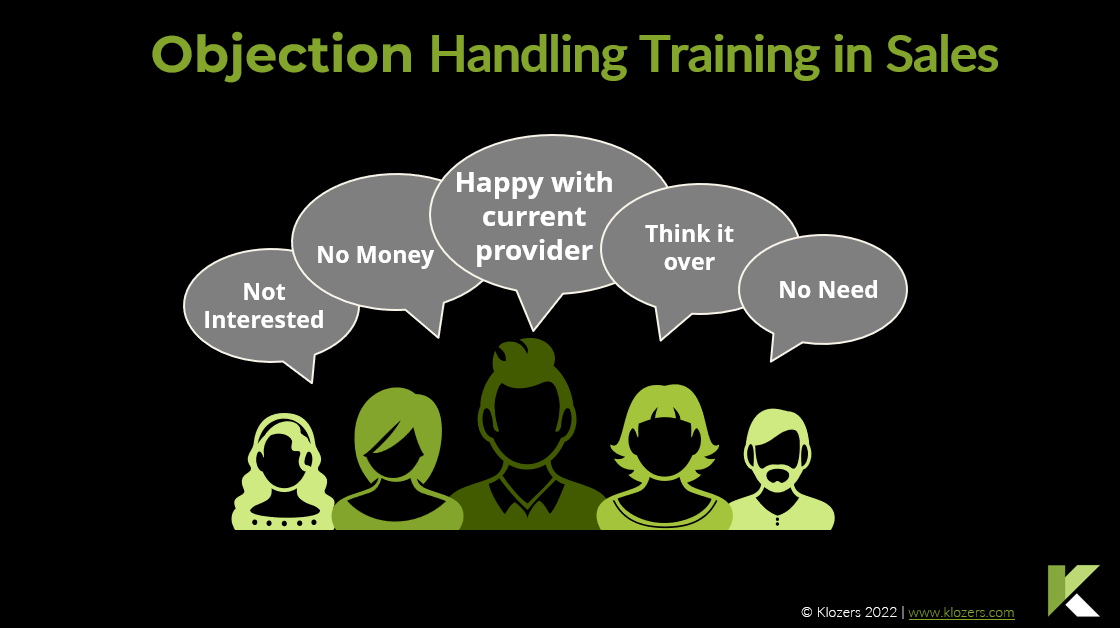
- Engage: Interactive exercises help participants build personalized value propositions. Peers from within the business who are regularly above target share their stories.
- Monitor: Win rates for high-value deals are tracked monthly. Post-training feedback assesses the course’s effectiveness in improving value selling skills.
Remember, your bespoke sales training course is an investment, not a cost. By crafting unique sales training programs tailored to your unique challenges and opportunities, you’ll empower your sales team to become top sales performers. They’ll not just push products, but become trusted advisors, crafting solutions that perfectly align with customer needs and unlock mutual value. This leads to stronger relationships, higher win rates, and ultimately, sustainable business growth.
7. Sales Manager Training
The single biggest influence on any B2B sales professional’s success is their immediate line manager. Great managers create great sales reps, but sales management courses can give them the tools and techniques to be truly impactful. Delivering initial training sessions focused on the entire sales cycle, from inbound sales methodology to account management, is crucial. But to ensure your sales teams learn effectively, their line managers need to be on board too.
The right online sales course or onsite training program for sales leaders, ideally before rolling out training to the wider organization, can significantly improve your chances of sales success. Comprehensive courses from Klozers, focusing on business development, customer acquisition, and building trust, can equip managers to lead and support their teams effectively. They’ll learn specific techniques for nurturing leads, developing personal brands, and closing deals, with real-world exercises and actionable insights to solidify their learning.
Our free virtual courses can offer a convenient and accessible starting point for sales fundamentals, while more in-depth courses with sales simulations provide ongoing learning and enhanced user experience. Regardless of the format, choose a program with a similar structure to your sales process, covering aspects like price points, overcoming resistance, and handling objections. Most importantly, it should help managers build trust with their teams and cater to their specific needs.
Leading sales isn’t just about individual performance; it’s about team dynamics and collaboration. Sales team training programs focused on building trust, developing communication skills, and fostering a customer-centric approach can make a significant difference. These programs can teach managers how to effectively build support for new strategies and initiatives, while also providing them with the tools to manage their teams efficiently and mentor individual members.
Remember, the best sales training programs are those that are unique and tailored to your company’s specific needs. Consider factors like your industry, sales process, and target audience when choosing a program. Whether it’s focusing on digital products or mastering complex sales cycles, the right training can equip your sales managers to accelerate your business growth and lead your team to win more deals.
So, invest in your sales management team with the right training. It’s not just about improving individual skills; it’s about building a high-performing sales organization that can consistently attract customers, close deals, and drive sustainable growth.
8. Post Training Support
Here are some additional ideas to take your bespoke training to the next level:
- Coaching: Consider our 90 day post coaching support to help your team internalise what they have learned during the training.
- Peer Coaching: Encourage peer-to-peer mentorship and practice sessions. This allows team members to learn from each other, share best practices, and provide constructive feedback in a supportive environment.
- Ongoing Reinforcement: Don’t let the learning stop! We can provide ongoing access to training materials, online resources, and refresher sessions to ensure continual skill development and knowledge retention.
- Celebrate Successes: Recognize and celebrate individual and team achievements. This keeps the momentum going, motivates further learning, and reinforces the value of continuous improvement.
Remember, your sales team is your engine of success – invest in your people, and watch your business soar.
We provide free consultations where you can ask any further questions you might have about specific aspects of creating your bespoke training course. We’re here to help you turn your sales team into sales champions!
“A fantastic learning experience”
Amanda – Account Manager
Klozers Bolsters Leadership Team
***FOR IMMEDIATE RELEASE***
Klozers Bolsters Leadership Team with Appointment of Marc Smit as General Manager to Drive Expansion
Smit brings over 30 years of sales expertise and 17 + years in training experience to Klozers
[Edinburgh, United Kingdom – 01/11/2023]
UK based Klozers, a leading provider of sales training and coaching, today announced the opening of its new European Headquarters in Amersfoort, Netherlands, in conjunction with the appointment of Marc Smit as General Manager. The decision follows increased demand in Europe for their range of Professional Selling programmes throughout 2023.
There’s a new way to deliver sales growth…
Don’t buy Sales Training until you’ve watched this video…
New European Office
Klozers Founder and Managing Director, Iain Swanston said “We are forecasting record growth for the mainland of Europe, mainly in the DACH and Benelux regions. Our new Amersfoort, NL office and the appointment of Marc Smit as General Manager, represents our commitment to our existing clients in the region. Marc has a great track record, not just in sales education, but also in Business Development, and we are looking forward to working with him.”
Smit brings over 17 years of experience in the sales training industry working at the highest level. Most recently, Smit worked as Partner at the European Institute for Sales, and previously as a Sales Performance Consultant at Miller Heiman where he helped clients achieve significant sales growth and profitability.
In his new role Smit will be responsible for leading Klozers Global Accounts Team and developing Klozers Worldwide Partner Delivery Network.
“We are thrilled to have Marc join our team,” said Iain Swanston, CEO of Klozers. “His extensive experience in sales training and his proven track record of success make him the ideal person to lead our new European operations. We are confident that under Marc’s leadership, we will continue to grow, expand our business, and help our clients achieve even greater success. “
Smit is a highly respected sales training expert and consultant. He is also a certified Miller Heiman Sales Performance Consultant and is passionate about helping sales professionals and sales teams improve their skills and achieve their goals.
“I am excited to join Klozers and lead the company’s growth and expansion.“ said Smit. “Klozers is a leader in the sales training industry, and I am committed to helping our clients achieve even greater success. I look forward to working with our team to develop and implement new sales training programmes and solutions that meet the needs of our clients.
About Klozers
Klozers is a leading provider of professional sales training and coaching. The company offers a wide range of sales training programmes, exec sales coaching and consulting services. Klozers clients include Fortune 500 as well as mid-market and large SMEs.
“A fantastic learning experience”
Amanda – Account Manager
15 Energizing Sales Kickoff Themes for Your Team
15 Sales Kickoff Themes Built Around Business Priorities
A sales kickoff theme should do more than make the event memorable. Choose the business priority first, then use the theme to connect leadership messages, sales development and action planning around the same idea.
By Iain Swanston, Founder, Klozers
- Updated 30 August 2026
The best sales kickoff theme is one that reinforces the commercial priority of the event. Decide what the team needs to understand or do differently, choose a short theme that expresses that priority, then build the agenda and follow-through around it.
How to choose a sales kickoff theme
Start with the outcome, not a slogan. If the business needs to enter a new market, improve conversion, strengthen value selling or align several functions around the same plan, the theme should make that priority easier to understand and repeat.
Then test the theme against the event. Can leadership use it naturally? Does it help participants understand why the sessions belong together? Can managers refer back to it after the kickoff without it sounding forced?
For the wider event structure, use the sales kickoff planning guide. It covers objectives, agenda design, speakers, training and follow-through.
15 sales kickoff theme ideas
The ideas below are grouped by the business objective they are designed to support. Each can be adapted to your language, sales strategy and internal priorities.
Growth and new markets
Build the Next Market
Use when the priority is entering a new sector, geography or customer segment. Centre the agenda on market insight, target accounts, customer problems and the sales behaviours needed to create traction.
Win the Right Opportunities
Use when the team needs better focus rather than simply more pipeline. Sessions can cover qualification, opportunity selection, deal strategy and where sales time should be invested.
From Pipeline to Growth
Use when the organisation has pipeline but needs stronger conversion. Connect the theme to opportunity progression, discovery, stakeholder engagement and next-step discipline.
Customer and value
Create Customer Value
Use when the team needs to move away from product-led conversations. Build sessions around customer priorities, discovery, value creation and how sellers connect solutions to business outcomes.
Sell the Difference
Use when buyers struggle to see meaningful differentiation. Focus the kickoff on customer problems, competitive alternatives, proof and how salespeople communicate relevant value.
Customer First
Use when the commercial priority is improving customer understanding across sales, marketing and account teams. Use customer evidence and real sales situations rather than treating the phrase as a slogan.
Execution and performance
Turn Strategy into Action
Use when leadership has a clear strategy but execution is inconsistent. Translate strategic priorities into the sales behaviours, account actions and manager follow-through required after the kickoff.
Raise the Standard
Use when the team needs greater consistency in how sales work is carried out. Define the behaviours that good execution requires, then give participants time to practise and apply them.
Focus. Execute. Improve.
Use when too many priorities are competing for attention. Narrow the kickoff to the few commercial actions that matter most and define how progress will be reviewed afterwards.
Change and innovation
Ready for What’s Next
Use when the business is responding to a significant market, product or organisational change. Give the team the context first, then work through the implications for customers and sales execution.
Adapt and Advance
Use when established sales habits need to change. Make the agenda practical by identifying which behaviours should be retained, which need to change and what sellers will do differently.
AI-Assisted Selling
Use when the business is introducing AI into sales work. Keep the theme focused on useful applications, judgement, workflow and customer value rather than presenting AI as the objective in itself.
Team alignment
One Team, One Plan
Use when sales, marketing, customer success or leadership need better alignment around the same commercial priorities. Build shared planning and decision-making into the event.
Better Together
Use when collaboration across roles, regions or functions is the main requirement. Give mixed groups real commercial problems to work on together rather than relying on generic team-building activities.
Connected to Win
Use when complex opportunities depend on better internal coordination or multi-stakeholder selling. Connect the theme to account coverage, information sharing and clear ownership.
What makes a sales kickoff theme useful?
A useful theme is specific enough to support the commercial message but broad enough to connect several sessions. It should make sense to the people attending without a long explanation.
- Relevant: it reflects a real business or sales priority.
- Clear: people can understand the idea quickly.
- Usable: leaders and facilitators can connect sessions to it naturally.
- Practical: it can lead into decisions, practice and actions.
- Repeatable: managers can refer back to it after the event.
How should the theme affect the agenda?
The theme should influence the questions the event asks, the examples people work on and the actions they leave with. It does not mean every slide needs the same headline or visual device.
If the theme is Turn Strategy into Action, for example, the agenda should give people time to translate the strategy into account, opportunity or prospecting actions. If the theme is Create Customer Value, the sessions should include customer problems, discovery and value conversations rather than only product updates.
If the kickoff contains a substantial training component, Klozers can run your kickoff as a bespoke programme, built around the priorities and sales situations your team needs to work on.
Should the theme determine your speaker?
It can help define the brief, but the speaker should still have a clear job to do. Choose someone because they can help the audience understand, practise or act on the priority, not because their presentation title happens to match the theme.
See our guide to choosing sales kickoff speakers for the questions to ask before you book someone.
What about virtual or hybrid sales kickoffs?
The same selection principle applies. A virtual event does not need a separate fantasy theme simply because it is online. Choose the business priority first, then design shorter sessions, participation and collaboration around the way people will attend.
Where active practice is important, sales training simulations can provide a structured way for participants to apply skills to realistic sales situations.
Sales kickoff theme FAQs
What is a good theme for a sales kickoff?
A good theme expresses the business priority of the kickoff in a short, usable idea. It should help connect the agenda and the actions expected after the event.
How do I choose a sales kickoff theme?
Define what the team needs to understand or do differently, select a theme that expresses that priority, then test whether the planned sessions and follow-through genuinely support it.
Should a sales kickoff theme be motivational?
It can be motivating, but motivation should not be the only test. The theme should also help the team understand the commercial message and what needs to happen after the kickoff.
Can we use a different theme for a virtual sales kickoff?
You can, but the delivery format does not need to determine the theme. The business priority should still come first.
How many sales kickoff theme ideas should we shortlist?
Shortlist a small number that fit the business priority, then test them with the people responsible for the event. The final choice should be easy to explain and use throughout the agenda.
Related sales kickoff guides
Iain has spent over 30 years in B2B sales, selling, training and leading teams both domestically and internationally. He serves as an Associate at Strathclyde University Business School, where he has delivered the sales content for the Masters in Entrepreneurship since 2015. Klozers builds sales programmes from what a client’s own top performers already do, and delivers them on the client’s live deals.
Tell us what the team needs to do differently after the event. We can help you design practical sales training around those priorities.
Sales Graduate Training
***FOR IMMEDIATE RELEASE***
Klozers Embarks on Mission to Empower University Graduates Through FREE Education, Aiming to Enable 100,000 Graduates to Build a Career in Sales.
[Edinburgh, United Kingdom – 05/09/2023
Klozers, a leader in B2B sales education, is proud to announce a groundbreaking mission dedicated to fostering the next Generation of Sales Professionals. Our mission is clear: to equip the next generation of sales professionals with the essential skills they need to excel in the modern sales landscape. We are committed to providing top-notch sales training to 100,000 graduates, completely free of charge, because we firmly believe that education should never be a barrier to success.
There’s a new way to deliver sales growth…
Don’t buy Sales Training until you’ve watched this video…
Why We're Committed
1 in 8 Jobs are in Sales roles: Sales is one of the largest sectors within employment, and the communication skills required for selling in the modern world, are equally important in other roles, outside of sales.
Graduates need Help: Finding and retaining employment is arguably more difficult then ever. In addition, many Graduates are leaving University burdened with debt, and getting the first step on the wage ladder is hugely important.
Empowering the Workforce: At Klozers, we understand that educated, skilled graduates are the lifeblood of successful businesses. By imparting knowledge and expertise to navigate the sales landscape, we empower the workforce and contribute to the growth and prosperity of enterprises, both large and small.
Bridging the Skills Gap: In the rapidly evolving world of modern sales, staying relevant is paramount. We offer comprehensive modules covering vital topics such as Building your Sales Pipeline, Mastering Questioning Techniques, Overcoming Objections, and The Art of Closing, ensuring that graduates are equipped to thrive in today’s competitive marketplace.
Long-Term Careers: Our commitment to free education goes beyond the numbers; it’s about nurturing graduates and supporting their skills development. By investing in the early stage growth of graduates, we can help them understand the benefits of a career in sales.
Driving Economic Prosperity: Empowered graduates lead to thriving businesses, vibrant industries, and prosperous economies. Through our mission, we actively contribute to the economic prosperity of the business community and society at large. This is our way of giving back.
How You Can Join Us
We invite the business community to unite with us on this transformative journey. Partner with Klozers, and together, let’s pave the way for 100,000 graduates to unleash their true potential in sales.
Your support is not just an investment in the future of your company; it’s an investment in the future of a generation, shaping a brighter tomorrow for all.
Join us as we build a community of skilled, confident, and accomplished sales professionals, driving the business world forward.
Partner with Klozers and become a catalyst for change and good – empowering 100,000 graduates to thrive in sales, absolutely FREE.
Check out all the free courses here: Online Courses – Klozers
For media inquiries, please contact:
Iain Swanston – sales @ klozers.com
About Klozers:
Klozers is a leading provider of B2B sales education, dedicated to empowering the next generation of sales professionals with the skills and knowledge the need to excel in the modern sales landscape. Our mission is to eliminate barriers to success by providing the modern sales training to 100,000 graduates, free of charge, ultimately contributing to the growth and prosperity of the business community.
“A fantastic learning experience”
Amanda – Account Manager
Sales Training Simulations
Sales Training Simulations Show You How Deals Are Actually Run
Training tells you what your team knows. Sales training simulations tell you what they do when the deal gets hard, and which people in the buying group they never reach.
By Iain Swanston, Founder, Klozers
- Updated 25 August 2026
A sales training simulation is a controlled selling scenario, built around your market and deal complexity, in which a team runs a deal from first contact to commitment while every decision is observed and recorded. Unlike role play, it produces evidence of how deals are run, not an opinion about how well someone performed.
- Training measures what a team knows. Sales training simulations measure what they do when the deal gets hard.
- Role play tests how someone performs. A simulation tests the decisions they take, and records them.
- The most common finding is that sellers reach the people who are easy to reach, and never reach the person who owns the outcome.
- The output is a baseline, not a score. It tells leadership where execution breaks, by stage and by seller.
- A simulation is a diagnostic. It is the step before you decide what to teach or what to standardise.
What is a sales training simulation?
A sales training simulation is a constructed deal. Your team runs it from first contact through to commitment, against a buying group who behave the way your real buyers behave. Every decision they take is visible, and every decision is recorded.
That is the whole point of it. In a workshop, a seller can tell you they always confirm who releases the money before they build a proposal. In a simulation, you find out whether they did.
The scenario is engineered rather than borrowed. Your deal sizes, your sales cycle, your buying group, your objections. A generic scenario produces generic behaviour, and generic behaviour tells you nothing you did not already suspect.
How are sales training simulations different from role play?
Role play is a performance in front of the room. It is short, it is judged on delivery, and the seller knows exactly what is being marked. A simulation runs long enough for pressure to increase, and long enough for a seller to cut a corner and believe it was reasonable at the time.
The difference matters because those cut corners are what the simulation is there to record. Nobody skips the Economic Owner in the first hour. They skip them in hour four, when the close date is under threat and the Technical Evaluator is returning calls.
| Role play | Sales training simulation |
|---|---|
| Judged on how well someone spoke | Judged on the decisions they took |
| A generic scenario | Engineered to your market and deal complexity |
| Runs for minutes | Runs long enough for pressure to build |
| Produces a feeling about the team | Produces a baseline you can inspect |
| The seller knows what is being marked | The seller reveals what they do by default |
Every workshop is built from a blank page around your team’s own live deals. No slides. Every topic carries a KPI you agree up front, then track and prove afterwards.
Pre and post assessment, so you see the change
Worked on your real deals, in the room
Manager Embed Plan and calls at 30, 60 and 90 days
Delivered in person by a practitioner, not a presenter
Trusted by teams at Microsoft, Panasonic, TikTok, Bizerba, Marangoni and Lathams.
What do sales training simulations actually reveal?
Three patterns show up in almost every engagement, at every level of seniority.
The buying group is guessed at, not mapped
Sellers name the person who talks to them most and treat that person as the deal. They rarely separate the Economic Buyer, who releases the money, from the Economic Owner, who owns the pain of the problem and the outcome the purchase has to deliver.
Those are two different people, and confusing them is one of the most reliable ways to lose a deal late. You can persuade the Economic Buyer and still lose, because you never involved the person whose problem it is. A purchase nobody owns is usually abandoned inside the year.
A simulation makes this visible in a way a conversation cannot. At the debrief you can put the buying group on a screen and mark who was actually contacted. The Technical Evaluator is always there. The Coach is usually there. The Economic Owner frequently is not.
Value is described, then abandoned at the first price question
The value argument survives right up until the Commercial Evaluator arrives, at which point it is quietly replaced with a discount. Sellers who can articulate value fluently in the morning session concede it in the afternoon without noticing they have done so.
Commitment is assumed rather than tested
Deals move forward because the conversations have been friendly. Nobody asks what has to be true before this goes to the board, so nobody finds out that it was never going to.
Why does the buying group matter more than it used to?
Because your sellers get fewer chances to influence it. A Gartner survey of 646 B2B buyers, published in March 2026, found that 67% prefer a rep-free experience, and that 45% used AI during a recent purchase.
Read that alongside the finding in the same research that confident buyers are twice as likely to report a high-quality deal, and the conclusion is uncomfortable. Buyers are doing more of the work without you, and the deals that go well are the ones where the buying group reached clarity. If your seller spent their limited access on the person who checks features, that clarity was built without them.
This is not an argument for more training. It is an argument for knowing, before you train anyone, which of the eight roles your team actually reaches.
"Not a theoretical course. I left with a clear plan for my own accounts."
Workshop delegate
How do you know whether you need one?
Not every team does, and it is worth being blunt about that before anyone spends a budget.
A simulation earns its place when leadership suspects something is wrong but cannot name it. The forecast keeps slipping in the same way. Two sellers hit target and the rest do not, and nobody can articulate what the two do differently. Deals die late, after the demo, for reasons that never appear in the CRM. Those are execution problems, and they are invisible from a dashboard because a dashboard records outcomes rather than decisions.
It is the wrong tool when the problem is already named. If your team cannot explain what you sell, that is a product knowledge problem and a workshop will fix it faster and cheaper. If your pipeline is empty, no amount of deal execution work will help, because there are no deals to execute on. If leadership has already decided what the answer is and wants a day that confirms it, a simulation will simply produce evidence they ignore.
The honest test is whether you are willing to act on what it finds. A baseline that shows your team never reaches the Economic Owner is only useful if somebody then changes how deals are inspected. If nothing will change, you are buying an enjoyable day rather than a diagnostic, and there are cheaper ways to have one.
How do you run a sales training simulation that produces something useful?
Most simulations fail for the same reason most training fails. Nobody decides in advance what they are trying to find out, so the day produces enthusiasm and nothing else.
Decide the question first, then build the scenario to answer it. If the question is whether your team can reach the person who owns the outcome, the scenario needs a buying group where that person is deliberately hard to reach, and a Technical Evaluator who is very easy to reach and very willing to talk.
Agree the measure before the day, not after. The retention problem that undermines most sales training starts with a day that had no measure attached to it, and a plan that nobody inspected at 30 days.
Keep leadership in the room as observers. A debrief delivered second-hand is a report. A debrief watched live is a decision.
What do you get at the end?
A baseline of how deals were run, stage by stage and seller by seller. A 90 day action plan per seller, tied to their own real accounts rather than to the scenario. And a leadership debrief on what surfaced across the team, which is usually the part that changes what happens next.
The baseline is the asset. It is what lets you measure again at 90 days and say whether anything moved, rather than asking people how they found the day. If you are choosing between providers, ask each one what you will hold at the end that you did not hold at the start. Browse all sales training courses if you want to see how a simulation fits alongside the rest of a programme, or read what to look for in B2B sales training for enterprise teams.
You do not need a supplier to find out whether you have an execution problem. You need one meeting and four questions.
- Take your three largest open deals. For each one, ask the owning seller to name every person in the buying group.
- For each name, ask which one releases the money and which one owns the pain and the outcome. They are rarely the same person, and the second one is the one that matters.
- Ask what evidence exists that the person who owns the outcome has agreed the problem is worth solving. Not an opinion. A meeting, an email, or a number they gave you.
- Count how many of the three deals survive question three. That number is your baseline, and it cost you ten minutes.
How long does a sales training simulation take?
Most run across one or two days. The scenario has to be long enough for pressure to increase, because the decisions that cost deals do not appear in the first hour. A two hour version tests presentation, not judgement.
Do sales training simulations work for experienced sellers?
It works better with experienced sellers. They have more habits, and habits are exactly what a simulation makes visible. Junior teams reveal gaps in knowledge. Senior teams reveal gaps in discipline, which are more expensive and harder to see any other way.
Are sales training simulations the same as a business game?
No. A business game is usually about understanding how an organisation works and is judged on engagement. A sales simulation is a diagnostic, engineered around your deal complexity and judged on what it reveals about execution.
Is a simulation a replacement for training?
No. It is the step before it. A simulation tells you what to fix, so the training that follows is aimed at something specific rather than at everything.
Can we run one on our own live deals instead?
Yes, and for many teams that is the better starting point. Live deals are cheaper to work with and immediately relevant. An engineered scenario is worth the extra effort when you need to pressure-test something that your current pipeline does not happen to contain.
Iain has spent over 30 years in B2B sales, selling, training and leading teams both domestically and internationally. He serves as an Associate at Strathclyde University Business School, where he has delivered the sales content for the Masters in Entrepreneurship since 2015. Klozers builds sales programmes from what a client’s own top performers already do, and delivers them on the client’s live deals.
You are buying a change in how your team sells, and the proof that it worked. A short call to work out what would need to change, and a date that works
DISC Training for Sales Success
DISC Training for SALES - Top Question from Google
What DISC Personality is best for Sales?
Here’s the short answer:
In all our years of delivering sales training and coaching we can honestly say that we have worked with great salespeople from every quadrant. Each DISC style has strengths and weaknesses and the best salespeople know how to manage these.
With that said, if you are selling into a vertical such as accountancy, where the group’s DISC culture is predominantly of a similar customer buying style, it is easier for salespeople who are from that same DISC style as the buyers, to build relationships and sell quickly.
DISC is about preferences, there are no right or wrongs and there are no can do’s and can’t do’s.
In this article we will cover...
There’s a new way to deliver sales growth…
Don’t buy Sales Training until you’ve watched this video…
1. DISC training for sales success
Disc training is a valuable tool for everyone who is customer facing, whether they be in customer service or frontline sales. If like us you believe that people buy from people, you will understand that DISC is an effective way to help salespeople build relationships, gain rapport and sell more.
Disc training helps salespeople better understand themselves and others, so they can be more successful in their sales role.
Our sales team training teaches people how to identify their own sales style, different personality types, and how to adjust their approach accordingly. With the right training, salespeople can gain powerful skills that will enable them to close deals and increase their overall sales performance.
2. What is a DISC personality test?
DISC is a personality test that helps us understand what we do and how we behave. DISC tests have been developed over many years from the original assessment, which was developed by William Marston Moulton who based his work around the teachings of Carl Jung and Jung’s book “The Emotions of Normal People”.
So what is DISC? Well every human being regardless of race, colour or creed has a preferred style of behaviours that they exhibit. Specifically, every Human Being has a preferred style of behaviours that fall into one of four categories D – I – S or C. Sometimes we are accused of labelling people, or putting them into boxes when we do this, but please do not be offended. This is no different to recognising that some people are left handed or that some people have blue eyes, or others have red hair.
There is no right or wrong, and neither is there a better or best DISC style. Each of the four quadrants has strengths and weaknesses and this just recognises that none of us are perfect.
Take a DISC Assessment Now!
3. What are the four DISC personality types?
DISC tells us that every individual has a “preferred” way of doing and behaving. These ways predominantly fall within four main types or disc styles. These DISC styles are: D Profile, I Profile, S Profile and C Profile.
Whilst many companies attach words to the styles such as D for Dominance or I for Influencer, we prefer not to, as words on their own can be subjective as individuals can draw different conclusions and meanings from the same words.
The Four most common words used to identify disc styles are:
D – Dominance
I – Influencer
S – Steadiness
C – Compliance
Not every individual fits exactly into the four quadrants and some share the traits of two or more quadrants. However, each individual does have a centre which is the DISC style they will default to under stress.
In addition to their natural sales style, some individuals have an adjusted style or work mask. Whilst the natural style never changes, the work mask can change based on the individuals perceptions of what they need to do to be successful.
4. What does DISC training do?
From a sales perspective a DISC sales profile has four main benefits as follows:
DISC assessments help salespeople identify and understand their own personal DISC sales profile. In addition to a 16 page report on their DISC sales style, each of our participants has the opportunity to book additional training and coaching.
DISC assessments helps salespeople understand different customer buying styles and quickly build stronger relationships with their customers, thus improving sales effectiveness.
DISC assessments helps sales leaders understand the strengths and weaknesses of their sales team and identify where they will need the most support.
DISC assessments helps sales leaders identify the best DISC sales profile among candidates as part of the hiring process.
5. How DISC training drives sales results
DISC sales does more than help improve communication and sales interactions. It empowers salespeople at every step of the sales process and gives each individual specific strategies they can use to improve their sales performance and the customer experience.
In sales we understand that each of us has a different way of selling and that’s what makes us unique. Without loosing our natural sales style, it’s important to acknowledge that our sales style will fit well with many customers, but it may not fit well with others.
Our DISC sales style, in certain circumstances may hurt us and negatively influence the prospect. By providing salespeople with their own disc sales profile you are enabling them to
Provide participants with the self knowledge and a deeper understanding of their own natural sales style.
Help participants explore their own natural strengths and weaknesses via the disc model.
Use the DISC sales model to quickly identify customers and their buying styles and then use that information to practice adapting their styles to each specific customer.
Discover specific strategies they can draw upon to improve sales interactions and further develop their own emotional intelligence.
Use DISC profiles by placing customers first and at the center of their communication style and build rapport fast.
Provide sales leaders with a disc sales map and list of sales priorities to help them manage, train and coach their sales team.
6. How much does DISC training cost?
Our DISC training costs £250 per person plus taxes and includes:
1 x DISC sales assessment complete with in depth information in a 16 page report and a DISC sales profile.
1 x Live, one on one training session delivered remotely with one of our DISC trainers.
For DISC sales of groups of 10 or more please contact us in advance.
We also provide DISC training on site, either on your premises, or at an external location of your choosing. Our workshops are highly interactive and designed to deliver the best possible DISC sales learning experience.
The DISC sales facilitation kit our trainers use is proprietary and not available to purchase.
Take a DISC Assessment Now!
How to Improve Sales Effectiveness
Sales effectiveness - Top Question from Google
How do you measure sales effectiveness?
Here’s the short answer:
How you measure sales effectiveness will depend on your company goals and objectives. Here are 5 measurements or sales KPIs (key performance indicators) to get you started:
Revenue growth. Not everything should be about money, but if your revenue growth is stalled or even worse, going backwards you will need to take action.
Conversion ratio. At a big picture level you will need to ensure the sales team are converting new sales leads. For more detailed conversion ratios, examine the conversion rates between each stage of your sales process such as MQL to SQL.
Average deal size. Increasing your average deal size via cross selling and upselling is a great way to improve your sales effectiveness.
Sales Cycle. Your sales cycle is the time between what we call first contact with a prospect and when you receive money in the bank for your goods and services. The shorter the sales cycle the more efficient your process.
Customer satisfaction. Never forget your customers and ensure that any improvements to your sales effectiveness are not at the expense of customer satisfaction.
In this article we will cover...
There’s a new way to deliver sales growth…
Don’t buy Sales Training until you’ve watched this video…
1. What is Sales Efficiency anyway?
Sales efficiency is simply measuring the ratio of the value gained from the costs of your sales team and the revenue they generate. The greater the ratio then the greater the return and the more effective the sales unit are.
In order to track and measure your sales efficiency you will need to be familiar with all the costs within your sales and marketing departments. Ideally you will have identified your cost per lead and your lifetime customer value.
These sales metrics may vary across products, departments and even salespeople and are the key to any sales improvement plan.
2. Sales Effectiveness framework
Over the years we have found great value in simplifying our own systems and processes, which we then share with our clients. For the last 10 years we have focussed our sales strategy, planning and improvements around what we call the four high value areas of B2B sales. These are:
Finding: you have to find people, companies and opportunities before you can sell to them.
Klozing: once you’ve found a deal you need to be able to take the deal through a sales process and win it.
Growing: once you have done all the hard work of finding and klozing new paying customers you need to keep and grow that account.
Developing: lastly, finding, klozing and growing are all activities undertaken by sales reps and we need to keep them, grow them and build a winning sales culture, all with scalable sales processes.
If you simply spend as much time as possible in these four areas it’s almost impossible not to sell more and improve sales effectiveness.
3. Finding - Lead to Opportunity Conversion Rate
Before we can convert leads to opportunities we need to first measure how good we are at generating leads. What is our process for filling the top of the sales funnel with potential customers and is it scalable? Have we explored all the different channels available and then identified the most fruitful ones.
Furthermore it’s important to define what is a lead? How close are they to your Ideal Client Persona (ICP) and what process do we use to qualify them? In our own business we use MQL and SQL which stands for Marketing Qualified Lead (MQL) and Sales Qualified Lead (SQL).
We deliberately keep this simple so in our world a marketing lead is simply a contact that has downloaded an asset from our website or attended a webinar, or following us social channels. An MQL is a lead that has actively asked to talk with us whether that be via our website, telephone or email. The key differentiator here is that we have never spoken to them.
Next up is our Sales Qualified leads and these are defined as people who have spoken to sales and meet the criteria of both our ICP and BANT (Budget, Authority, Need and Time) which is a simple sales qualification process.
In our own business we measure our conversion ratio of MQLs against deals closed. Most companies would use SQL against deals closed but our system works well for us and our conversion ratio of MQLs when last measured was 42.22% which we think is pretty good.
It’s also worth noting the importance of lead response time here. According to a Lead Connect survey 78% of customers buy from the first responder. Also sales conversions are 391% higher when the first response is withing 1 minute. Lastly, leads that older than 5 minutes receive an 80% drop in lead qualification. Speed is your friend in lead generation.
New Customer Acquisition Rates
Whilst conversion ratios are important, what is equally important is new customer acquisition rates. If you have a 100% conversion rate but you only generate and close one deal a month you are unlikely to get the sales results you want or need.
Wherever possible we would recommend a data driven approach and starting with your ICP. The most efficient marketing is laser targeted on the ICP which then generates a better quality of lead. Small changes in messaging and design can have a huge impact on this.
Often times an easy win for both marketing and sales is to use campaigns and special offers to increase conversions and new customer acquisition. Most often recognised as tactics for B2C we have had huge success with clients building campaigns around a special offer.
Interestingly the most successful special offers we have worked with clients on ended up being more expensive than the original offer. The art of selling is not about discounting, it’s about selling your product at your price.
For obvious reasons it’s important that your customer acquisition rate exceeds your customer attrition rate which we cover later in this article.
4. Klozing and Sales Performance
As previously stated Klozing comes when you have found a deal or opportunity, and you then take that deal through your sales pipeline and win it. Most companies will base their sales metrics and how they measure sales effectiveness on closing sales qualified leads.
These sales metrics are influenced or driven by the sales team’s ability and performance. Ability refers to the skills and traits of the sales team to close deals and performance refers to their output. You can have the most highly trained sales reps in the world but unless they perform and are highly engaged they will not close deals. We therefore define sales effectiveness as Ability + Performance = Sales effectiveness.
Let’s break down Ability first. If ability comes from traits and skills what does this mean in real terms?
Traits are important at the hiring phase – what are the sales reps hobbies out of work? Would you hire a gamer who is stuck in their bedroom overnight of the captain of the local football team? Sports people normally excel in sales because they have great traits, self discipline, good work ethics and they are team players.
Skills are obviously important, however, in sales there are a myriad of skills required some of which are more or less relevant depending on the role. For example an AE (Account Executive) will potentially need communication skills, presentation skills, objection handling and negotiating skills to close deals.
A salesperson focussed on selling to the public sector via bids and tenders would require a completely different skill set.
5. Growing - Retention and Expansion.
A major part of sales effectiveness comes from the ability to not just win new business but hold onto it and expand within those accounts. After all the most difficult and most costly part of sales, namely new client acquisition is done. Growth & retention via cross selling and upselling should be mandatory in every company strategy.
Often the first step in growing is to ensure retention and reduce customer attrition or churn. Companies measure sales churn in different ways for example saas companies may measure churn on their monthly paid subscriptions, however, some companies may be heavily geared to annual subscriptions and this then needs to be taken into account.
Our own belief is that reducing churn is the area of sales effectiveness that every sales organisation should address first. There is no point winning new business if you cannot retain it.
The Critical metrics most often used to reduce churn would be customer satisfaction, user engagement and changes in customer needs.
6. Developing - scaling people and process
In our experience developing falls into two main categories as follows, firstly the startups.
Many company founders and sales leaders rush to scale their business before they have the fundamentals in place. They want to hire an entire sales force before they have in some cases proven their value proposition, let alone put in place scalable systems and sales processes for profitable growth. One sales rep who can’t win deals quickly becomes 10 sales reps who can’t win deals which compounds the problems and adds to the existing workload of already time poor sales leaders. Step 1, focus on the value proposition and making it as attractive as possible. Step 2, focus on building repetition and sales effectiveness at scale not just on individual salespeople.
In Developing the second group we deal with are established businesses who need to either reduce costs (no necessarily the cost of people, but the cost of customer acquisition) or simply want to drive performance and an effective sales team.
For these companies the status quo and change is the biggest challenge. Tenured salespeople can be resistant to changes which needs to be taken into account when you are planning for improvements in sales effectiveness.
In many cases delivering sales training is the easy part, creating meaningful behavioural change across an entire team is the bigger problem. So big that many sales leaders simply put up with subpar performance and average output from their sales force.
These are actually the most rewarding projects as they always deliver the biggest impact.
7. How to boost sales effectiveness - key questions
Sales Enablement is one of the most common approaches to drive sales effectiveness across sales teams. Sales Enablement is a way of providing the right tools, content, sales training and resources that the sales teams needs to be win more deals.
In addition a modern Sales Enablement department would be responsible for supporting the implementation of the company’s sales strategy, their sales processes, and measuring sales effectiveness across the organisation.
If your sales organization does not have it’s own sales enablement team our recommendation would be to first get a baseline understanding of the overall sales performance of your sales team’s effectiveness.
Its important that any evaluation is from the top down and includes the sales leaders, the sales managers and every sales rep. This would include things like sales opportunities generated, best practices, win rates, quota attainment and effective selling skills and behaviours.
Key Questions
1. What data do I have?
Sometimes we let perfection get in the way of progress. What data do you have that you can take actions from?
2. What data should I have?
What data are you going to need to make the right decisions and how can I start recoding it?
3. What data is easy to collect?
Data itself and can end up overwhelming. Where possible make data collection easy, avoid adding workload to salespeople.
4. No data?
If you don’t have data score each section on a 1 through 10 with 10 being perfect.
5. Where are the easy wins?
Find some easy wins to give your project some momentum.
6. Which are the biggest leavers?
Which improvements are going to have the biggest impact?
Taking time out to take a complete measurement of the sales organizations overall effectiveness will provide you with a better understanding help you to identify realistic goals in terms of improvements that you can achieve.
“A fantastic learning experience”
Amanda – Account Manager
Sales Consultancy | Unlock Your Sales Potential
Sales Consultancy - Top Question from Google
What do sales consultants do?
Here’s the short answer:
We are professional sales consultants specializing in helping B2B companies by improving their sales performance and achieving their sales goals. We work with a wide range of clients, including SMEs, Mid-Market and Enterprise accounts.
Our sales consultants look at your business as a whole and typically work with clients to identify areas for improvement in sales strategy, sales performance and sales process. Whilst many companies come to us for sales training, we have learned that in some cases training is the wrong place to start.
Therefore, we only provide training that we know will be impactful and aligned with the companies overall sales objectives.
Sales consultants may also work with clients to develop marketing and sales materials, such as brochures, presentations, and proposals, and they may provide guidance on sales techniques and best practices.
Our goal as sales consultants is not just to increase sales, but to do so in a way that is scalable and profitable. Furthermore we love to leave a legacy after us in terms of an improved culture and continuous improvement in sales performance.
We do this by providing expertise and guidance on a wide range of sales and marketing-related topics, and by working with clients and their sales teams to develop and implement effective growth strategies.
In this article we will cover...
There’s a new way to deliver sales growth…
Don’t buy Sales Training until you’ve watched this video…
1. Why is sales consulting important
No CEO, VP, or Sales Director can be an expert in everything. A proven sales consultant who is external to the business can bring different skills, experiences and perspective to your business. The reality is that there is nothing that we bring that any CEO or VP of Sales could do themselves. What we bring is speed – our teams knowledge and skills will fast forward your business quicker that you can do working on your own. In addition to speed our team brings:
Our consultants bring expertise and experience in sales and marketing to our clients. They can provide valuable insights and guidance on a wide range of sales and marketing-related topics, and they can help you identify areas for improvement in your existing sales approach and to develop effective strategies to achieve real sales growth.
Working with our consultants, we help our clients improve their teams sales skills, productivity and sales performance resulting in real business growth. Our sales consultants will help you to identify and address bottlenecks in the sales process, and they can provide guidance on best practices and strategies to increase new sales enquiries and sales.
Klozers sales consulting services are flexible and scalable, which makes them suitable for companies of all sizes and in a variety of industries. Companies can work with us on a short-term or long-term basis, depending on their needs, and they can scale their support up or down as needed.
We serve as trusted advisors to CEOs and Sales Directors by supporting not just their sales team, but their sales operation as a whole.
Every business is unique so we would love to talk to you and learn more about your business. Contact us now for a free and no obligation sales consultation.
2. Common Consulting Projects - Sales Process
Often B2B sales can seem complicated and we do our best wherever possible to simplify everything. Sales is a process and should have logical and measurable start and ending points. Without a process it’s simply not possible to achieve consistency in either results or performance and more importantly it’s not scalable.
Our sales consultancy helps you:
Identifying areas for improvement: we work with clients to identify bottlenecks or other issues in the sales processes that are preventing them from achieving their goals. They can then develop strategies to address those issues and improve the sales process.
Providing training and development: we can provide training and development to help your sales force improve their skills and achieve better results. This might include training on sales techniques, product knowledge, or customer service skills.
Developing sales strategies: we work at CEO and Sales Director level to develop sales strategies that align with their business objectives. This might include identifying target markets, developing sales processes and systems, and creating marketing and sales materials.
Analyzing data and market trends: we use data analysis from your CRM and market research to identify trends and patterns that can inform your sales strategy. We can then use this information to develop changes to the sales approach whilst if necessary retaining the original sales strategy.
Providing group pipeline coaching and individual one to one coaching support: we work with sales people to develop 90 day sales plans for their teams and then provide coaching to help the sales teams deliver on the plans.
As part of our endeavours to simplify sales we break each area of the sales process down into the four high value areas of sales. Which are Finding, Klozing and Growing – we’ve found if you focus all your energies on just finding more people to sell to, then improving your klozing to get more deals over the line and then ensure that you both retain and grow those accounts, its impossible not to sell more.
The fourth and last high value are of sales is Developing which is the constant development of skills, confidence and knowledge of the sales people themselves.
3. Common Consulting Projects - Sales Training
Klozers started as a sales training business back in 2014 and sales training and coaching is at the heart of our business. We’ve successfully delivered sales training across multiple countries and verticals, from frontline SDRs to boardroom sales leaders.
Developing bespoke training programs: our clients have typically tried generic sales training courses and come to us looking for something different – results. We work with clients to develop customized sales training programs that meet the specific needs of their people and their organization. These programs might include training on lead generation, sales techniques, customer service, or other relevant topics.
Providing training workshops: our sales consultants can conduct sales training workshops for salespeople, either in person or online. These sessions might include lectures, group discussions, and hands-on exercises to help salespeople learn and practice new skills.
Providing ongoing coaching and support: we have team of experienced sales coaches who provide ongoing coaching and support to salespeople to help them apply their new sales skills in the workplace and to overcome any situational challenges as they arise. This might include providing feedback and guidance on sales techniques, as well as encouragement and support.
Evaluating the effectiveness of training: our consultants can also help clients to evaluate the effectiveness of your in house sales training programs, by collecting data and analyzing the results. This can help clients to identify areas for improvement within their sales force and to refine their training programs as needed.
- Sales Team activity: training and improvement to sales processes are important, however, many sales teams struggle to execute the right types and level of sales activity. Every sales team needs to be held accountable to delivering the sales activity required.
Our sales training can be delivered either in-person at a location of your choosing, remotely online or a hybrid of the two. All our training is aligned with the companies overall sales strategy and goals which ensures you will receive the outcomes, results and business growth you are looking for.
4. Common Consulting Projects - Sales & Marketing Alignment
Aligning sales and marketing within a business is important because it helps to ensure that both teams are working towards the same overall goals and objectives. Here are some examples of the type of projects we work on to align sales and marketing within a business:
Establish clear and common growth goals and objectives: The first step in aligning sales and marketing is to establish clear and common growth goals and objectives for both teams. Examples include setting overall OKR based goals for the business, such as increasing sales revenue or expanding into new markets.
Define roles and responsibilities: It is important for both sales and marketing teams to understand their roles and responsibilities within the entire sales process. This may involve defining the specific tasks and responsibilities of each team, as well as how they will work together to achieve the overall goals of the business.
Communicate and collaborate: To align sales and marketing effectively, it is important for both teams to communicate and collaborate regularly. To this end we are great advocates of “Growth Pods” whereby we remove traditional siloed sales and marketing departments and place professionals from sales and marketing into smaller pods where they work together with common goals.
Use data and analytics: By using data and analytics, both the sales team and the marketing team can better understand the needs and preferences of their customers, and make more informed decisions about how to reach and engage them.
Use shared metrics: Using shared metrics can help to align sales and marketing efforts, as both teams can track progress towards common goals and objectives. This may include metrics such as customer acquisition cost, customer lifetime value, or lead conversion rate.
Aligning sales and marketing is a subject close to our hearts as we have gone through the process as a business ourselves. We can show you exactly how we did it, including the results, warts and all.
5. Klozers B2B Sales Consultancy - Join us
We’re growing fast and keen to hear from experienced sales consultants who would like to join our team. Our clients quite rightly demand the best and here are some of the vast array of skills that you will need:
- Sales and Marketing: sales and marketing are inextricably linked in modern selling so you will need to demonstrate expertise in all aspects of B2B sales and marketing.
- Communication skills: you will need to be a natural communicator and be able to effectively communicate with clients, from CEO & Sales Director level, through to the front line sales team. You should be able to clearly and concisely convey information and ideas, and be able to adapt your communication style to suit different personas.
Analytical skills: we will help you analyse the data in your CRM system to help your clients identify trends and patterns, from which you will need to develop solutions for sales growth.
Problem-solving skills: we love working with our clients on complex problems and helping them find the best solution for their circumstances. We don’t believe in a one size fits all solution so you’ll need to be creative in terms of your problem solving.
Consultative skills: our genesis as a business was delivering consultative selling skills which is still our best selling course. Our sales consultants are our brand champions so you will need to be able to work with clients in a consultative manner, and build strong relationships based on trust and mutual respect.
Business acumen: sales never operates in isolation of the wider business and our sales consultants need a strong understanding of business principles and how to apply them to different sales scenarios. You should be able to analyze market trends and customer needs, and to develop sales strategies that align with clients’ business objectives.
Klozers are a full life sales and marketing consultancy meaning we cover everything from the initial value proposition development through to closing more sales deals. What this means to you is that we work in a fast paced environment and no two days are the same. It’s great fun and hugely rewarding.
We are currently recruiting consultants throughout Europe and North America so please feel free to call us for more information.
“A fantastic learning experience”
Amanda – Account Manager
90 Day Sales Plan | Free Download
90 Day Sales Action Plan - Top Question from Google
How do write a 90 Day Sales Action Plan?
Here’s the short answer: To write a 90-day sales action plan, your sales team should follow these steps:
- Identify measurable goals: The first step in creating a 90-day sales action plan is to identify your specific goals. These should be specific, measurable, achievable, relevant, and time-bound (SMART) goals that will help you to achieve success within the next 90 days. The sales goals in your plan should always be aligned with the companies overall sales and business strategy. Focus your goals on sales activities and behaviours, rather than revenue – if you do the right behaviours the revenue takes care of itself.
- Break down your goals into actionable tasks: Once you have identified your goals, you will need to break them down into smaller, actionable tasks. What is it that you need to do to achieve the goals? These should be specific and achievable steps that you can take to move closer to your goals. Again avoid thinking about revenue. As an example; look at your sales process and identify where you can either increase the volume new sales enquires generated and increase the conversion ratio of the deals you are generating.
- Assign deadlines and priorities: For each task, assign a deadline and a priority level. This will help you to stay organized and focused, and ensure that you are making progress towards your goals. Use the 30, 60 and 90 day milestones to hold yourself accountable rather than waiting till the end of the 90 day period.
- Create a timeline: Use a timeline or calendar to visualize your progress and keep track of your tasks and deadlines. This will help you to stay on track and stay focused on your goals. We’re great fans of vision boards so make sure all the salespeople create and maintain a personla vision board.
- Monitor and review your progress with your Sales Manager: Regularly review your progress to ensure that you are on track to achieve your goals. If you are not making the progress you expected, adjust your plan as needed to get back on track.
- Make yourself accountable: Planning is great, however, doing is better. The best sales plan in the world is worthless if you do not execute the actions within the plan. B2B sales can be a tough environment and it helps to have the support of others around you like a sales manager to help hold you accountable to your new sales plan.
Top tip: include the four high value areas of sales (Finding, Klozing, Growing and Developing) in your sales plan to ensure you allocate the right amount of time for your circumstances. For example some salespeople may need to focus on generating new leads, whilst others need to develop relationships with existing customers. Check out the FREE template below as an example of this.
Free access to our best tools and templates
In this article we will cover...
There’s a new way to deliver sales growth…
Don’t buy Sales Training until you’ve watched this video…
90 DAY PLAN TEMPLATE
Download a FREE copy of our 90 Say Sales Plan template and make this your sales year.
1. Why are 90 day sales plans important?
90-day sales plans are important because they provide a clear, focused framework for sales reps to work towards specific goals and objectives over a defined period of time. A well-crafted 90-day sales plan can help the entire team to:
- Stay focused and organized: Sales is the easiest job in the world but the most difficult to be effective. With so many distractions planning is an important part of sales success. By breaking down goals into specific tasks and assigning deadlines and priorities, a 90-day sales plan can help sales professionals to stay organized and focused, and ensure that they are making progress towards their goals.
- Track progress and make adjustments: Schedule weekly checkpoints to track progress, a 90-day sales plan can help sales professionals to identify areas of sales activities where they are falling behind, and need to make up the numbers to get back on track. In addition to sales activities the plan can help identify skills gaps where reps are doing the activity, but not getting the results.
- Increase personal motivation and accountability: There is something comforting and reassuring about having a plan and then working the plan. By setting clear goals and tracking progress, a 90-day sales plan helps sales professionals to stay motivated and accountable, and feel more engaged in their work.
- Enhance communication and collaboration: Often times the sales leadership in a company are unsure of exactly what their direct reports are doing. 90 Day plans are a great way to ensure that sales reps are working on the right activities at the right time. By working towards shared goals, your 90-day sales plan can help sales professionals to improve communication and collaboration with their sales leadership and colleagues in their team.
Overall, a 90-day sales plan is a valuable tool that can help sales reps to focus their efforts, track their progress, and stay motivated and accountable as they work towards specific goals and objectives.
2. Are 90 day sales plans for a sales manager different to one for a sales person?
A 90-day sales plan for a sales manager will be different from a 90-day sales plan for a salesperson, as the responsibilities and goals of the two roles differ.
For a sales manager, a 90-day sales plan may focus on goals such as improving team performance, increasing team productivity, improving the sales skills of the team, or building relationships with key clients.
It may also include tasks such as conducting performance evaluations, providing training and development opportunities for team members, or creating strategies to target new markets.
90 day plans are a great tool to help new sales managers to demonstrate an impact in a new position. In addition to their management responsibilities many new sales managers also have a sales quota and are directly responsible for a few strategic clients.
For a salesperson, a 90-day sales plan may focus on goals such as increasing sales revenue, closing new deals, or improving customer retention. It may also include tasks such as identifying and qualifying leads, making presentations, or following up with prospects and customers.
Like the salespeople’s 90 day plans, the sales managers plans should always be linked to the company’s overall business plan and sales strategy.
3. Who should create the sales plans - the Reps or the Manager?
Sales plans should always be created by the salespeople who are responsible for executing the plan even when they are new sales reps to the company.
Here are a few factors to consider when creating your 90-day sales plans:
a) Modern sales management is an extremely busy role and creating action plans for every member of your team takes time because of the variables involved.
b) Where new hires lack the skills or experience to create their own 90 day plans, sales managers should use the planning process to help train and coach their direct reports to be more self sufficient.
The sales manager should always be involved as they ultimately have to sign off the plans. However, giving responsibility to the salespeople, helps build their skills and more importantly give them a sense of ownership of the plan, which in turn provides better engagement across the team.
4. How do I choose the right Goals and Objectives for my plan?
The goals and objectives in a 90-day sales plan should be aligned with the company’s overall sales strategy. Your sales strategy is your long-term plan that outlines the approach and tactics that your company will use to achieve its sales goals. By aligning the goals and objectives of the 90-day sales plan with the overall sales strategy, sales reps and sales managers can ensure that they are working towards the same overall goals and objectives as the company.
Here are a few ways to align the goals and objectives in a 90-day sales plan with the company’s sales strategy:
Identify the measurable goals of the company: The first step in aligning the 90-day sales plan with the company’s sales strategy is to understand the overall sales goals of the company. These may include goals such as increasing sales revenue, expanding into new markets, or improving customer retention.
Determine how the 90-day sales plan fits into the overall strategy: Once you have identified the overall sales goals of the company, you can determine how the 90-day sales plan fits into the overall strategy. This may involve identifying specific tactics or approaches that the team can use to contribute to the overall sales goals.
Use OKRs to set goals: The OKR system is a business goal setting framework used by many companies to drive growth and improvements. We use this in our own business and with our clients who love it.
Overall, aligning the goals and objectives in a 90-day sales plan with the company’s sales strategy can help sales reps and sales managers to work towards the same overall goals and objectives as the company, and contribute to the success of the overall sales strategy.
5. How do I implement 90 day action plans with my sales team?
Salespeople can be a tough audience and they especially don’t like change or something they feel threatening. This is why it’s so important to take a collaborative approach and make sure you win their hearts as well as their minds. This is as much about Change Management as it is about sales.
With that in mind, facilitate a workshop and with your team:
- Identify the goals and objectives of the team: The first step in creating a 90-day sales plan is to identify the specific goals and objectives that the team should work towards. These should be specific, measurable, achievable, relevant, and time-bound (SMART) goals that will help the team to achieve success within the next 90 days.
- Break down the goals into actionable tasks: Once you have identified the goals of the team, you will need to break them down into smaller, actionable tasks. These should be specific and achievable steps that the team can take to move closer to the goals.
- Assign deadlines and priorities: For each task, assign a deadline and a priority level. This will help the team to stay organized and focused, and ensure that they are making progress towards the goals.
- Create a timeline: Use a timeline or calendar to visualize the team’s progress and keep track of the tasks and deadlines. This will help the team to stay on track and stay focused on the goals.
- Communicate the plan to the team: Once the plan is complete, communicate it to the team and make sure that everyone understands their roles and responsibilities.
- Monitor and review progress: Regularly review the team’s progress to ensure that they are on track to achieve the goals. If the team is not making the progress you expected, adjust the plan as needed to get back on track.
Remember the most powerful workshops are those where the salespeople get to talk, are heard and believe its their own ideas they are about to go out and execute.
6. How do I hold my sales team members accountable to the 90 day plans?
A culture of accountability is essential for any business to be successful and all sales plans are worthless unless they are delivered. If you are introducing sales plans for the first time you should set the activity bar low so it’s achievable. You can gauge this by the activity level of the top performer and by using them as a benchmark you can immediately remove the argument that it cannot be done because everyone is too busy.
Communicate the plan clearly: Make sure that the salespeople understand their goals and the specific tasks that they need to complete in order to achieve them. Clearly communicate deadlines and priorities, and provide any necessary resources or support to help them succeed.
Set up regular check-ins: Schedule regular check-ins with sales team members to review their progress and provide support and guidance as needed. These check-ins can be conducted in person, over the phone, or via video conference.
Track progress and review results: Use tools such as dashboards or performance tracking software to track the progress of sales team members towards their goals. Regularly review these results to identify areas where team members are falling behind, and provide additional support as needed.
Provide feedback and coaching: Offer constructive feedback, training and coaching to sales team members to help them improve their performance and achieve their goals. This can include providing guidance on best practices, identifying areas for improvement, and offering support and resources to help team members succeed.
Set consequences for non-compliance: Establish clear consequences for sales team members who are not meeting their goals or following the plan. These consequences could include additional training or coaching, reduction in commissions or bonuses, or even termination if necessary.
The art of sales management is to push your sales force, however, if you push too hard you will lose them mentally. Better still link their personal goals to your business goals and watch them push themselves.
Be sure to get include a “Commitment Statement” in your plan and get your Reps to read it an sign it. This is great for setting the scene and reminding them that they are responsible for their own results.
7. 90 day sales plan for new hires vs sales plan for existing salespeople?
A 90-day sales action plan for a new salespeople should be very different to this 90-day sales action plan which is designed for existing salespeople. In most cases the hiring manager will use the first 30 days to provide what we call non sales training to a new sales rep. As part of the initial onboarding and training process a new employee would be given training on the new company’s vision, the company’s mission, product training and industry knowledge,
Next up during the 60 – 90 day sales plan the training quickly focuses more on sales knowledge topics. This should include, the value proposition, target markets, generating new leads and key clients that need to be prioritised.
Here are some additional things you should consider for new sales team members:
Focus: A 90-day sales action plan for those in a new sales job should focus more on onboarding and training, while a 90-day sales action plan for existing salespeople, may focus more on specific goals and objectives. For example, new sales team members will need more support understanding their sales territory, the sales process, background to any key accounts they are taking over.
Tasks: A 90-day sales action plan for new hires may include tasks such as learning about the company’s products and services, meeting with key stakeholders, and observing sales calls, while a 90-day sales action plan for existing salespeople may include tasks such as making presentations, following up with leads, and closing deals.
Goals: A 90-day sales action plan for new hires may include goals such as becoming familiar with the sales process and building relationships with key stakeholders, while a 90-day sales action plan for existing salespeople may include goals such as increasing sales revenue or improving customer retention. It’s important that every new sales rep understands how the company defines success and
Overall, the focus and tasks included in a 90-day sales action plan may vary depending on the specific needs and goals of the sales team or individual, as well as their experience and expertise in sales. It is important to choose goals and tasks that are specific, measurable, achievable, relevant, and time-bound (SMART) in order to maximize the chances of success. This includes weekly personal goals, following the companies sales processes, and producing high quality work that measurably impacts their sales quota.rep
“A fantastic learning experience”
Mastering the Art of Asking For The Order
asking for the order - Top Question from Google
How do you ask customers for the sale? (The short answer)
You should always remember, people do not like being sold to, but they love buying. With this in mind the best way to ask for the order, is not to ask for the order. If you use a consultative sales approach the customer will realise for themselves that there is a good fit between what you are selling and their needs. The best sales professionals never have to ask for the order. They simply create the right conditions for the buyer to buy.
If you are using a traditional sales approach in B2B sales, there are several ways to ask customers for sales, depending on the context and the relationship you have with them. Here are some examples:
- If you are in a business setting and have already established a relationship with the customer, you can ask for a sale by stating the benefits of your product or service and explaining why it would be a good fit for their needs. For example, you could say, “Our product has been proven to improve efficiency and save time, which I think would be valuable for your business. Would you like to discuss a purchase?”
If you are cold-calling or contacting potential customers for the first time, it’s important to be polite and respectful. Start by introducing yourself and your company, and then explain how your product or service can help them. For example, you could say, “Hi, my name is [Name] and I’m with [Company]. We offer a [Product/Service] that can help [Benefit]. Can I schedule a call to discuss how it could benefit your business?”
Overall, the key to asking for the sale or indeed anything, is to be polite, respectful, and informative. Show the value of your product or service, and be prepared to answer any questions they may have.
In this article we will cover...
There’s a new way to deliver sales growth…
Don’t buy Sales Training until you’ve watched this video…
1. Why it's important for salespeople to ask for the sale?
Not everyone is familiar with, or uses a consultative sales approach. Therefore, it’s very important for those using traditional sales methodologies to ask for the sale. Asking for the sale is the final step in the sales process, and it’s what ultimately determines whether the salesperson is successful in making a sale.
By asking for the sale, the salesperson is taking the initiative and putting the decision in the hands of the customer. This can be a powerful way to persuade the customer to make a purchase, and it can also help the sales person to close the deal more efficiently.
In addition to winning more sales, asking for the sale is also a crucial part of building a successful sales career. Sales is a profession that requires persistence, confidence, and the ability to handle rejection.
Asking for the sale helps sales professionals to develop these skills, and it can also help them to build a track record of success. The ability to ask for the sale has a direct impact on the sales performance of your sales team.
2. Why asking for the sale can lose sales professionals the deal
Asking for the sale is an important step in the sales process, and it’s essential for making a successful sale. However, if it’s not done in the right way, it’s possible that asking for the sale could lose the deal. Here are a few reasons why this might happen:
The customer isn’t ready: If the customer isn’t ready to make a decision, asking for the sale can be premature and can push them away. It’s important to carefully gauge the customer’s level of interest and readiness before asking for the sale.
The customer has objections: If the customer has objections or concerns, asking for the sale without addressing those issues can be counterproductive. It’s important to listen to the customer’s objections and to address them before asking for the sale.
The sales person is pushy or aggressive: Asking for the sale in a pushy or aggressive manner can be off-putting to the customer. Salespeople should be direct and clear in their request, but they should also be respectful and professional.
The customer is dissatisfied: If the customer is unhappy with the product or service, or with the salesperson’s performance, asking for the sale can be futile. In these cases, it may be better to address the customer’s dissatisfaction and try to resolve the issues before asking for the sale.
Overall, asking for the sale is a crucial part of the sales process, but it’s important to do it in a way that is appropriate for the specific situation and customer.
3. How fear of rejection stops sales professionals asking for the sale
Fear of rejection can definitely stop salespeople from asking for the sale. Asking for the sale is an inherently vulnerable position, and it requires the salesperson to put themselves out there and potentially face rejection. This can be intimidating, and it’s natural for salespeople to be afraid of being rejected.
However, it’s important for salespeople to overcome this fear and to ask for the sale anyway. Rejection is a natural part of the sales process, and it’s something that every salesperson will experience at some point in their career. By accepting that rejection is a possibility and by developing the skills and strategies to handle it effectively, sales people can overcome their fear of rejection and become more successful in their careers.
Sales people can overcome their fear of rejection in a number of ways, including the following:
Develop a positive attitude: A positive attitude can help salespeople to stay motivated and focused, even in the face of rejection. By believing in themselves and their abilities, salespeople can maintain a sense of confidence and resilience, which can help them to overcome their fear of rejection.
Practice effective rejection management: Sales people can learn how to manage rejection effectively by using techniques such as reframing, refocusing, and redirecting. These techniques can help sales people to view rejection in a more positive light, and to move on from rejection quickly and confidently.
Seek support: Sales people don’t have to face their fear of rejection alone. Seeking support from colleagues, mentors, and peers can provide valuable encouragement and advice, and can help sales people to feel more confident and capable.
Learn from rejection: Instead of viewing rejection as a failure, sales people can learn from it and use it as an opportunity to improve. By analyzing why a particular sale didn’t go through, salespeople can identify areas for improvement and develop strategies to overcome similar objections in the future.
By adopting these strategies, sales people can overcome their fear of rejection and become more successful in their careers.
4. How to build confidence in salespeople
Here are some tips for building confidence in a sales team:
Provide training and development: A sales team who are well-trained and well-equipped with the knowledge and skills they need to succeed are more likely to be confident in their abilities. Invest in sales training and development programs that provide sales professionals with the tools and resources they need to be successful.
Encourage positive thinking: Positive thinking is a powerful tool that can help sales professionals to build confidence and overcome challenges. Encourage sales professionals to focus on their strengths and to believe in their ability to succeed.
Set achievable goals: Setting challenging but achievable goals can help sales professionals to feel a sense of accomplishment and to build their confidence. Create a goal-setting framework that provides clear benchmarks and rewards for success.
Provide support and encouragement: Sales can be a tough and demanding profession, and sales professionals often face rejection and disappointment. Provide support and encouragement to help salespeople stay motivated and focused, and to build their confidence over time.
Celebrate success: Recognizing and celebrating the successes of salespeople can help to boost their confidence and to reinforce the behaviours and strategies that lead to success. Make sure to celebrate both individual and team successes, and to provide public recognition for outstanding achievements.
By implementing these strategies, sales managers and leaders can help sales teams to build confidence, improve sales performance and to become more successful in their careers.
5. Why salespeople feel uncomfortable asking for the sale
Asking for the sale can be uncomfortable for a sales person because they may fear rejection or feel like they are being pushy or aggressive. Additionally, some people may be unsure of how to ask for the sale in a way that is polite and respectful, or they may not be confident in their product or service. Here are some reasons why a sales person may feel uncomfortable asking for the sale:
Fear of rejection: Asking for the sale means putting yourself out there and potentially facing rejection. This can be intimidating and uncomfortable, especially for people who are sensitive to criticism or who have low self-esteem.
Concern about being pushy or aggressive: Some people may worry that asking for the sale will make them appear pushy or aggressive, which can be off-putting to customers. This may be especially true for people who are naturally reserved or introverted.
Uncertainty about how to ask for the sale: Asking for the sale is a skill that requires practice and finesse. If a sales person does not know how to do it effectively, it can make them feel unsure and uncomfortable.
Lack of confidence in their product or service: If you don’t believe in your product or service, it can be difficult to persuade others to buy it. This lack of confidence can make it uncomfortable to ask for the sale.
Overall, asking for the sale can be uncomfortable for many people because it involves overcoming these fears and doubts. However, with practice and the right mindset, you can learn to ask for the sale in a way that is confident and persuasive.
6. What are sales closing techniques?
Sales closing techniques are strategies that salespeople use to persuade a potential customer to make a purchase. These techniques can take many forms, but they all aim to help the salesperson overcome any objections the customer may have and to move the conversation towards a successful sale. Some common sales closing techniques include using a trial close to gauge the customer’s level of interest, asking for the sale directly, offering a discount or special deal, and using scarcity or urgency to create a sense of need. Sales closing techniques can be effective, but it’s important for salespeople to use them in an ethical and transparent manner.
Examples of sales closing techniques:
The trial close: This involves asking the customer a question that helps the salesperson gauge their level of interest in the product or service. For example, the salesperson might say, “Based on what you’ve told me, it sounds like this product could be a good fit for your needs. Am I correct?”
Asking for the sale directly: This is a straightforward approach where the salesperson simply asks the customer if they would like to make a purchase. For example, the salesperson might say, “Do you want to go ahead and place your order today?”
Offering a discount or special deal: This involves offering the customer a financial incentive to make a purchase. For example, the salesperson might say, “If you decide to order today, I can offer you a 10% discount on your purchase.”
Using scarcity or urgency: This involves creating a sense of need or urgency to persuade the customer to make a decision quickly. For example, the salesperson might say, “This offer is only available for a limited time, so if you want to take advantage of it, you’ll need to act now.”
In certain circumstances such as selling home products like kitchens and windows, it can help to introduce an order pad or order form to help capture the customers order details. The visible introduction of the order pad can prompt the buyer into moving forward.
It’s important to note that these are just examples, and every sales person should use the closing techniques that are most appropriate for their specific situation and customers.
7. Handling objections in sales
Objections from prospects are common as they try to reach the best buying decision for themselves. However, in most cases they are not objections, they are simply the buyers way of saying that they require more detail. Nonetheless, the inability to handle objections will cost both the sales person and the company in lost sales. Here are some tips for handling objections in sales:
Listen carefully to the objection: It’s important to understand exactly what the customer is saying and why they are objecting. Ask clarifying questions and pay attention to their body language and tone of voice to get a better sense of their concerns.
Acknowledge the objection: Show the customer that you understand their concerns and that you are taking their objections seriously. This can help to build trust and rapport with the customer.
Address the objection: Once you understand the customer’s objection, provide a response that addresses their concerns. This might involve providing additional information, offering a solution, or addressing any misconceptions the customer may have.
Ask for the sale: After you have addressed the customer’s objections, it’s time to ask for the sale. Be direct and clear in your request, and be prepared to overcome any additional objections that the customer may have.
Follow up: If the customer still isn’t ready to make a purchase, follow up with them at a later date. This can help to keep the conversation going and can increase the chances of making a sale in the future.
It’s important to remember that handling objections is an ongoing process, and every sales person should be prepared to handle objections at every stage of the sales process.
8. What are sales transition statements and how do you use them?
Sales transition statements are phrases that help you smoothly move from one part of a sales conversation to another. They can be used to introduce a new topic, ask for a sale, or overcome objections. Here are some examples of how you can use sales transition statements:
Introducing a new topic: “In addition to [current topic], there is another aspect of our product that I think you might find interesting. It’s [new topic].”
Asking for a sale: “Based on what we’ve discussed, I think our product would be a great fit for your needs. Are you ready to move forward with a purchase?”
Overcoming objections: “I understand your concern about [objection]. Let me assure you that [reassurance/solution to objection].”
To use sales transition statements effectively, make sure they are smooth and natural-sounding. Avoid using language that sounds too salesy or pushy, and focus on addressing the customer’s needs and concerns. By using these phrases to move smoothly from one topic to another, you can help guide the conversation and ultimately persuade the customer to make a purchase.
9. What are the most popular sales closing phrases?
Sales closing phrases or sales closing questions are used to conclude a sales conversation and persuade the customer to make a purchase. Some of the most popular sales closing phrases include:
“Are you ready to move forward with a purchase?”
“Can I count on you to buy today?”
“If you’re happy with everything we’ve discussed, shall we go ahead and get started?”
“Based on what we’ve discussed, I think our product is a great fit for your needs. What do you think?”
“I’m confident that our product will help you [achieve goal/solve problem]. Are you ready to make a commitment?”
It’s important to remember that these phrases are just suggestions, and the best sales closing phrase will vary depending on the situation and the customer. The key is to find the right questions or phrase that feel natural and authentic, and that helps you conclude the conversation in a way that persuades the customer to make a purchase.
10. Why a consultative sales approach is important in modern selling
A consultative sales approach is important in modern selling for several reasons. First, it allows the salesperson to better understand the customer’s needs, goals, and challenges, and to tailor their solutions to meet those needs. This can help to create a more personalized and effective sales pitch, and it can also help to build trust and rapport with the customer.
Second, a consultative sales approach is more focused on the customer’s needs than on the salesperson’s goals. This can help to create a more mutually beneficial and long-term relationship with the customer, rather than a transactional one-time sale.
Third, a consultative sales approach is more adaptable and flexible than traditional sales approaches. In today’s fast-paced and constantly changing business environment, salespeople need to be able to adapt quickly and to provide solutions that meet the customer’s evolving needs. A consultative sales approach allows salespeople to do this more effectively.
Overall, a consultative sales approach is important in modern selling because it allows salespeople to provide more effective solutions, to build stronger relationships with customers, and to be more adaptable to changing business conditions.
“A fantastic learning experience”
Amanda – Account Manager